


Paints and coatings — one UN number covers your whole catalogue
The word paint in ADR is wider than in a price list — varnish, stain, shellac, drying oil and thinner travel under the same entry. Add adhesives, resins and spray cans, and a paint wholesaler turns out to be a dangerous goods consignor every single day. We keep that routine ADR-compliant.
A 0.75-litre tin and a 200-litre drum of the same paint travel under different rules — and the aerosol version is class 2, the same class as propane.
This is what you already ship
Typical dangerous goods of the industry — with the real Table A entries. Tap any card to open the full UN page in our reference.
 Class 3
UN 1263, PAINT
Paint — varnish, stain and shellac included
LQ 500 ml / 5 L
Class 3UN 1866, RESIN SOLUTION, flammable
Resin solution — binders, impregnation
LQ 500 ml / 5 L
Class 3UN 1133, ADHESIVES containing flammable liquid
Adhesives — assembly, flooring, packaging lines
LQ 500 ml / 5 L
Class 3UN 1210, PRINTING INK, flammable or PRINTING INK RELATED MATERIAL
Printing ink — presses, packaging print
LQ 500 ml / 5 L
 Class 2
UN 1950, AEROSOLS, flammable
Spray paint — aerosol lines, retail
LQ 1 L / 120 ml
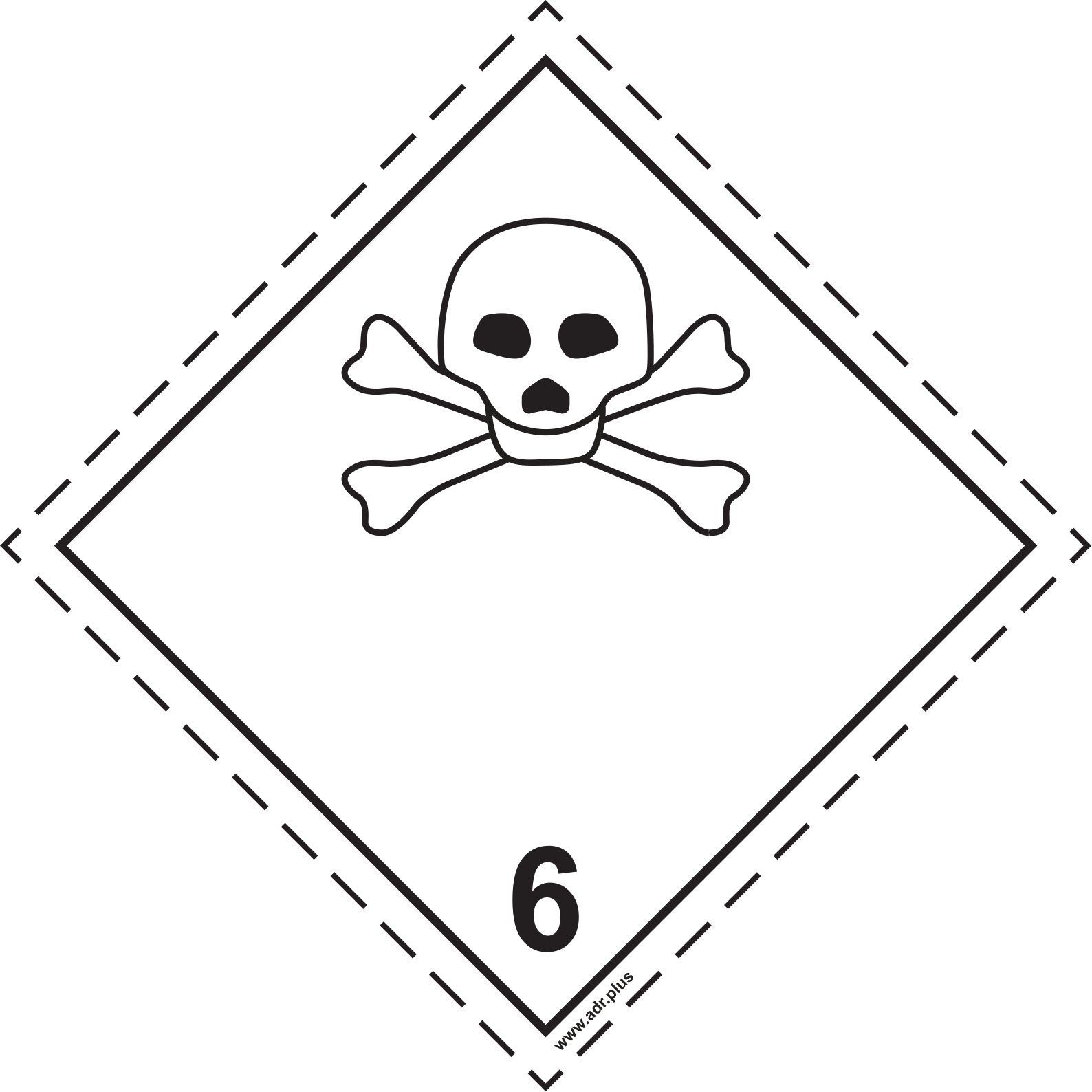 Class 6.1
UN 2078, TOLUENE DIISOCYANATE
Toluene diisocyanate — polyurethane systems, hardeners
LQ 100 ml
Three ways your goods can travel
The same product can go as limited quantities, under the 1.1.3.6 partial exemption or in full ADR — the classification and the packaging decide.
Limited quantities (LQ)
Small inner packagings within the column 7a limit, up to 30 kg gross — the goods travel with the LQ diamond, free of most other ADR provisions (Chapter 3.4).
Partial exemption (1.1.3.6)
Below the transport category threshold per transport unit — no orange plates, no written instructions, no ADR driver certificate (the list in 1.1.3.6.2).
Full ADR
Above the thresholds the goods travel under the full set of rules — transport document, plates and labels, equipment, trained crew and every participant duty.
The same paint travels three ways — small tins go as LQ with the diamond, a pallet of 20 l pails may fit under 1.1.3.6, and an IBC of primer ships in full ADR with an ADR driver.
Who answers for what
ADR splits the duties among the participants of the carriage. These are the roles your company typically holds — with the exact ADR paragraphs.
Consignor
Hands over only consignments that conform to ADR — classified, authorized, in approved packagings, with the transport documents furnished to the carrier.
Packer
Follows the packing and mixed-packing conditions and, when preparing packages for carriage, the marking and labelling requirements.
Loader
Checks packagings for damage before handing over, observes the mixed-loading prohibitions and the separation from foodstuffs.
Filler
Fills only authorized tanks in sound condition, observes the filling degree, checks the closures for leaks and the marking of the tank.
For each of these roles the company needs an appointed safety adviser (1.8.3.1) — ours works on subscription.
About the DGSAWhat a mistake costs
One batch shipped with the wrong packing group — the sums below are what national law charges for it.
Sanctions are national — checks are European
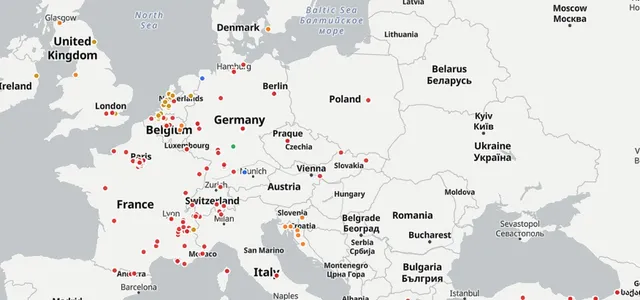
Every ADR country sets its own fines for dangerous goods violations. Roadside checks follow one European standard — Directive (EU) 2022/1999 with a common list of infringements by risk category. Open your country to see the authorities and the exact amounts.
Find your countryAnd beyond the fines
- A vehicle stopped at a roadside check — with your customer waiting for the delivery
- An incident with an untrained crew — and an insurer reading the file closely
- Violations on record — and inspections coming back more often
What the law expects from you
ADR duties come first — and your industry carries its own EU rules on top.
Under ADR
- Classify every product before it is handed over for carriage
- Train everyone who touches dangerous goods (Chapter 1.3)
- Appoint a safety adviser — carriers, consignors, loaders, packers alike
- Mark, document and equip every consignment correctly
EU rules of the industry
Decopaint — Directive 2004/42/EC
VOC limits for paints and varnishes. The solvent content the directive limits is the same solvent that makes the can a class 3 cargo on the road.
CLP — Regulation (EC) 1272/2008
Classification and labelling for the market. The flash point behind your CLP pictogram also decides whether the can travels as class 3 — two systems, one measurement.
REACH annex XVII — diisocyanates
Restriction 74. Since 24 August 2023 industrial and professional users of diisocyanates need training — and your hardeners are exactly that chemistry.
The industry in numbers
Is this about you?
If even one line matches your operation — it is worth a conversation.
- You ship just varnish and do not count it as dangerous goods
- Spray cans leave for retail together with ordinary goods
- Formulations and thinners change, but the transport classification does not
- People handle diisocyanate hardeners without the required training
- Nobody in the company is formally appointed as the safety adviser
Our solutions
Viscosity, flash point, packaging — the regime shifts with the formula, our system keeps up.
Cargo instruction with the transport document entry
Classification, the carriage regime and the ready transport document entry — for a specific cargo.
from €50 / document
A consultant on subscription
A certified safety adviser, the appointment notice and the platform — from €50 a month plus €10 per consignment.
ADRplus One
Train the team
Chapter 1.3 courses online, in your languages — at your own pace, with certificates.
Course is being updated
ADR compliance audit
A remote compliance audit with a report — where you stand and what to fix first.
€290
Questions from the industry
Have a different question?
Contact the consultantOur paint is water-based — does ADR still apply?
Many water-based products fall outside class 3, but the answer lives in the flash point and the test data, not on the label — and one solvent-borne line in the catalogue changes the whole picture. We check name by name.
A small tin and a drum — really different rules?
Yes — the package size decides the regime. Small tins may go as LQ, a drum batch may fit under 1.1.3.6, and an IBC means full ADR. The same product, three different logistics.
Aerosol paint — is that class 3 as well?
No — aerosols are class 2. The gas pressure rules the can regardless of what is inside, so the marking and the transport logic differ from tins of the very same paint.
Where do we start?
Send the catalogue — we prepare the cargo instruction with the transport document entry from €50 per document and show which regime each product falls into. From there the subscription from €50 plus €10 per transport covers the adviser, the platform and the training of your people.
Tell us how your goods move
Within one working day you get a clear answer — what applies to you, what does not, and what it costs to be in order.