





At a roadside check the folder of documents is inspected before the load itself. ADR 8.1.2 names exactly what must travel in the cab of the transport unit — and a missing paper is a violation even when the cargo itself is perfectly prepared.
Three items are required on every ADR journey (8.1.2.1):
- The transport document under 5.4.1, covering all the dangerous goods carried — how it is drawn up and our preparation service.
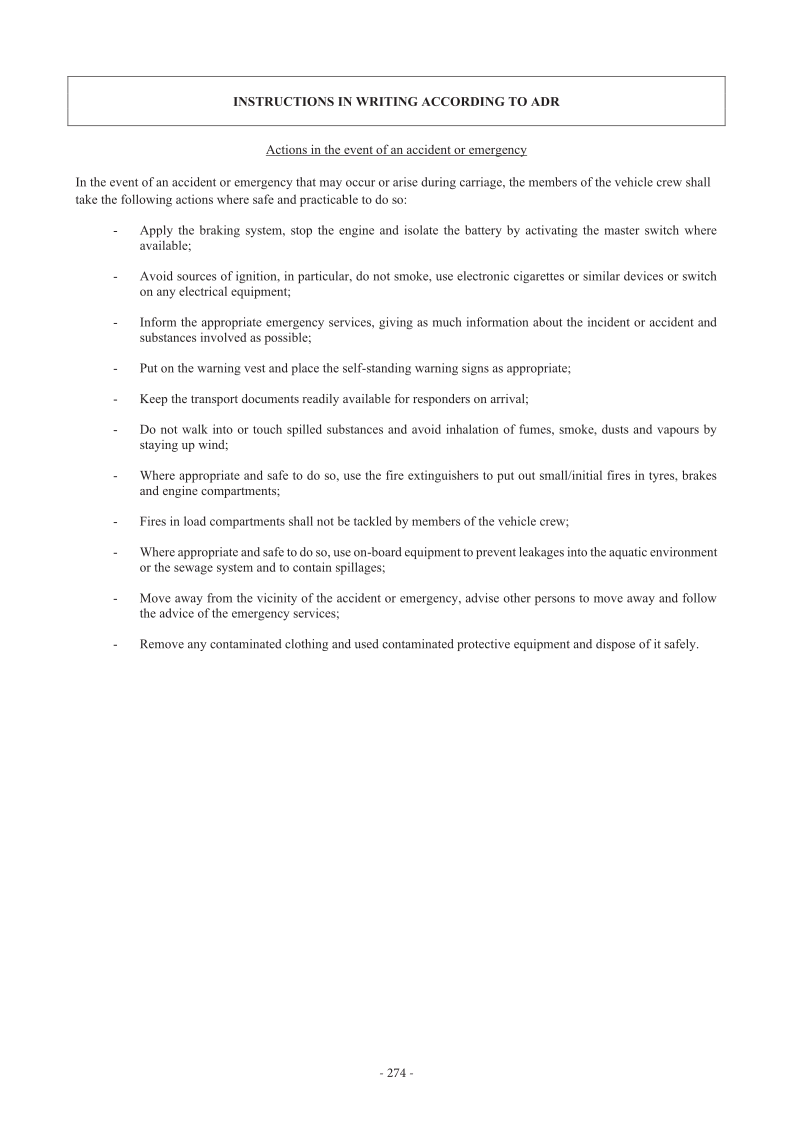
- The instructions in writing under 5.4.3 — the four-page emergency card in the form of 5.4.3.4, kept where the crew can reach it at once.
- Means of identification with a photograph for each crew member (1.10.1.4).
Three more join the folder whenever ADR requires them to be drawn up (8.1.2.2):
- The certificate of approval under 9.1.3 — for EX/II, EX/III, FL and AT vehicles and MEMUs; see vehicle and tank certification.
- The driver’s training certificate under 8.2.1 — the card confirming ADR training and examination; how drivers obtain it and training through our academy.
- A copy of the competent authority approval, when 5.4.1.2.1 (c), (d) or 5.4.1.2.3.3 requires one — class 1 and certain class 7 consignments.
For a transport chain that continues by sea or air, the paperwork is usually built around one multimodal dangerous goods form accepted by all carriers — we prepare DGD declarations as a service.
Which of the six apply to a given consignment depends on the goods, the vehicle and the route. That check is exactly what an ADR consultant does before the wheels turn.
References — ADR 2025 8.1.2 (documents to be carried), 5.4.1 (transport document), 5.4.3 (instructions in writing), 1.10.1.4 (identification), 9.1.3 (certificate of approval), 8.2.1 (driver training certificate).