

Car services — dangerous goods leave your gate every day
Old batteries to the recycler, drained petrol, aerosols, airbags, refrigerants — a workshop hands over dangerous goods daily without calling itself a consignor. ADR calls it exactly that. We put the flow in order without slowing the workshop down.
The return run of old batteries and airbags is full ADR carriage — even when it is your own van driving to the recycler.
This is what you already ship
Typical dangerous goods of the industry — with the real Table A entries. Tap any card to open the full UN page in our reference.
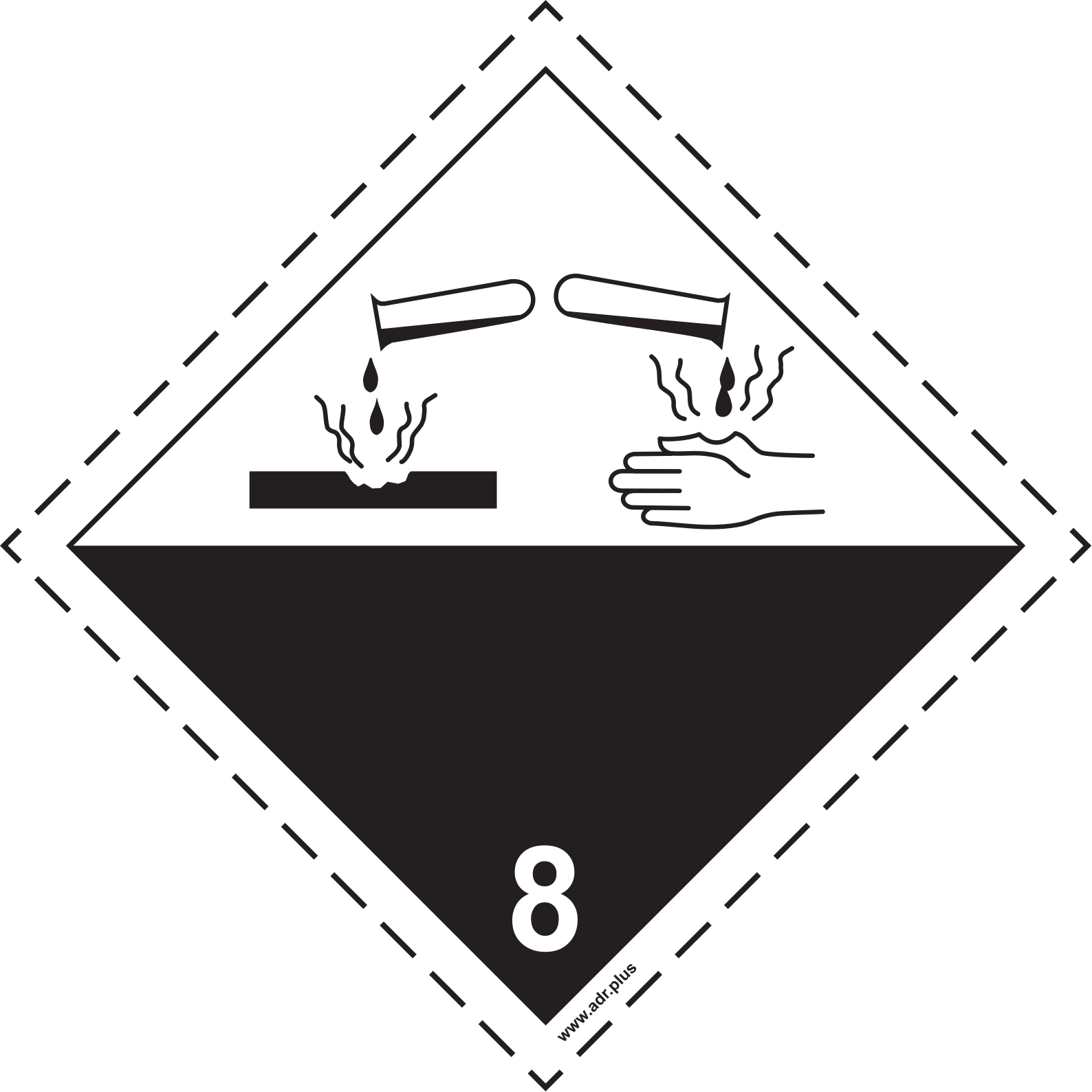 Class 8
UN 2794, BATTERIES, WET, FILLED WITH ACID, electric storage
Starter batteries — new in, old out
LQ 1 L
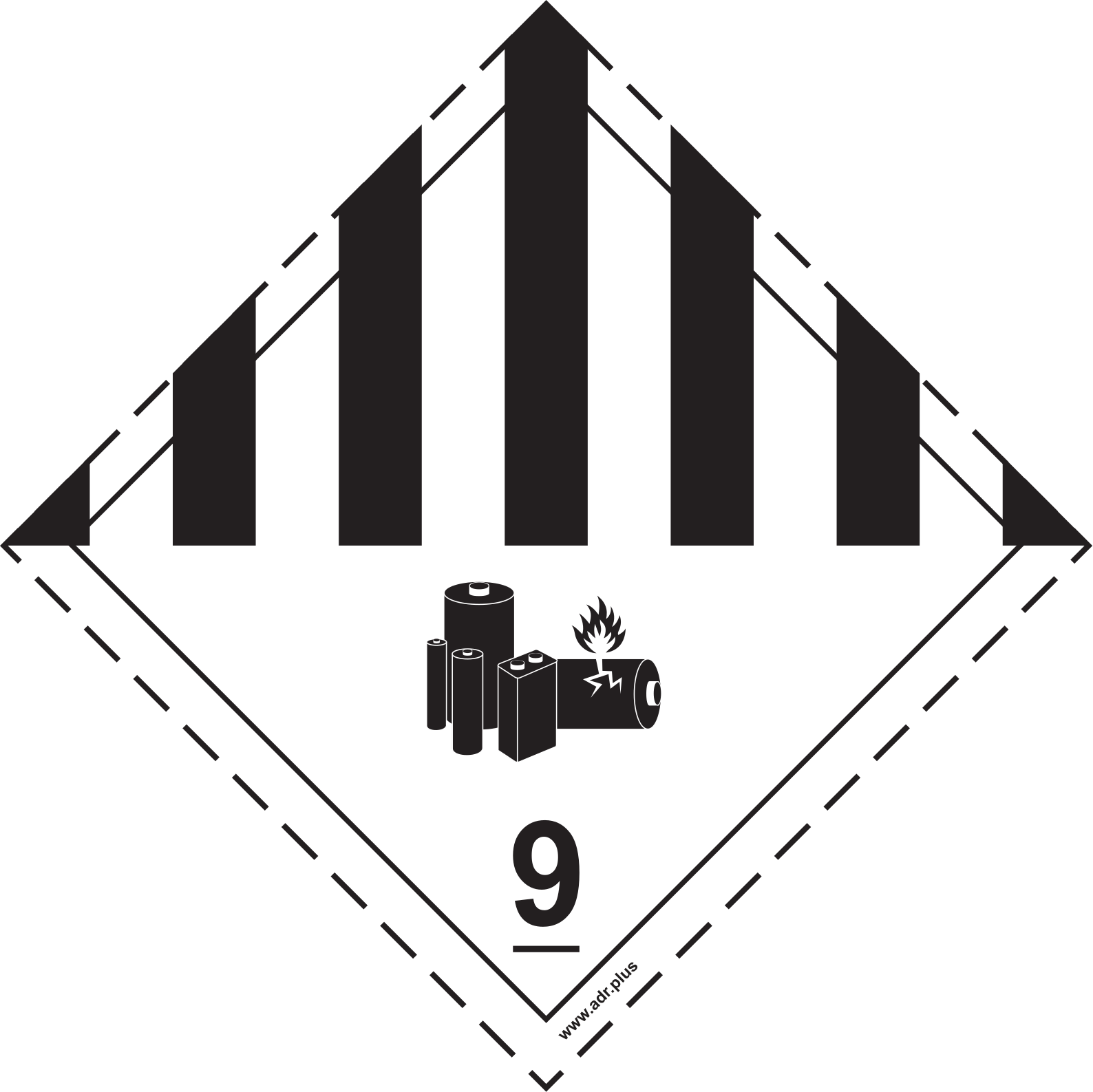 Class 9
UN 3480, LITHIUM ION BATTERIES
Lithium batteries of hybrids and EVs
LQ 0
 Class 9
UN 3268, SAFETY DEVICES, electrically initiated
Airbags and belt pretensioners
LQ 0
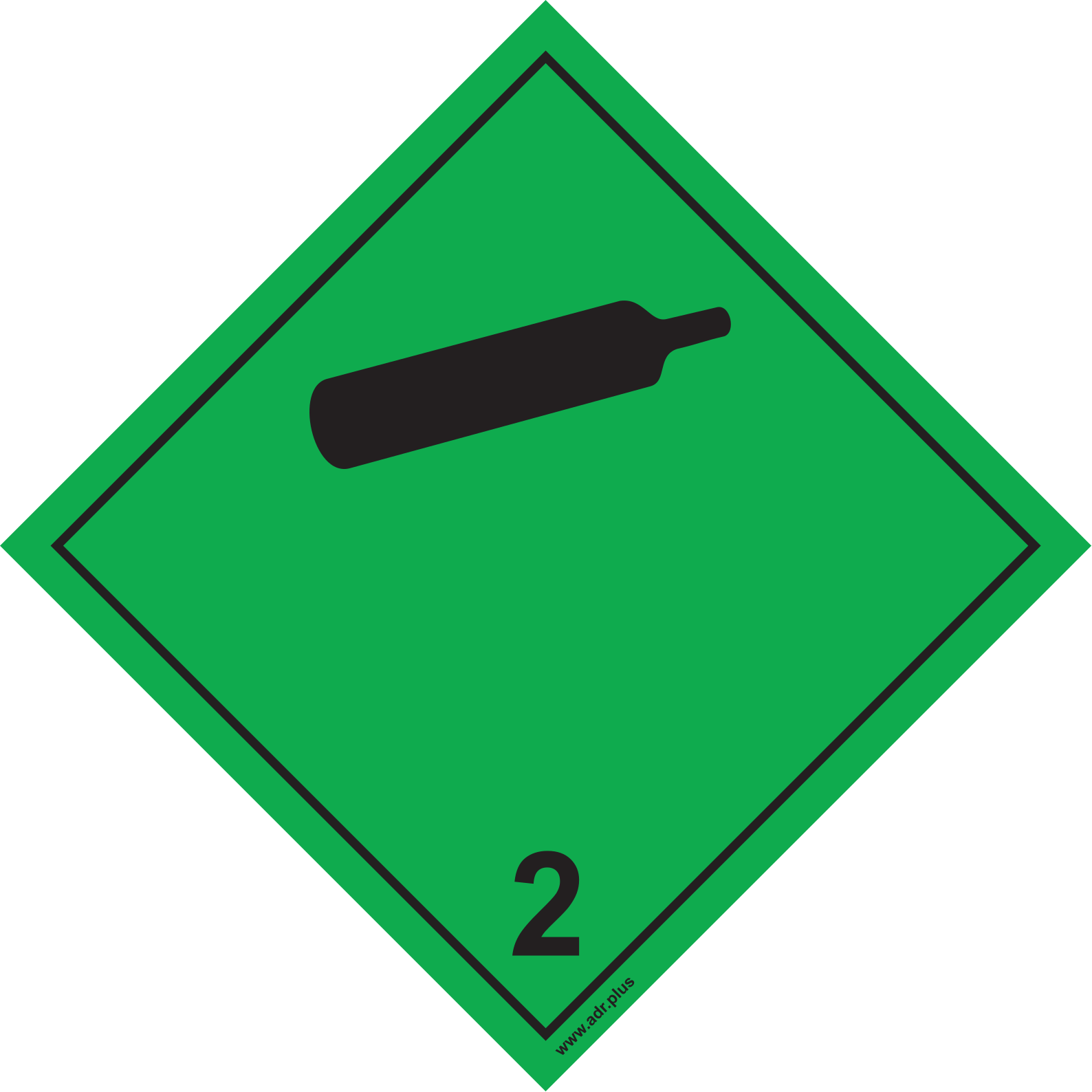
 Class 2
UN 1950, AEROSOLS, flammable
Aerosols — cleaners, greases, primers
LQ 1 L / 120 ml
 Class 3
UN 1203, MOTOR SPIRIT or GASOLINE or PETROL
Drained petrol from tanks and repairs
LQ 1 L
Class 9UN 3082, ENVIRONMENTALLY HAZARDOUS SUBSTANCE, LIQUID, N.O.S.
Used oil and coolants when environmentally hazardous
LQ 5 L
Three ways your goods can travel
The same product can go as limited quantities, under the 1.1.3.6 partial exemption or in full ADR — the classification and the packaging decide.
Limited quantities (LQ)
Small inner packagings within the column 7a limit, up to 30 kg gross — the goods travel with the LQ diamond, free of most other ADR provisions (Chapter 3.4).
Partial exemption (1.1.3.6)
Below the transport category threshold per transport unit — no orange plates, no written instructions, no ADR driver certificate (the list in 1.1.3.6.2).
Full ADR
Above the thresholds the goods travel under the full set of rules — transport document, plates and labels, equipment, trained crew and every participant duty.
Aerosol cans travel three ways — a few cartons go as LQ with the diamond, a mixed van load may fit under 1.1.3.6, and a pallet run of old batteries is full ADR with the marked vehicle.
Who answers for what
ADR splits the duties among the participants of the carriage. These are the roles your company typically holds — with the exact ADR paragraphs.
Consignor
Hands over only consignments that conform to ADR — classified, authorized, in approved packagings, with the transport documents furnished to the carrier.
Packer
Follows the packing and mixed-packing conditions and, when preparing packages for carriage, the marking and labelling requirements.
Unloader
Compares the transport document with what actually arrived before unloading.
Carrier
Checks before departure that the documents are on board, the vehicle and load show no defects or leaks, the plates and equipment are in place.
For each of these roles the company needs an appointed safety adviser (1.8.3.1) — ours works on subscription.
About the DGSAWhat a mistake costs
Old batteries and oils leave the workshop weekly — the sums below are what national law charges for a mistake.
Sanctions are national — checks are European
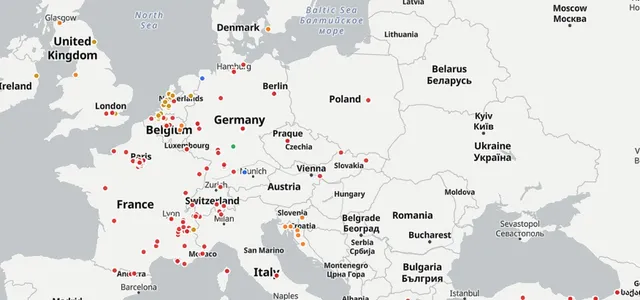
Every ADR country sets its own fines for dangerous goods violations. Roadside checks follow one European standard — Directive (EU) 2022/1999 with a common list of infringements by risk category. Open your country to see the authorities and the exact amounts.
Find your countryAnd beyond the fines
- A vehicle stopped at a roadside check — with your customer waiting for the delivery
- An incident with an untrained crew — and an insurer reading the file closely
- Violations on record — and inspections coming back more often
What the law expects from you
ADR duties come first — and your industry carries its own EU rules on top.
Under ADR
- Classify every product before it is handed over for carriage
- Train everyone who touches dangerous goods (Chapter 1.3)
- Appoint a safety adviser — carriers, consignors, loaders, packers alike
- Mark, document and equip every consignment correctly
EU rules of the industry
F-Gas — Regulation (EU) 2024/573
Fluorinated refrigerants of car air-conditioning — certification of works and controlled handling on top of the transport rules.
Batteries — Regulation (EU) 2023/1542
Collection and the life cycle of batteries — the take-back flows it creates move by road under ADR.
Waste Framework — Directive 2008/98/EC
Used oil, coolants and workshop waste — traceability from your pit to the treatment site, in parallel with ADR.
The industry in numbers
Is this about you?
If even one line matches your operation — it is worth a conversation.
- Old batteries wait on a pallet until «somebody takes them away»
- Your own van carries drained fuel or airbags to the recycler
- Aerosols and refrigerant cylinders arrive weekly from suppliers
- Nobody signed anything about ADR when the EV lift was installed
- The word «consignor» has never been used about your workshop
Our solutions
The workshop earns on repairs — the shipping side runs on subscription, without a full-time specialist.
Cargo instruction with the transport document entry
Classification, the carriage regime and the ready transport document entry — for a specific cargo.
from €50 / document
A consultant on subscription
A certified safety adviser, the appointment notice and the platform — from €50 a month plus €10 per consignment.
ADRplus One
Train the team
Chapter 1.3 courses online, in your languages — at your own pace, with certificates.
Course is being updated
ADR compliance audit
A remote compliance audit with a report — where you stand and what to fix first.
€290
Questions from the industry
Have a different question?
Contact the consultantWe only fix cars — how are we in dangerous goods?
Through what leaves the workshop. Old batteries, drained fuel, airbags and used oil are dangerous goods, and the one who hands them over for carriage is the consignor with the full ADR duties — including when your own van does the run.
The recycler comes and takes everything — is it their problem?
Partly theirs, partly yours. The carrier answers for the vehicle, but the consignor answers for the goods being classified, packed and documented — that side of the handover stays with the workshop.
EV batteries scare us — what is special about them?
Lithium batteries are class 9 dangerous goods, and damaged or defective ones travel under special conditions that are set at classification. Before the first battery leaves the workshop, the route and the packaging must be decided — and that is exactly our job.
What does order cost for a workshop?
The cargo instruction with the transport document entry for your flows from €50 per document, and the subscription — a certified safety adviser, the platform and the training of your people — from €50 a month plus €10 per consignment. Cheaper than one stopped van.
Tell us how your goods move
Within one working day you get a clear answer — what applies to you, what does not, and what it costs to be in order.