
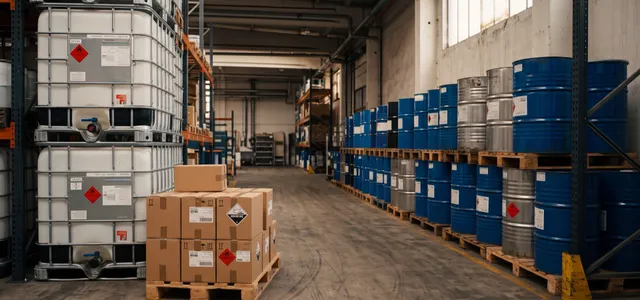


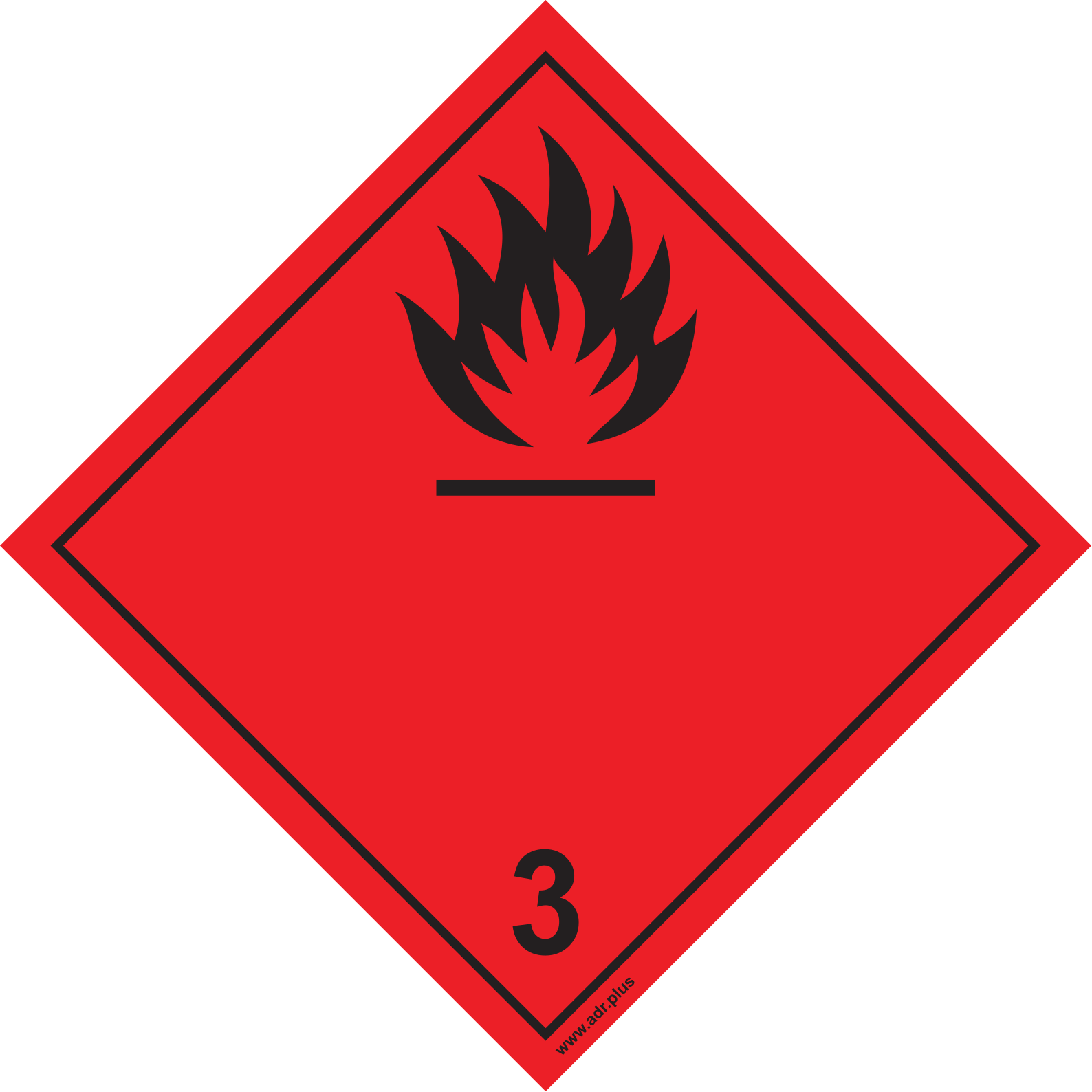
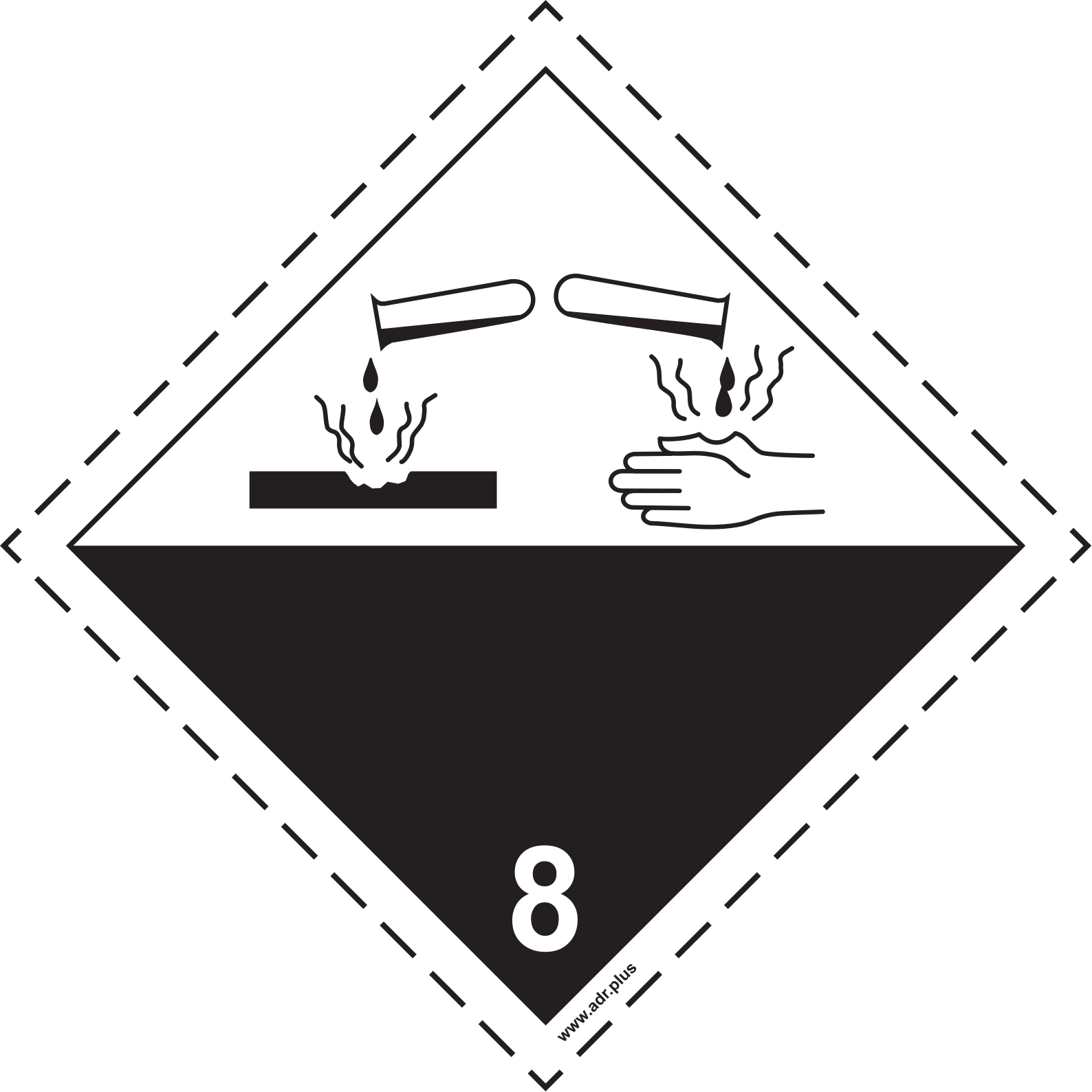
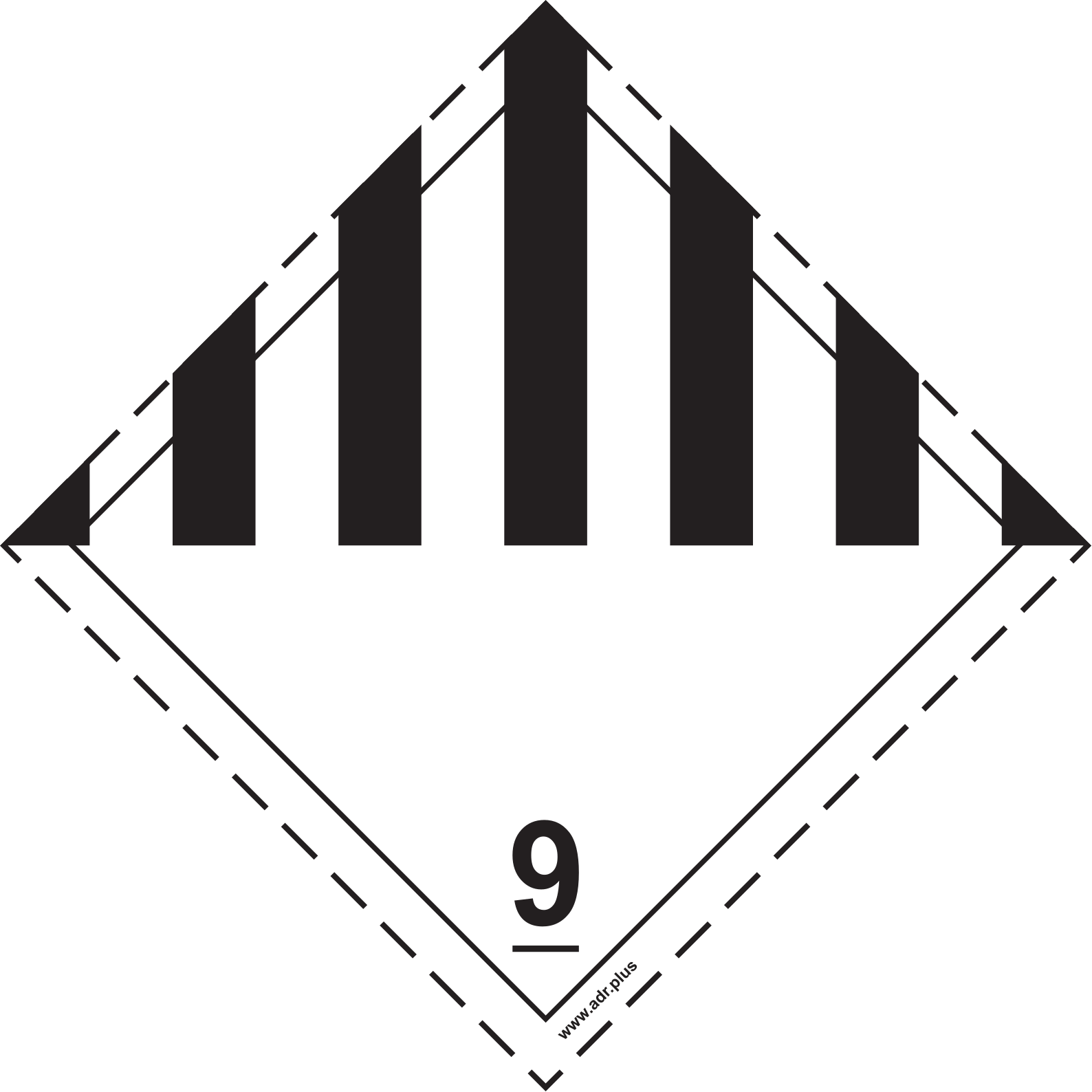

Before a substance or article can move as dangerous goods, somebody has to classify it — assign it a hazard class, a packing group where applicable, and a UN number. In almost every case this is the shipper’s responsibility, with the ADR consultant reviewing the decision. For genuinely new substances the competent authority of the country of origin decides — explosives under 2.2.1.1.3, self-reactive substances under 2.2.41.1.13, organic peroxides under 2.2.52.1.8.
The procedure has four stages.
- The hazards are identified from the substance’s safety data sheet against the class-specific criteria of 2.2 — one substance may present several hazards at once.
- The primary class is fixed by the table of precedence of hazards (2.1.3.10); the remaining hazards become subsidiary hazards.
- The matching UN entry is selected in Table A (3.2.1) following the hierarchy of entry types in 2.1.1.2 — a specific named entry always outranks a generic or N.O.S. one.
- The packing group is verified (2.1.1.3) against the test criteria of the primary class.
Each stage has its own traps. N.O.S. entries carry additional naming requirements on the transport document (3.1.2.8.1). Mixtures and solutions follow separate assignment rules (2.1.3.3), where concentration thresholds decide whether a product falls under ADR at all — and in which class.
The mistake inspectors look for first is a generic “flammable liquid N.O.S.” entry where Table A holds a specific one. A specific entry always takes priority; N.O.S. in its place is misdeclaration even when class and packing group happen to match. The classification decision feeds every document, label and exemption downstream — an error made here repeats through the whole consignment, and it is the shipper who answers for it.
References — ADR 2025 2.1 (general rules), 2.1.1.2 (types of entries), 2.1.3.10 (table of precedence of hazards), 2.2 (class-specific criteria), 3.1.2 (proper shipping name), 3.1.2.8.1 (technical name for N.O.S.).