



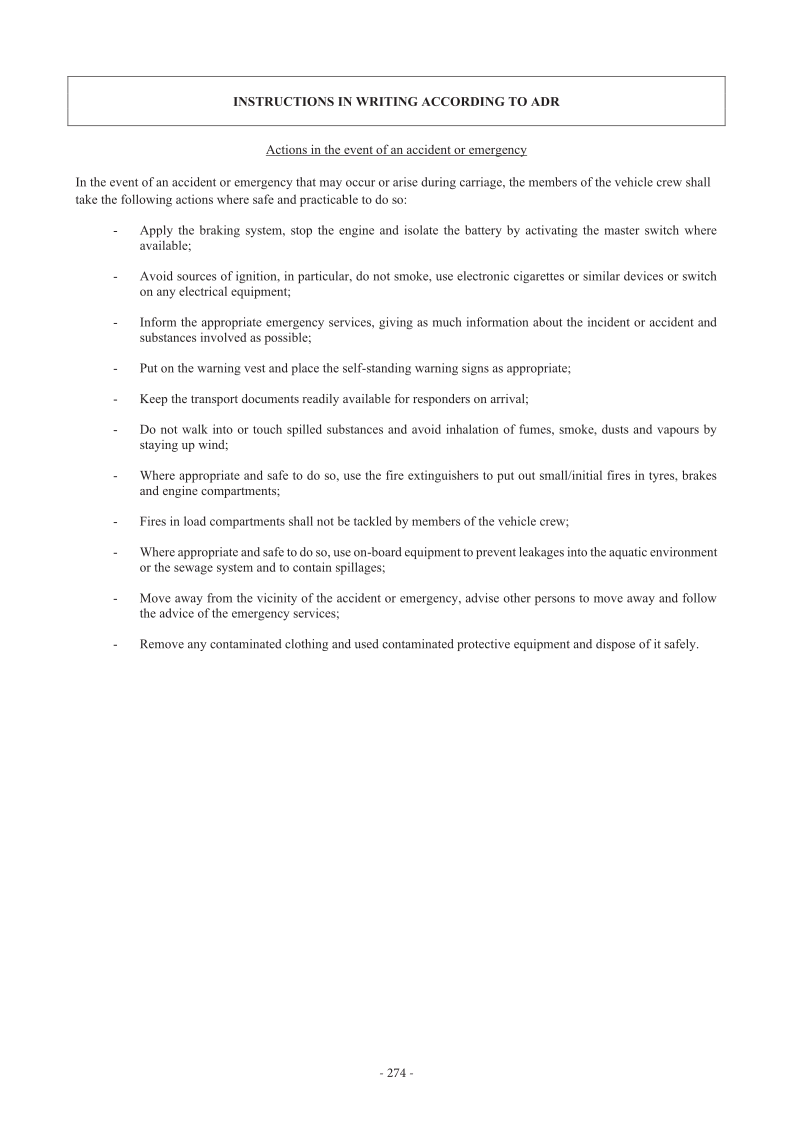
Transport of dangerous goods below a threshold quantity is exempt from most ADR provisions (vehicle equipment, ADR driver certificate, orange plates, written instructions).
Points calculation — multiply the net quantity (kg or L) of each substance by its transport category multiplier.
- Category 0 — maximum total quantity per transport unit is 0 — no exemption at any quantity. Carriage itself is not forbidden. It is simply fully regulated.
- Category 1 — ×50 (×20 for the UN numbers in note a to the 1.1.3.6.3 table, where the total per transport unit is capped at 50 kg)
- Category 2 — ×3
- Category 3 — ×1
- Category 4 — unlimited (not counted toward the threshold).
Limit — the sum across all goods on the vehicle must be ≤ 1000 points.
The points for a specific load can be calculated in the 1.1.3.6 calculator by UN number and quantity.
Still required even under the exemption — transport document (8.1.2.1 (a)), proper UN packaging, package marking (UN number + label), fire extinguisher (one of min 2 kg per transport unit, 8.1.4.2), driver awareness training under Chapter 1.3 (8.2.3).
Excluded — substances of Category 0 (see Column 15 of Table A). Private transport of goods packaged for retail sale follows 1.1.3.1(a) instead.
Goods packed in limited quantities (Chapter 3.4) are not counted into the points total. ADR does not state this in a single sentence — the exhaustive list in 1.1.3.6.5 of what comes out of the calculation names 1.1.3.1 (a) and (d) to (f), 1.1.3.2 to 1.1.3.5, 1.1.3.7, 1.1.3.9 and 1.1.3.10 — Chapter 3.4 is not among them, while 3.4.1 (a) keeps Chapter 1.1 applicable. The position rests on how the two regimes relate — 1.1.3.6 relieves, by quantity, goods that would otherwise travel under the full ADR regime, and goods in limited quantities are already outside most of it by their own mechanism.
References — ADR 2025 1.1.3.6.1 (transport categories), 1.1.3.6.2 (scope of the relief), 1.1.3.6.3 (maximum quantities per category), 1.1.3.6.4 (multipliers and the calculated value of 1000).