
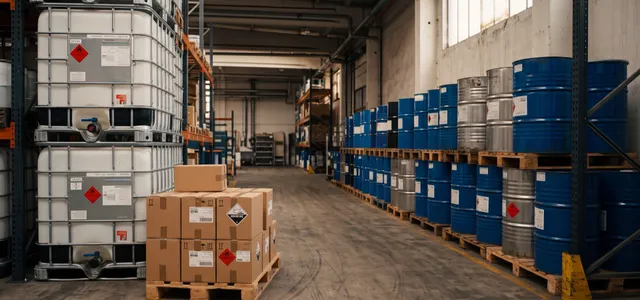
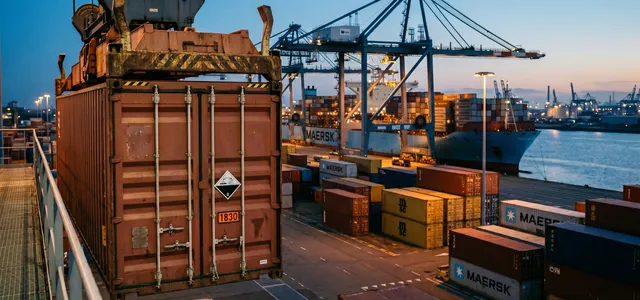

ADR rules on mixed loading exist because some dangerous goods react violently when they meet — during an accident, or simply through packaging damage under vibration. The rule book is 7.5.2 (mixed loading of packages in one vehicle or container) and 7.5.4 (precautions with respect to foodstuffs, other articles of consumption and animal feeds). A few cases worth knowing.
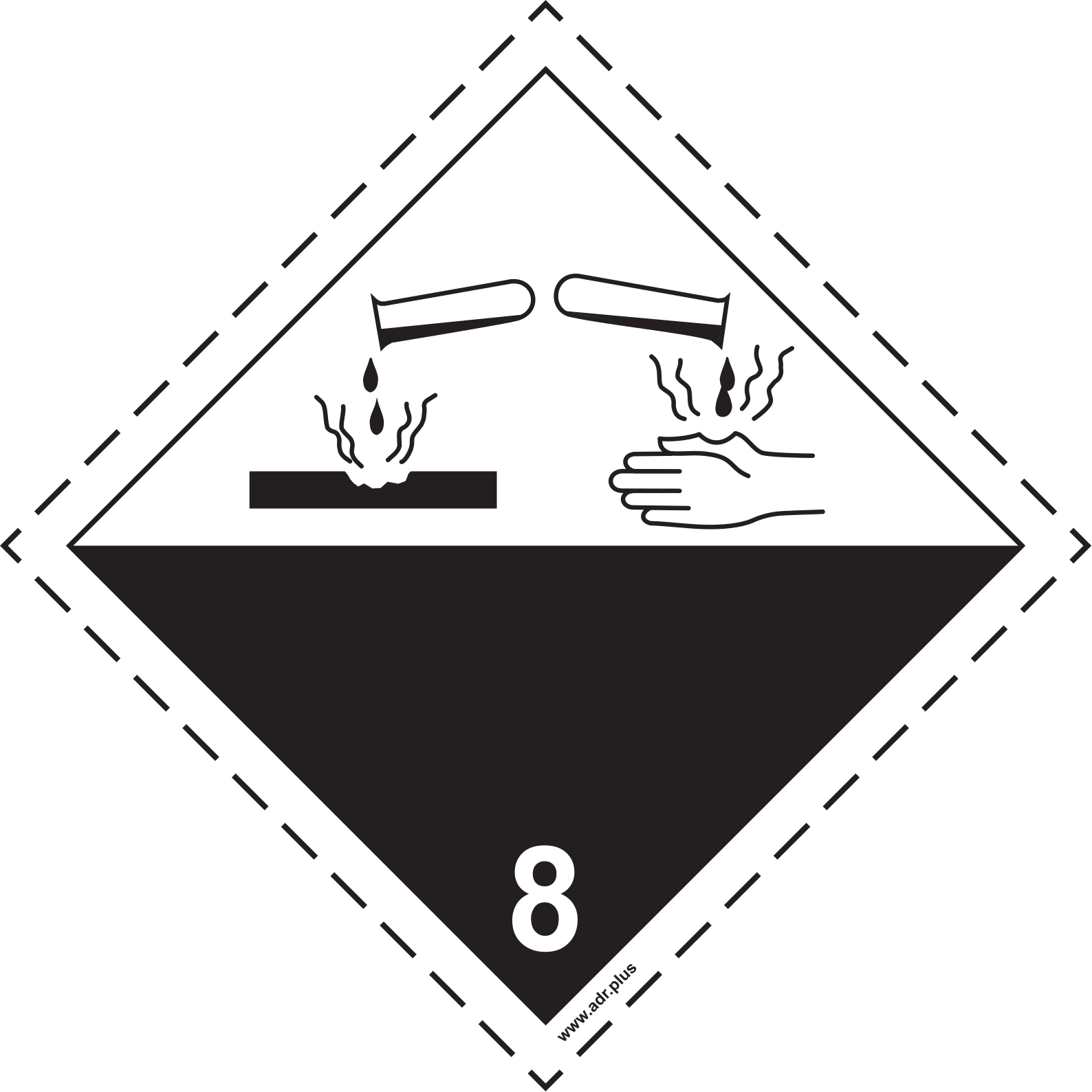
Acids + cyanides. A leak of hydrochloric acid onto a package of sodium cyanide (UN 1689) produces hydrogen cyanide gas — lethal in minutes. The mixed-loading table of 7.5.2.1 does not prohibit this pair, labels 6.1 and 8 meet at an X. The barriers ADR does set are at package level — the mixed-packing provisions of Column 9b (4.1.10) — so separation of acids from cyanide salts inside the vehicle is a decision of the consignor and the ADR consultant, not a table lookup.
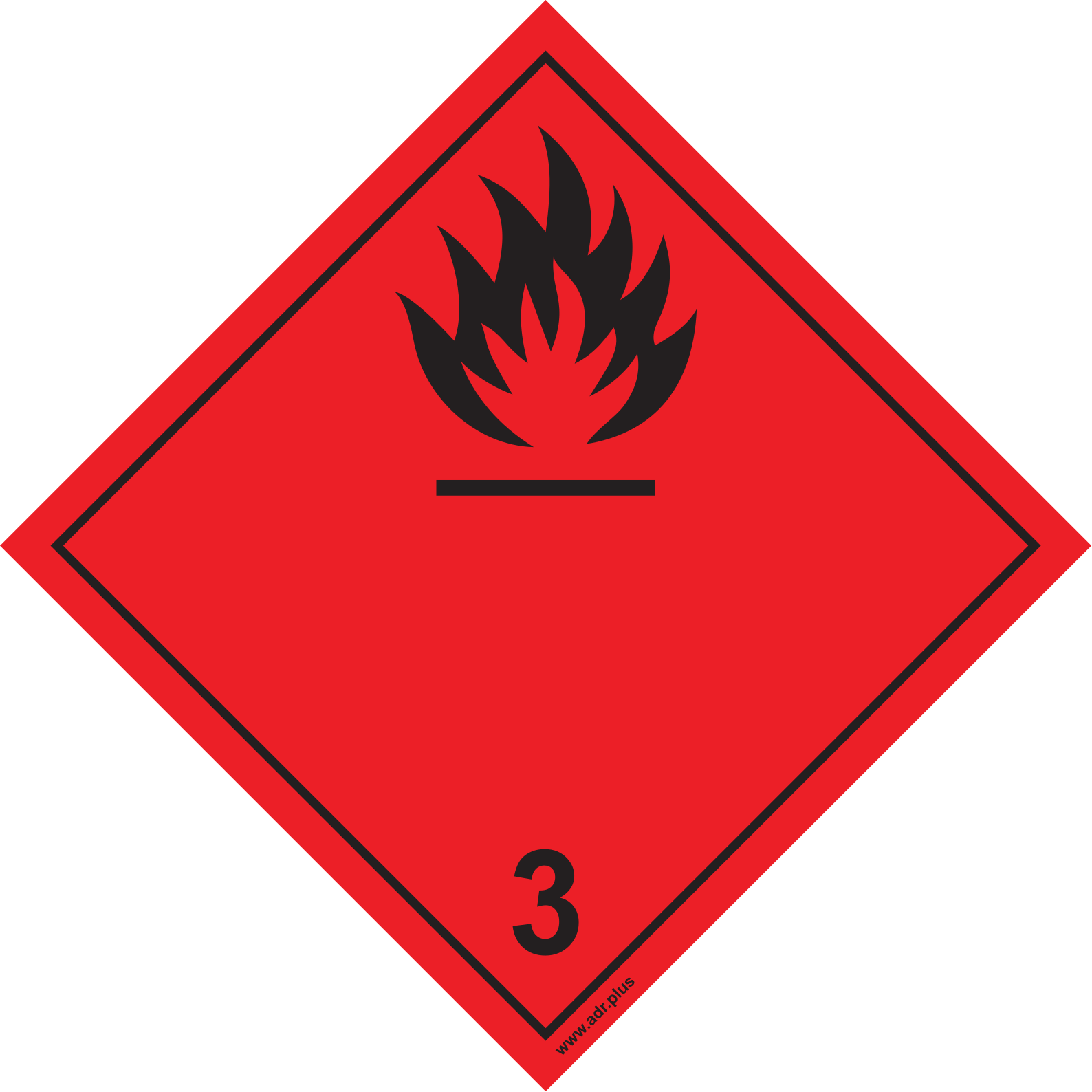
Class 5.1 oxidizers + class 3 flammable liquids, or + class 4.1 flammable solids. Oxidizers accelerate combustion drastically. An oxidizer package leaking onto class 3 or 4.1 turns an ordinary fire into an explosion-range event. Here too the 7.5.2.1 table shows X — mixed loading in one vehicle is permitted. What ADR restricts is packing them into the same package — Column 9b of Table A carries the MP1–MP24 mixed-packing provisions (4.1.10), several of which exclude packing group I and II substances of class 5.1 together with other goods.
Class 1 compatibility groups. Class 1 explosives have letter groups A, B, C, D, E, F, G, H, J, K, L, N and S (2.2.1.1.6). The matrix that tells which groups can be loaded together in one vehicle or container is in 7.5.2.2 and covers groups A, B, C, D, E, F, G, H, J, L, N, S — group A (primary explosives) travels only with itself, group L may be loaded only with packages containing the same type of substances and articles of group L, and group S is compatible with almost everything. Lookup is by group letter, not by UN number alone.
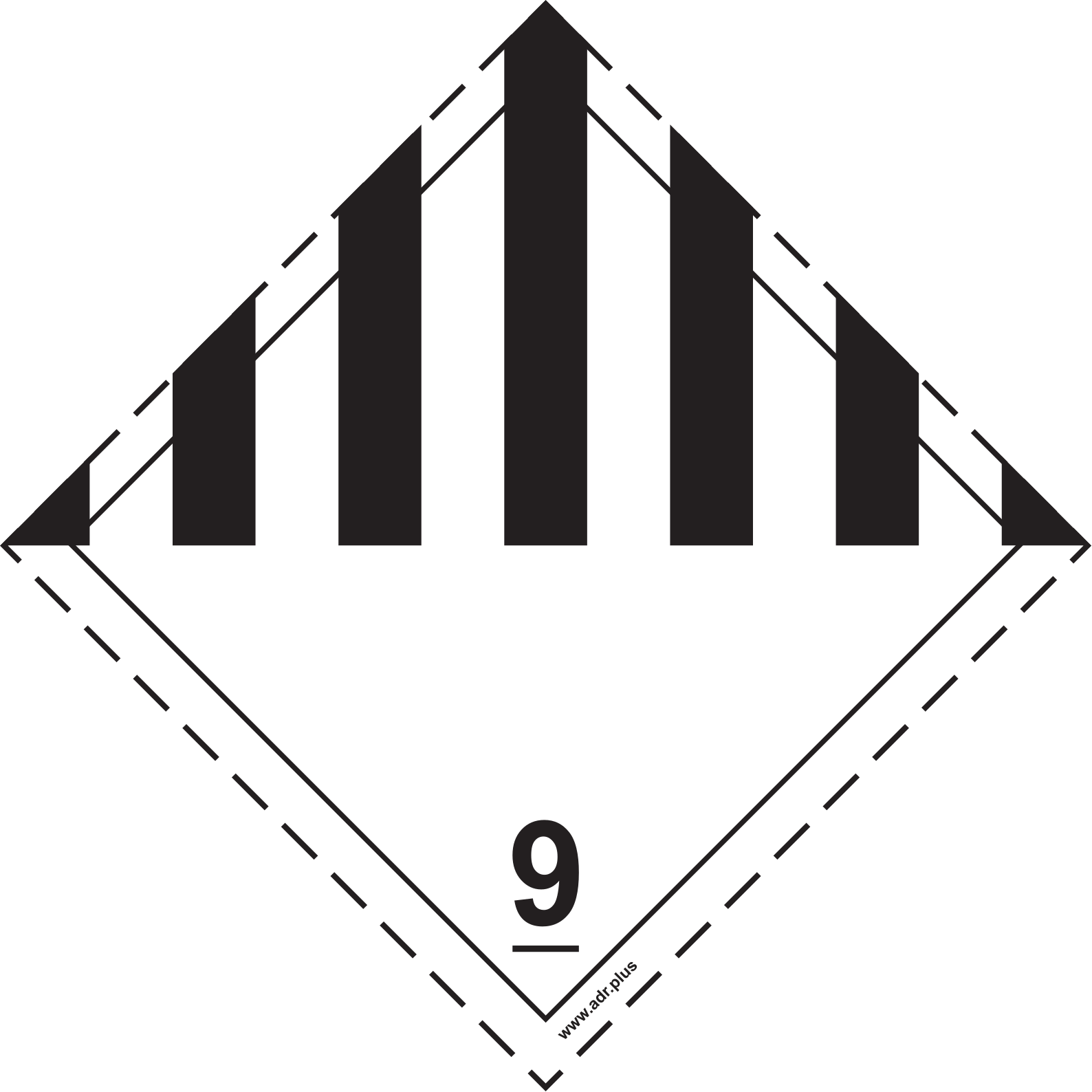
Class 6.2 infectious substances + foodstuffs. The separation from foodstuffs, other articles of consumption and animal feeds comes from special provision CV28 and 7.5.4, which covers packages bearing labels 6.1 or 6.2 and label 9 packages containing UN 2212, 2315, 2590, 3151, 3152 or 3245. Separately, CV13 requires that after a leak or spillage the vehicle or container is not re-used until thoroughly cleaned and, if necessary, disinfected or decontaminated, and that other goods carried with it are examined for contamination.
Class 8 acid + class 8 base. Both class 8 corrosives, and the table permits them together — but acid + base in direct mixing is a violent exothermic reaction. Partitions, dividers or separate compartments within a class-8-only load are good practice, not an ADR requirement.
Class 7 radioactive stowage. Special provision CV33 (7.5.11) — segregation from workers in regularly occupied working areas and from members of the public (Table A of CV33), from undeveloped photographic film and mailbags (Table B), and from other dangerous goods according to 7.5.2. Category II-YELLOW and III-YELLOW packages must not travel in compartments occupied by passengers, and no one but the vehicle crew may ride in such a vehicle. The sum of transport indexes aboard one vehicle not under exclusive use may not exceed 50.
Foodstuffs, other articles of consumption and animal feeds. Where Column 18 shows CV28, packages bearing labels 6.1, 6.2 or the listed label 9 goods must not be stacked on, or loaded in immediate proximity to, packages known to contain foodstuffs, other articles of consumption or animal feeds. If they are loaded in immediate proximity, they are kept apart by complete partitions, by packages not bearing those labels, or by a space of at least 0.8 m — unless the labelled packages have an additional packaging or are completely covered (7.5.4).
General principle. For every two UN numbers on the same transport document, check Column 9b for MPx (mixed packing, rules in 4.1.10) and Column 18 for CVx (7.5.11). MP1 and MP2 are the restrictive codes — same type of goods within the same compatibility group only, or nothing else at all. The higher MP codes state when packing together is allowed, and CV provisions tell you what else must or must not be on the truck.
Common mistake — loading cyanide salts and acid drums on the same sheeted truck because “the table permits it”. The table does permit it — and that is exactly why the decision has to be made on the chemistry, by the consignor and the ADR consultant, and not left to the matrix.
References — ADR 2025 7.5.2.1 (label table), 7.5.2.2 (class 1 compatibility groups), 2.2.1.1.6 (definition of compatibility groups), 7.5.4 (foodstuffs), 7.5.11 CV13, CV28, CV33, Table A Columns 9b (MP codes, 4.1.10) and 18 (CV codes).