
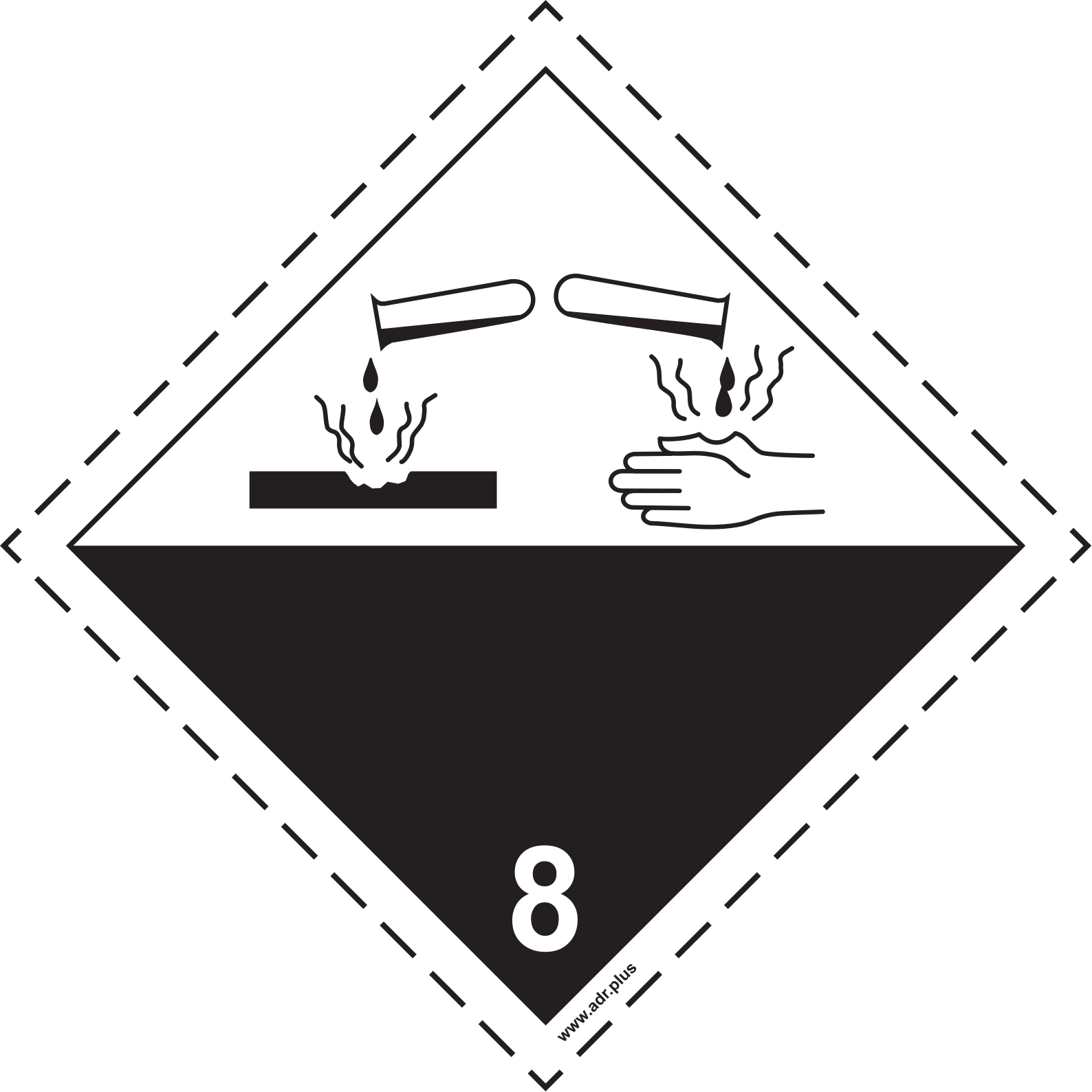
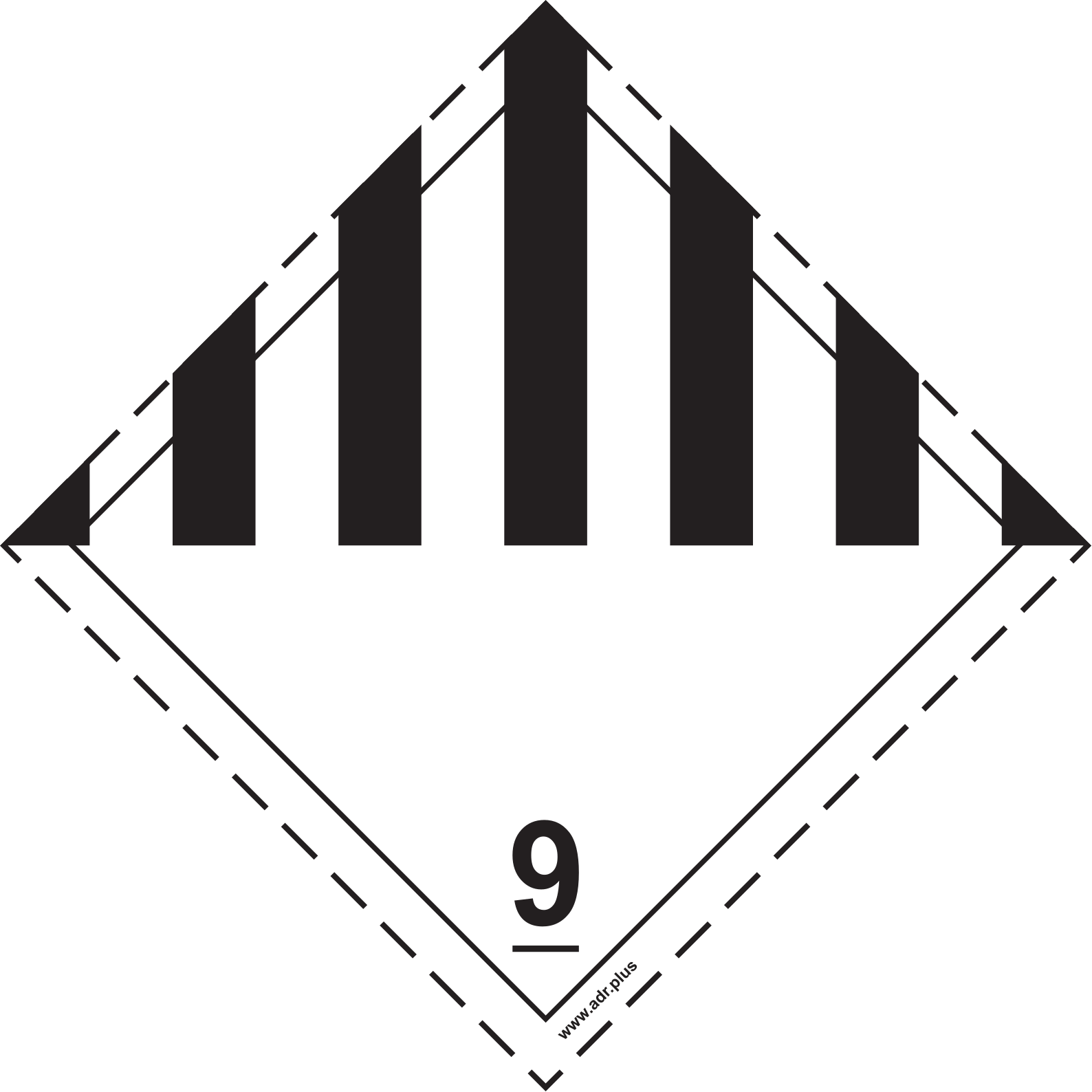

Radioactive material (class 7) is governed by the IAEA transport regulations (SSR-6) mirrored into ADR. It does not use packing groups — the package type and the Transport Index take that role.
Activity thresholds (2.2.7.2.2). Each radionuclide has an A1 value (for special-form sources — sealed, non-dispersible) and an A2 value (for everything else). Below the exemption activity of 2.2.7.2.2.1 the material drops out of class 7 entirely. Above it, the consignment activity determines the package type.
Package types (2.2.7.2.4, 6.4).
- Excepted — very low activity. Minimal package requirements, marking only and no class 7 label (5.1.5.4)
- Industrial IP-1 / IP-2 / IP-3 — for LSA and SCO (see below)
- Type A — for activities up to A1 (special form) or A2 (other). Survives normal transport
- Type B(U) and Type B(M) — for activities above Type A limits. Survives accident conditions (fire, impact, water immersion)
- Type C — for air transport of large activities
LSA and SCO. Low Specific Activity material (2.2.7.2.3.1) and Surface Contaminated Objects (2.2.7.2.3.2) are dispersed forms with activity spread through a volume or on a surface. They move in industrial packages under 4.1.9.
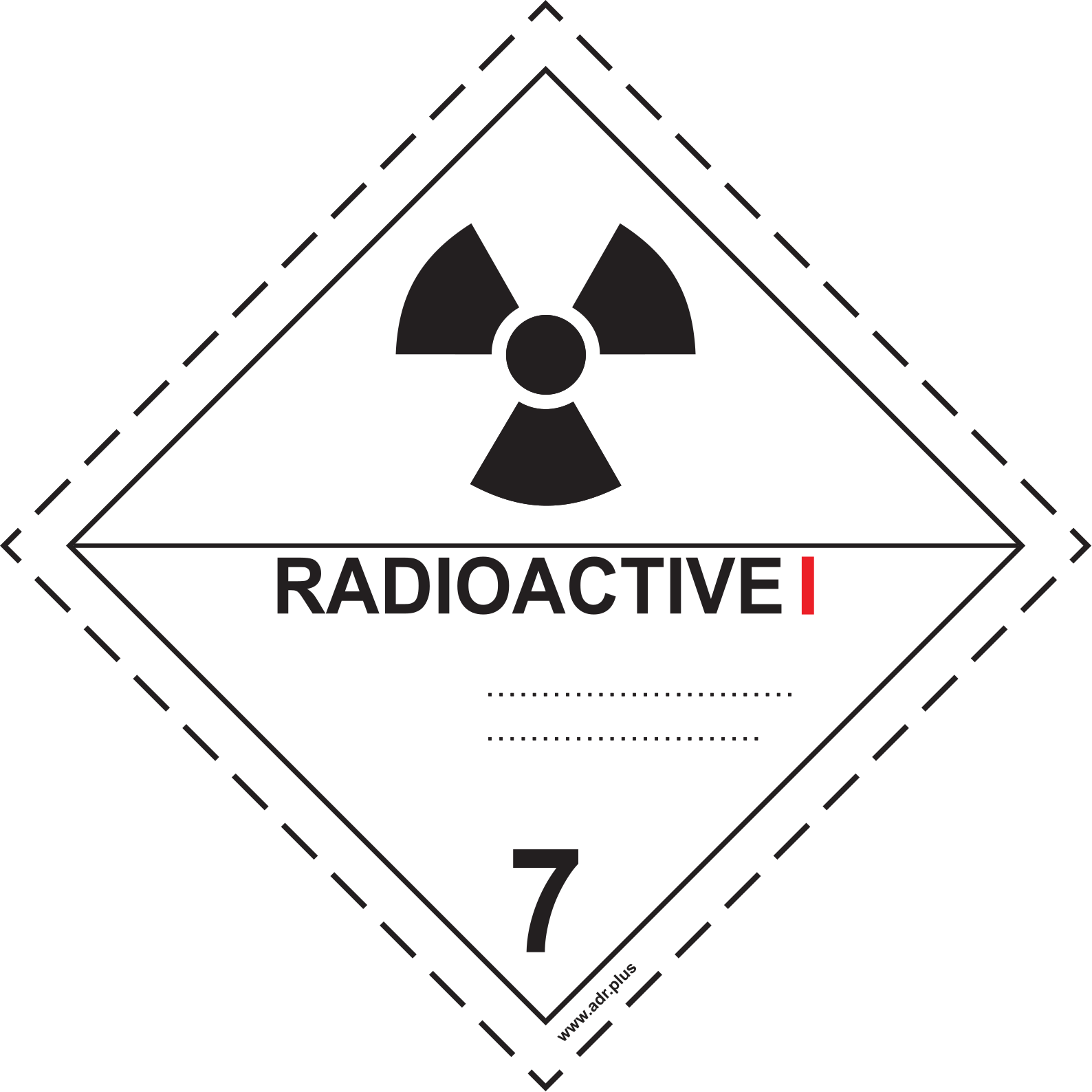
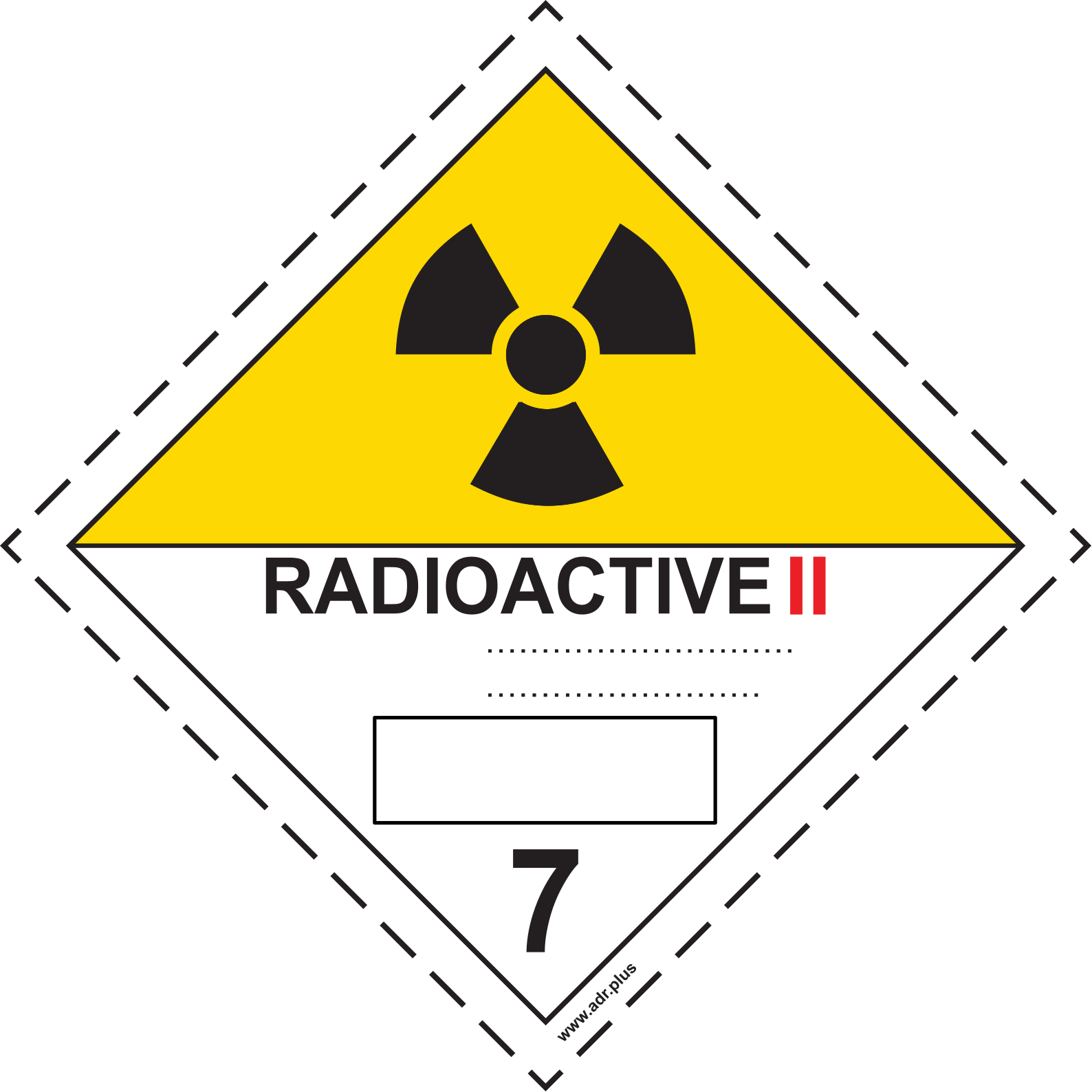
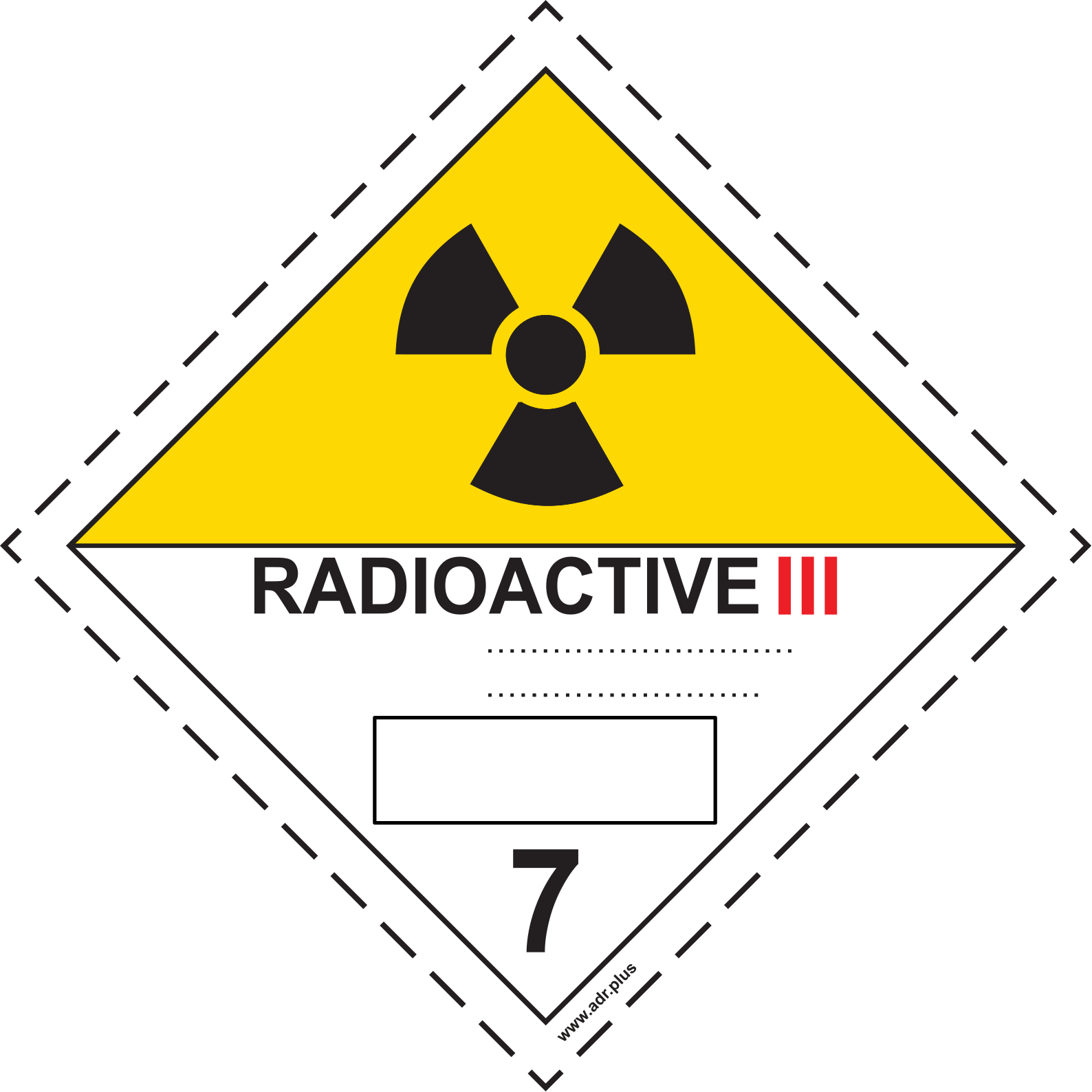
Package categories (5.1.5.3.4) are set by surface dose rate and Transport Index.
- I-WHITE — surface dose ≤ 5 μSv/h, TI = 0
- II-YELLOW — surface dose ≤ 500 μSv/h, TI ≤ 1
- III-YELLOW — surface dose ≤ 2 mSv/h, TI ≤ 10
The Transport Index (TI) is the maximum dose rate in mSv/h at 1 m from the package surface, multiplied by 100. TI drives per-vehicle stowage limits in 7.5.11 CV33.
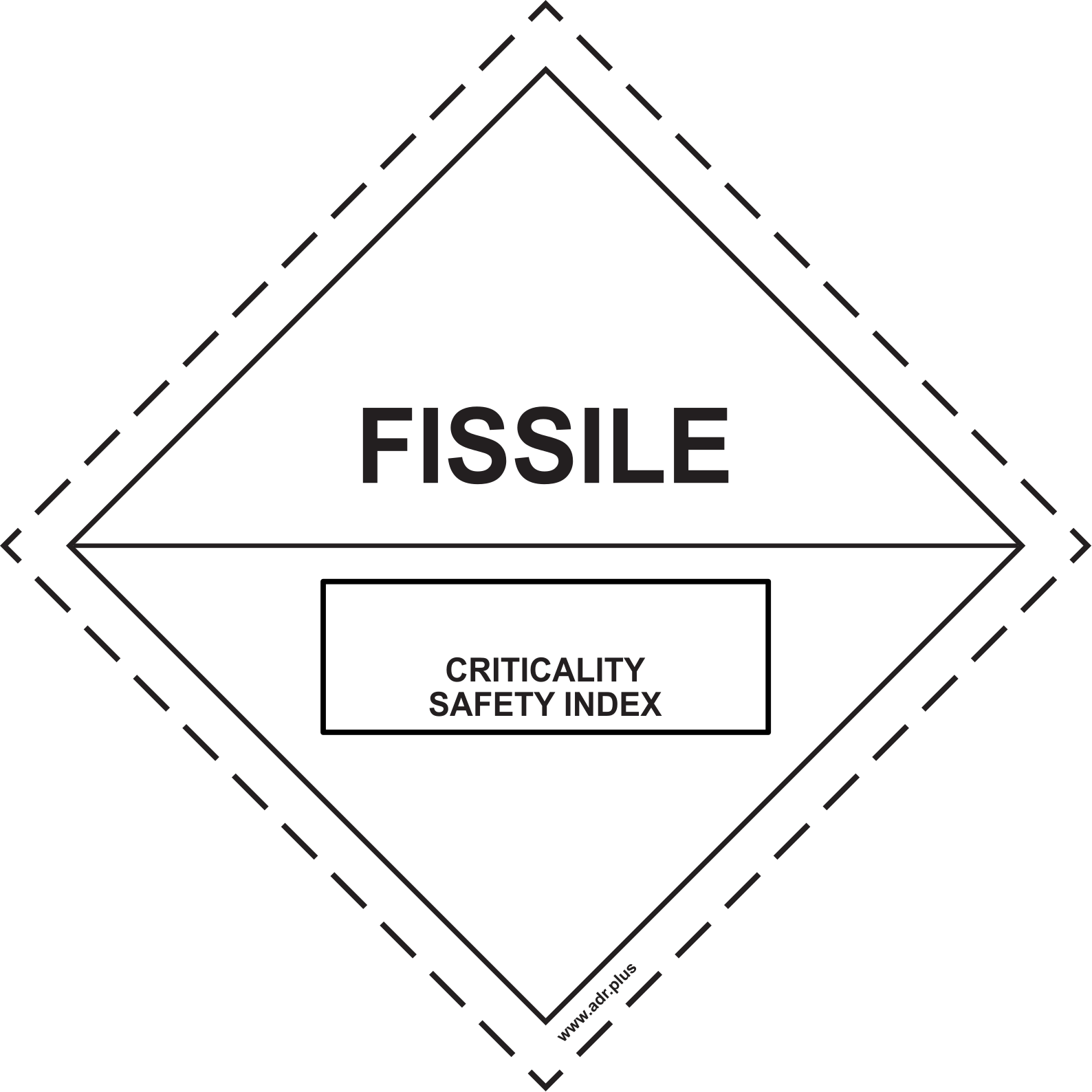
Fissile material (2.2.7.1.3) — U-233, U-235, Pu-239, Pu-241. The exceptions are listed in 2.2.7.2.3.5. Fissile consignments carry an additional Criticality Safety Index (CSI) beside the TI, use Model 7E labels (5.2.2.1.11.1), and follow stricter stowage rules.
Transport document extras (5.4.1.2.5). radionuclide name or symbol, physical and chemical form, activity in becquerel, package category, Transport Index, fissile mass and CSI where applicable, competent authority approval reference if the package design requires it.
Common mistake — treating an excepted package (e.g. UN 2910, RADIOACTIVE MATERIAL, EXCEPTED PACKAGE - LIMITED QUANTITY OF MATERIAL) as non-regulated. It still carries the UN number and the consignor or consignee identification on the packaging (5.1.5.4.1), and the UN number with both addresses on the transport document (5.1.5.4.2) — but no class 7 label. Its contents must stay inside the activity limits of Table 2.2.7.2.4.1.2, with a surface dose rate of not more than 5 μSv/h.
References — ADR 2025 2.2.7 (classification), 5.1.5 (general provisions for class 7), 5.2.1.7 (package marking), 5.4.1.2.5 (transport document entries), 6.4 (package design), 7.5.11 CV33 (vehicle stowage).