
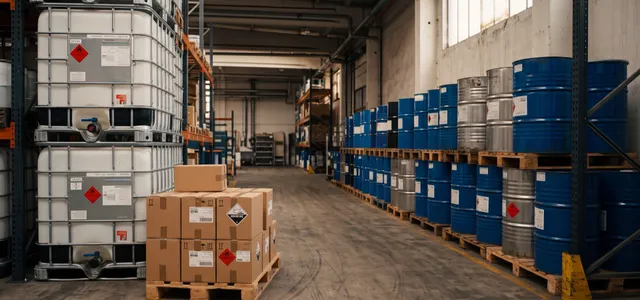
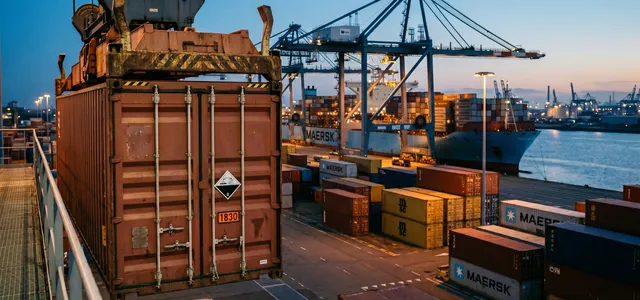




ADR separates training into several layers, each aimed at a different role. A driver’s ADR certificate does not substitute for the training of a shipping clerk, a DGSA’s certificate does not substitute for the driver’s, and 1.10.2 security training is on top of both.
1.3 — general and function-specific training for everyone involved. Any person whose duties concern dangerous-goods transport — consignor, packer, filler, loader, unloader, carrier, shipping clerk — must receive training matching the demands of that function (1.3.1). For the vehicle crew, Chapter 8.2 applies instead of Chapter 1.3 (1.3.1, Note 2), while a driver without an 8.2.1 certificate is nevertheless trained under Chapter 1.3 (8.2.3). Three components.
- General awareness — the transport regulations, why they exist, class system, labelling basics
- Function-specific — the rules governing the person’s own tasks (packaging for a packer, vehicle checks for a loader, documentation for a clerk)
- Safety — hazard recognition, personal protection, emergency procedures
Training is periodically supplemented with refresher training to take account of changes in the regulations (1.3.2.4). Records are kept by the employer and made available to the employee or the competent authority on request. The retention period is the one set by the competent authority, and the records are verified when a new employment begins (1.3.3).
1.10.2 — security training. On top of 1.3, each person receives security training covering awareness of security risks, recognition of those risks, methods of reducing them, and actions during a security incident. For high-consequence dangerous goods listed in 1.10.3.1.2, training depth increases and the security plan of 1.10.3.2 is in place at enterprise level.
8.2 — driver ADR certificate. See the dedicated card on driver certification. A driver ADR certificate does not cover 1.3 training of other staff.
1.8.3.7 — DGSA certificate. The safety adviser holds a competent-authority-issued certificate obtained after training and an examination (1.8.3.7, 1.8.3.8). It is valid for five years and is extended for five years at a time if the holder passes a renewal examination during the year before expiry (1.8.3.16.1).
Loader. ADR has no separate training section for the loader — the loader is covered by the function-specific training of 1.3.2.2, matched to what the job actually involves. The substantive duties sit elsewhere — 7.5.1.2 bars loading where an examination of the documents or a visual inspection of the vehicle, container or tank shows non-compliance, and 1.4.3.1.1 sets out the loader’s own checklist.
Class-specific content. Work with Class 1 explosives is covered by the function-specific training of 1.3.2.2, matched to the class. For Class 7 radioactive material ADR points to a separate training requirement in 1.7.2.5 (1.3.1, Note 3).
Records and audits. Among the DGSA’s duties (1.8.3.3) is monitoring the proper training of the undertaking’s employees and the keeping of training records, alongside the annual report on the undertaking’s dangerous-goods activities. Competent authorities audit these records during enterprise inspections.
Common mistake — the warehouse team is trained in December, the driver holds a current ADR certificate, and management assumes everyone is covered. The consignor (shipping clerk) and the packer still need 1.3 training matched to their tasks — different content from loader or driver training — and their records must show it.
References — ADR 2025 1.3.1 (scope), 1.3.2 (content), 1.3.2.4 (refresher training), 1.3.3 (records), 1.7.2.5 (Class 7 training), 1.8.3.7 and 1.8.3.16.1 (DGSA certificate and its validity), 1.10.2 (security training), 7.5.1.2 (checks before loading), 8.2 (driver certificate), 8.2.3 (training of persons other than certificated drivers).