
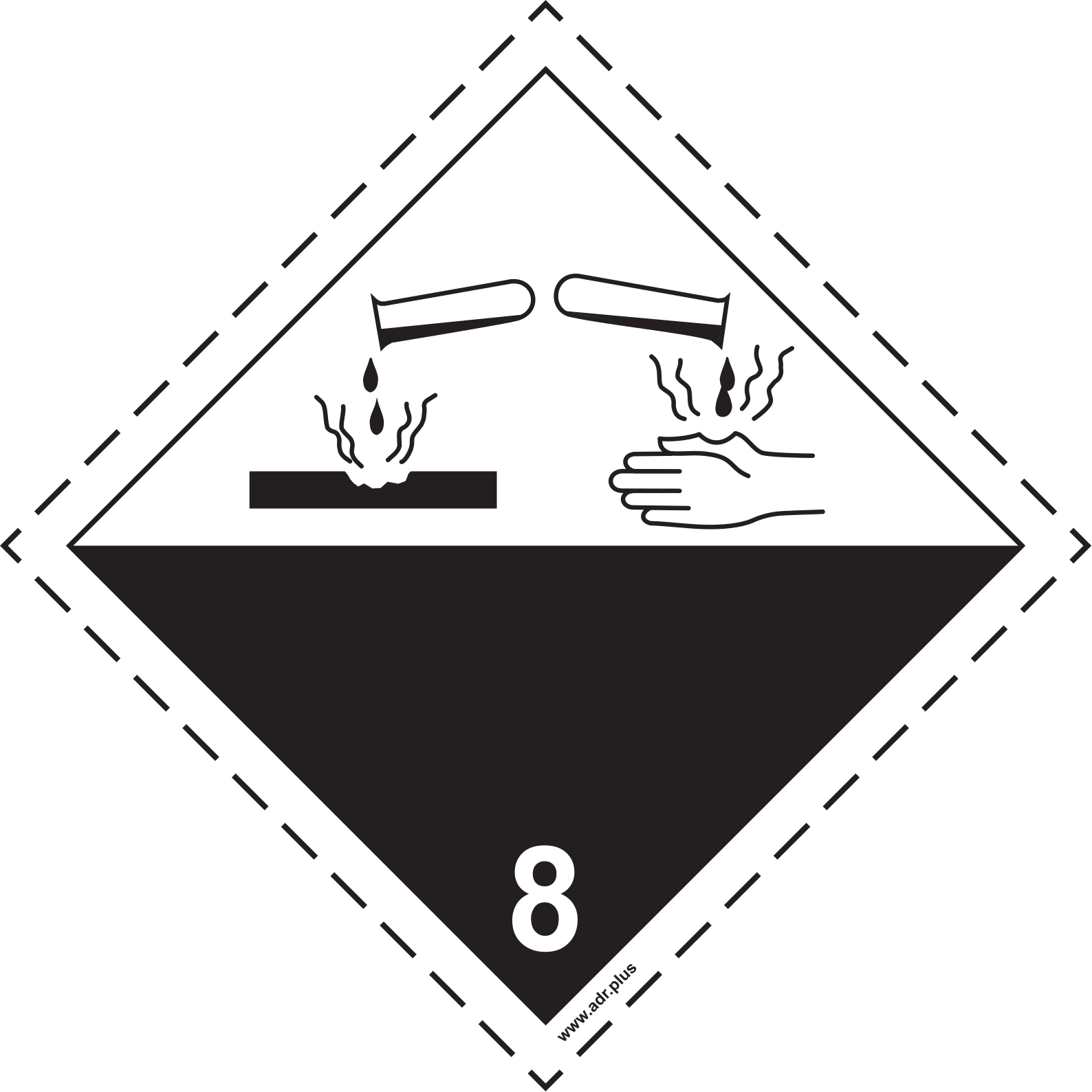


Most people who work with ADR paperwork have seen “PG II” or “PG III” printed next to a UN number and treated it as a label to copy from one document to the next, without asking what it’s actually measuring. That’s understandable — but packing group is one of the few pieces of classification data that changes real, physical requirements — which packaging you’re allowed to use, how much you can carry under simplified rules, and how the substance is treated at every later stage of the journey.
What a packing group actually measures
A packing group is a ranking of the degree of danger within a hazard class, not a separate hazard in itself. Most — though not all — of the 13 ADR classes use packing groups to distinguish between substances that share a hazard type but differ sharply in severity. There are three groups.
- Packing Group I — substances presenting the greatest danger within their class.
- Packing Group II — substances presenting a medium danger.
- Packing Group III — substances presenting the lowest danger that still requires ADR classification.
The exact numerical criteria that separate the three groups differ by class. For flammable liquids (Class 3), for example, packing group is largely driven by flash point and boiling point. For toxic substances (Class 6.1) — by measures of acute toxicity. The precise cut-off values are set out in the class-specific criteria of ADR Part 2 and are not reproduced in full here — treat any specific threshold mentioned on this page as illustrative, and confirm against the current ADR text or with your DGSA before making a classification decision.
Not every class uses packing groups. Class 1 (explosives), Class 2 (gases), Class 5.2 (organic peroxides), Class 6.2 (infectious substances) and Class 7 (radioactive material) use their own classification systems instead, and self-reactive substances of Class 4.1 sit outside the scheme too — divisions, groups and categories suited to how those hazards actually behave, rather than a three-tier severity scale. Articles, as opposed to substances, are not assigned to packing groups at all.
Why packing group changes what you can use
Packaging isn’t just a container — it’s tested and certified for a specific level of performance, and that performance level is tied directly to packing group. A drum, jerrican or IBC that has passed testing for Packing Group II is certified for use with PG II and PG III substances of the relevant type, but not for PG I, which demands a more rigorous performance standard. This is why the UN packaging code marked on a certified package includes a packing group indicator — it tells you, at a glance, the most demanding group that packaging is approved for.
Getting this wrong in the safe direction (using PG I-rated packaging for a PG III substance) isn’t a violation — over-specification is permitted, as long as the packaging itself stays within the packing instruction listed for the substance in Table A. Getting it wrong the other way around is a genuine compliance failure, and one that inspectors check for specifically, because it means the packaging hasn’t been proven to contain the substance under the drop, stacking and pressure tests appropriate to its actual danger level.
Packing group and the exemption thresholds
Packing group also feeds directly into how much of a substance you can carry under simplified regimes. Limited quantity thresholds, excepted quantity codes and the transport category used in the 1.1.3.6 exemption calculation are all set with packing group as one of the inputs — a PG I substance is, unsurprisingly, allowed in much smaller “no special training or full documentation needed” quantities than the equivalent PG III substance. If you’re working out whether a load qualifies for any of ADR’s lighter-touch regimes, packing group is one of the first things to establish, not an afterthought.
A practical example
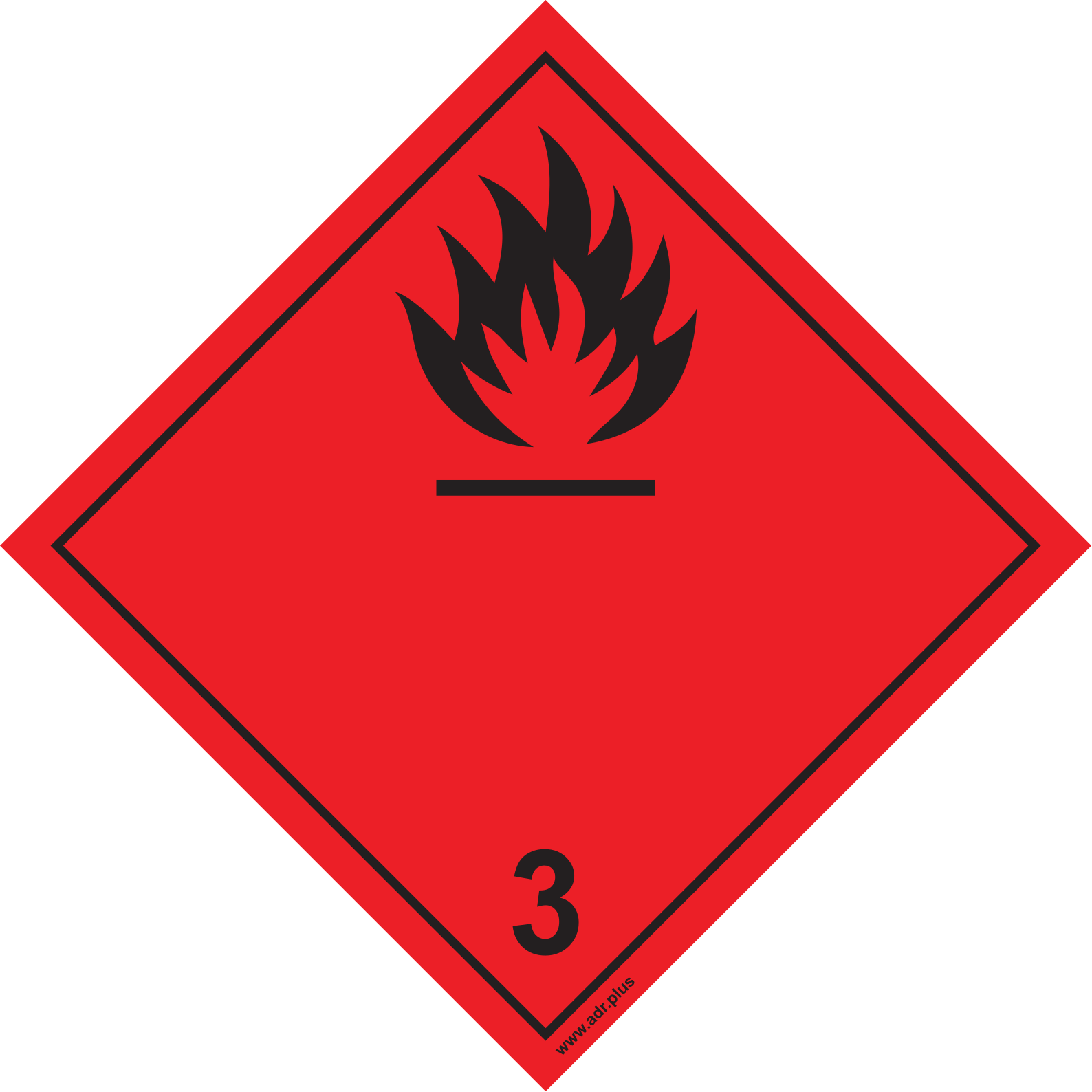
Take three common liquids that all sit in Class 3, flammable liquids, to see how the same hazard class produces very different handling requirements.
| Packing group | Typical criteria (flammable liquids) | Example |
|---|---|---|
| PG I | Initial boiling point ≤ 35 °C — extreme danger | Certain low-boiling solvents |
| PG II | Flash point < 23 °C, boiling point > 35 °C | Petrol |
| PG III | Flash point 23–60 °C, boiling point > 35 °C | Diesel, kerosene |
All three are Class 3. All three need an orange plate, hazard diamonds, and a transport document. But the packaging performance standard and the quantity you can move under exemptions differ between them — petrol in PG II gets a 1-litre limited quantity cap where diesel in PG III gets 5 litres — which is exactly why the packing group field on a UN number lookup is worth reading properly, not skipping.
Where to check the actual figure
If you need the packing group for a specific substance rather than a general rule of thumb, the fastest route is a direct UN number lookup rather than trying to recall or derive it from first principles — get the packing group, transport category and label requirements for a substance in one place, sourced against the current UN number data set, and confirm anything safety-critical with your DGSA before it changes how a load is packed or dispatched.