





Vehicles that carry dangerous goods on ADR routes are classified into categories by the kind of load they are certified for. Each category sets specific construction, fire-prevention and electrical-safety requirements — detailed in chapters 9.2 (construction of vehicles), 9.3 (EX/II and EX/III), 9.4 (bodies of vehicles carrying packages), 9.5 (bodies of vehicles carrying solids in bulk), 9.6 (temperature-controlled substances), 9.7 (fixed tanks, battery-vehicles, demountable tanks over 1 m³ and tank-containers over 3 m³ — EX/III, FL and AT) and 9.8 (MEMU).
Categories (9.1.1.2).
- EX/II — vehicles for the carriage of class 1 explosive substances and articles. The body is closed or sheeted (9.3.3), and the permitted net explosive mass per transport unit is lower than for EX/III (7.5.5.2.1)
- EX/III — vehicles for class 1, closed body of heat- and flame-resistant material at least 10 mm thick, driver’s compartment separated from the load compartment by a continuous wall (9.3.4)
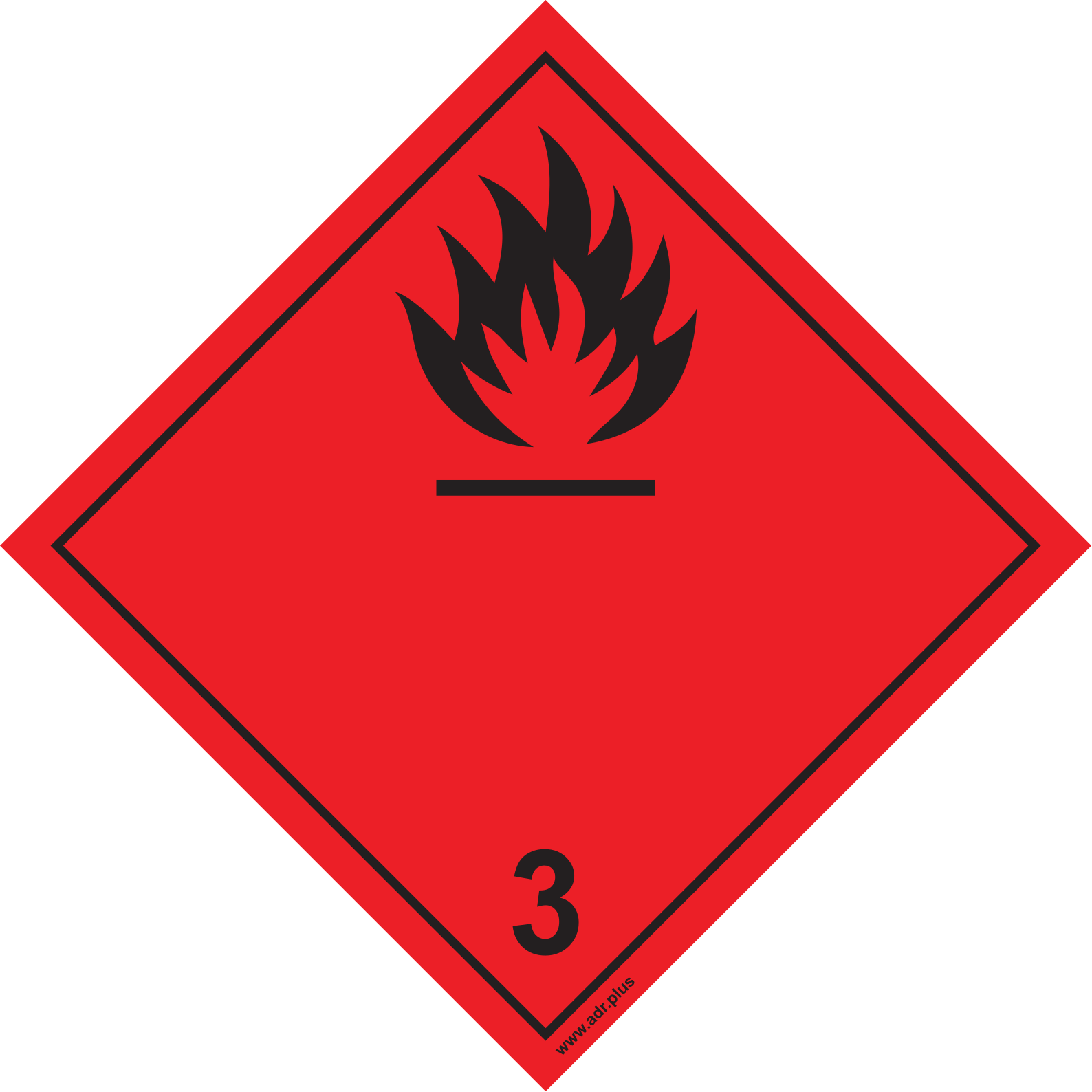
- FL — vehicles for liquids with a flash-point of not more than 60 °C (except diesel, gas oil and light heating oil, UN 1202, with a flash-point as specified in EN 590), for flammable gases, and for hydrogen peroxide or its aqueous solution with more than 60 % hydrogen peroxide (UN 2015) — in fixed or demountable tanks over 1 m³, or tank-containers, portable tanks and MEGCs of more than 3 m³ each, plus battery-vehicles over 1 m³ for flammable gases
- AT — vehicles other than EX/III, FL or MEMU intended for dangerous goods in tanks of the same capacities. The broadest category, covering tanks of corrosives, oxidizers, non-flammable toxics and refrigerated liquefied gases
- MEMU — Mobile Explosives Manufacturing Units for manufacturing and charging explosives from dangerous goods that are not explosives (1.2.1)
Certificate of approval (9.1.3). EX/II, EX/III, FL and AT vehicles and MEMUs carry an ADR Certificate of Approval issued by the competent authority of the country of registration (9.1.3.1). Its validity expires no later than one year after the technical inspection preceding its issue, and the vehicle may not be used for dangerous goods after the nominal expiry date until a valid certificate is in place (9.1.3.4). The annual technical inspection is required by 9.1.2.3.
What does not need an EX/FL/AT certificate. No certificate of approval is required for vehicles other than EX/II, EX/III, FL, AT and MEMU, apart from what the general safety regulations of the country of origin demand (NOTE to 9.1.2). For such vehicles only two provisions of chapter 9.2 apply — braking equipment under 9.2.3.1.1 and the speed limitation device under 9.2.6 (9.2.1.1). Fire extinguishers on board come from 8.1.4, not from chapter 9.
Key construction differences.
- EX/II vs EX/III. EX/II is closed or sheeted with sheeting resistant to tearing and not readily flammable. EX/III must be closed, with a body of heat- and flame-resistant material at least 10 mm thick. Both keep the engine forward of the load compartment and the exhaust routed so that the inner surface of the load compartment stays below 80 °C (9.3.5, 9.3.6). The load-compartment electrical installation is at least IP 54, and IP 65 for compatibility group J (9.3.7.2)
- FL. Electrical equipment in hazardous areas must suit those areas per IEC 60079 (9.7.8.2). An automatic fire-suppression system for the engine compartment and thermal protection against fire spreading from the wheels are required for FL vehicles carrying liquefied and compressed flammable gases with a classification code including
Fand for those carrying packing group I or II flammable liquids (9.7.9) - AT. Baseline tank vehicle — without the 9.7.9 additions and without the FL electrical regime
Common mistake — loading a class 3 flammable liquid with a flash-point of 50 °C into an AT tank because “the tank is cleared for liquids”. AT is not FL — a tank vehicle for liquids with a flash-point of not more than 60 °C is an FL vehicle. The one exception written into the definition is diesel, gas oil and light heating oil of UN 1202 with a flash-point as specified in EN 590:2013 + A1:2017 — that is why fuel tankers for diesel are AT.
References — ADR 2025 9.1.1.2 (definitions and categories), 9.1.2 (approval), 9.1.3 (certificate of approval), 9.2.1.1 (which vehicles chapter 9.2 applies to), 9.3 (EX/II and EX/III), 9.7 (tanks — EX/III, FL and AT), 7.5.5.2.1 (explosive mass limits per transport unit).