




Every driver who has followed a tanker down a motorway has seen it — a rectangular orange plate on the back of the vehicle, split into two numbers stacked on top of each other. Most people never learn what those numbers mean — but for anyone who consigns, loads or drives dangerous goods, reading an orange plate correctly is a basic, everyday skill.
What the two numbers mean
The plate carries two pieces of information, always in the same layout.
The top number is the hazard identification number, sometimes called the Kemler code. It describes the nature of the danger — not the substance itself, but the type and intensity of the hazard. The bottom number is the UN number — a four-digit code that identifies the specific substance or article, drawn from the UN Model Regulations list that ADR itself is built on.
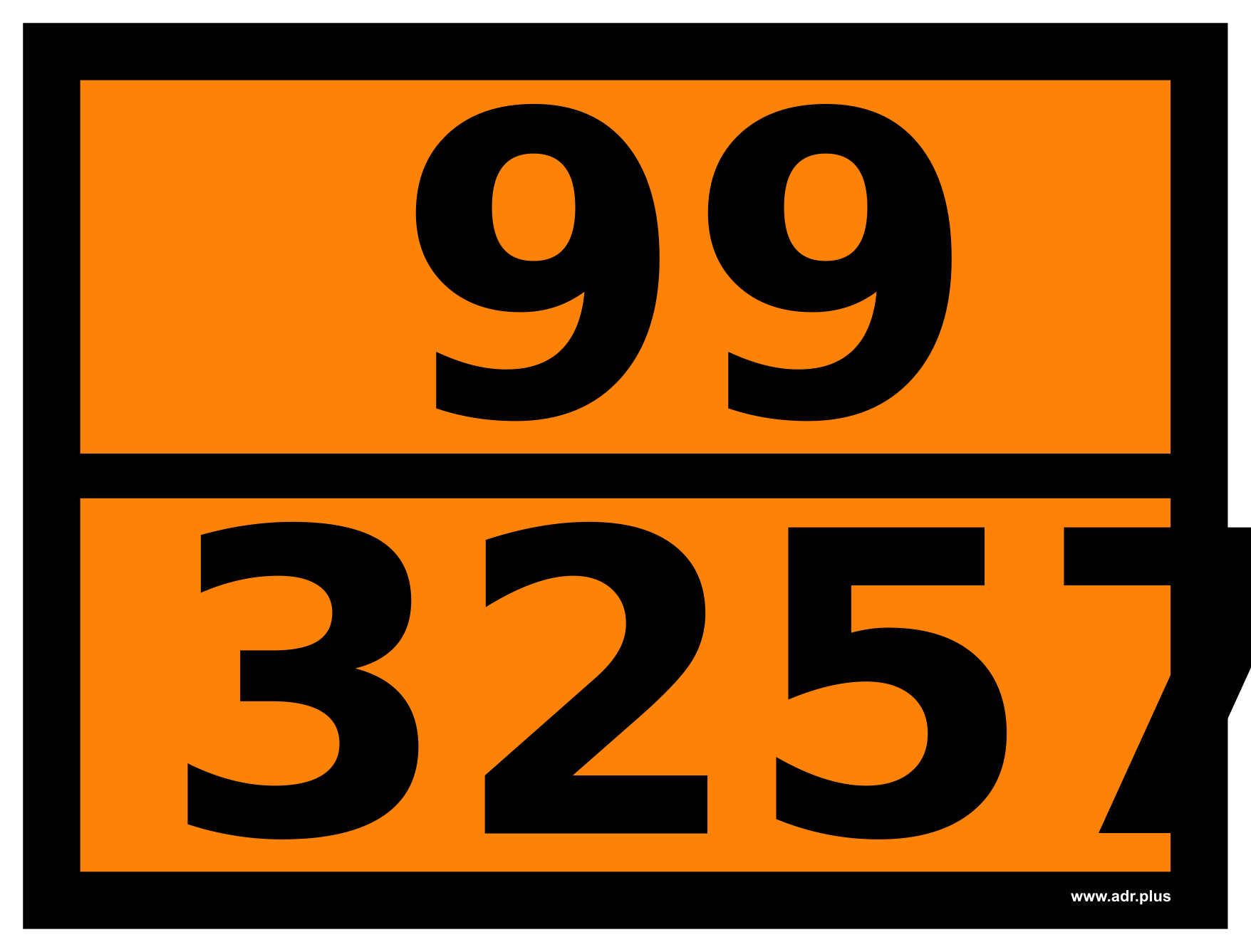
Put together, a plate reading 33 / 1203 tells a trained reader two things at once — “33” signals a highly flammable liquid, and “1203” is the UN number for petrol. Someone who knows the code doesn’t need to open the tank to know broadly what they’re dealing with — which is exactly the point of the system. Emergency responders read these plates first, before anything else, when they arrive at an incident.
How to read the hazard identification number
The Kemler code is built from digits that each carry meaning on their own, and the combination changes the reading.
- A repeated digit generally means an intensified form of that hazard — for example, 33 signals a liquid that is highly flammable, rather than just flammable.
- A leading X means the substance reacts dangerously with water — in an emergency, water may only be used with the approval of experts.
- 0 as a second digit means the hazard is adequately described by the first digit alone — the zero simply completes the code.
This is general, widely used guidance rather than an exhaustive table. The full hazard identification number table runs to dozens of combinations and depends on the exact substance entry — always check the current ADR Table A entry for the UN number in question, or confirm with your DGSA, before relying on a code in an operational decision.
Frequent codes on the road

Verified against the code list of 5.3.2.3.2.
- 30 — flammable liquid, flash-point between 23 °C and 60 °C inclusive. The zero shows that a single figure describes the hazard adequately
- 33 — highly flammable liquid, flash-point below 23 °C. The doubled digit intensifies the one hazard, it does not add a second
- 80 — corrosive or slightly corrosive substance
- 88 — highly corrosive substance
- 86 — corrosive or slightly corrosive substance, toxic. Two different digits — two distinct hazards
- X before the code — the substance reacts dangerously with water. Water may be used only by approval of experts (5.3.2.3.1)
When the plate is required
Plain orange plates (no numbers) are the default for most dangerous goods vehicles carrying packaged goods. Plates showing both the hazard identification number and the UN number become mandatory for tanks, tank-containers, and bulk transport — whenever a hazard identification number is listed for the substance in column (20) of Table A. On a multi-compartment tank carrying different substances, each compartment gets its own numbered plate on the side. For bulk transport the numbered plates are displayed for each substance carried in bulk. A single vehicle carrying several different dangerous substances in packages generally displays plain plates rather than substance-specific ones, because no single Kemler/UN pair could describe a mixed load accurately.
Hazard diamonds — labelling at package level
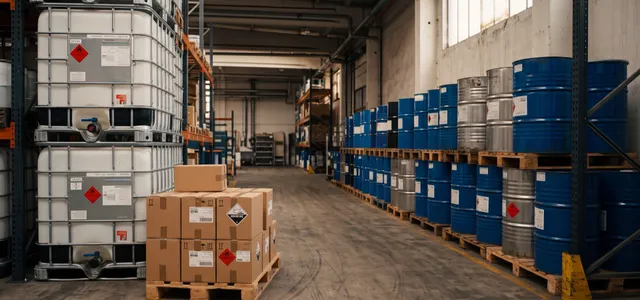
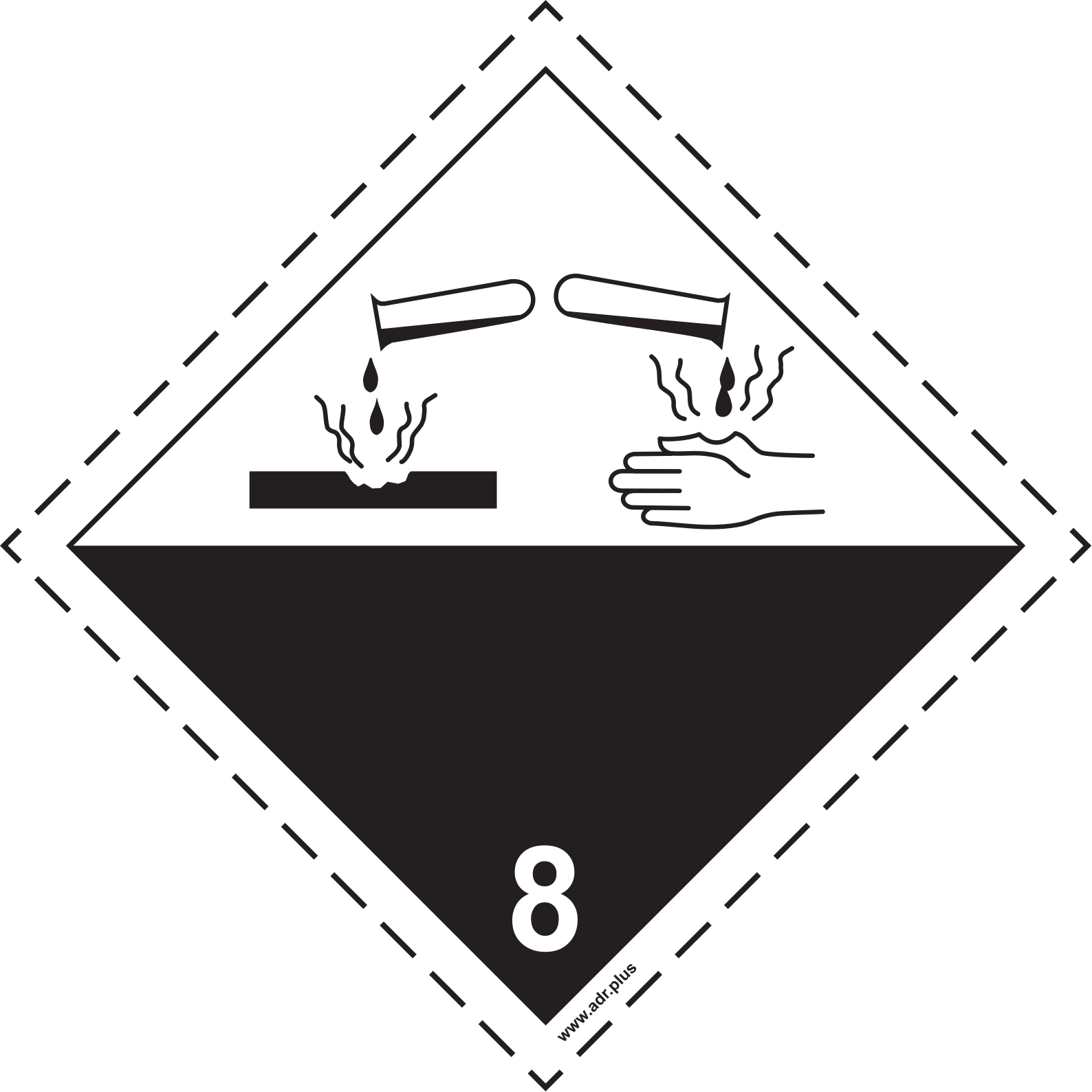
Where the orange plate speaks for the vehicle, the diamond-shaped hazard label speaks for the package. Each of the 13 ADR classes has its own label or labels — a coloured diamond with a pictogram (flame, skull, corrosion, radiation trefoil, and so on) and, for most classes, the class number printed in the bottom corner.
A single package can carry more than one label if it presents more than one hazard — for instance, a substance that is both flammable and toxic. The primary and subsidiary hazard labels are displayed next to each other. Labels must be placed on two opposite sides for intermediate bulk containers over 450 litres and for large packagings, and always be clearly visible, not obscured by other markings, straps, or stacking.
Package marking beyond the diamond
Besides the hazard label, ADR requires the UN number, preceded by the letters “UN”, to be marked clearly and durably on every package (not just on accompanying paperwork). The proper shipping name — the official ADR name, which is not always the same as the commercial or trade name — belongs in the transport document. On the package itself it is required in addition to the UN number only where ADR says so — for goods of Class 1 (5.2.1.5), for packages of Class 7 radioactive material (5.2.1.7) and on refillable receptacles for gases of Class 2 (5.2.1.6).
Certified packagings and IBCs (intermediate bulk containers) also carry a UN packaging code — a short alphanumeric string that certifies the packaging design has passed the relevant performance tests for the packing group and substance type it’s rated for. That code is a manufacturer’s certification, not something a shipper adds — but it’s worth checking before you use a package for a different, more demanding substance than the one it was tested for.
A short checklist before the vehicle leaves the yard
Before dispatch, it’s worth running through the basics.
- Does the orange plate on the vehicle match what’s actually loaded — plain plates for mixed package loads, substance-specific plates for single-substance tanks and bulk?
- Is every package marked with its UN number — and, for Class 1 and Class 7 goods, the proper shipping name — not just an internal product code?
- Are hazard diamonds present, correctly oriented, and unobstructed on every package that needs them?
- Where a package presents more than one hazard, are both the primary and subsidiary labels shown?
None of this replaces classification work — labelling only reflects a classification decision that should already have been made correctly upstream. But a driver or loader who can read a plate or a diamond at a glance is the last line of defence against a mislabelled or misloaded vehicle leaving the yard. Getting comfortable with the numbers is one of the fastest ways to build real day-to-day confidence with ADR.