



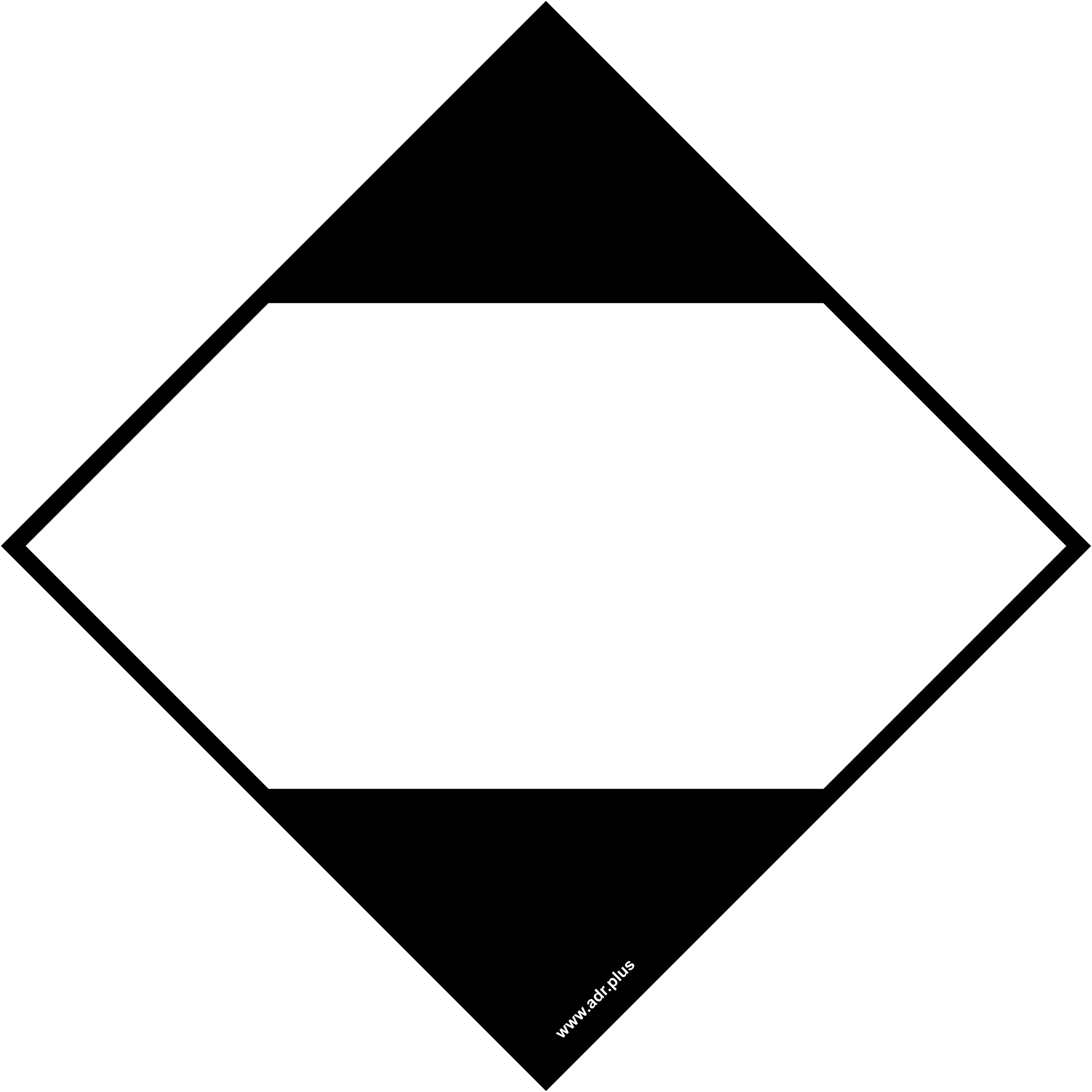
The limited quantity label — ADR itself calls it a mark — is a square set at an angle of 45° (diamond-shaped), with the top and bottom portions and the surrounding line black and the centre white or a suitable contrasting background (ADR 3.4.7.1). It identifies a package, overpack or transport unit carrying dangerous goods under the Chapter 3.4 relief, and on packages it takes the place of the usual hazard communication — of the labelling chapter 5.2 only the orientation-arrow provision 5.2.1.10 continues to apply, so an LQ package needs neither danger labels nor the UN number marking (ADR 3.4.1).
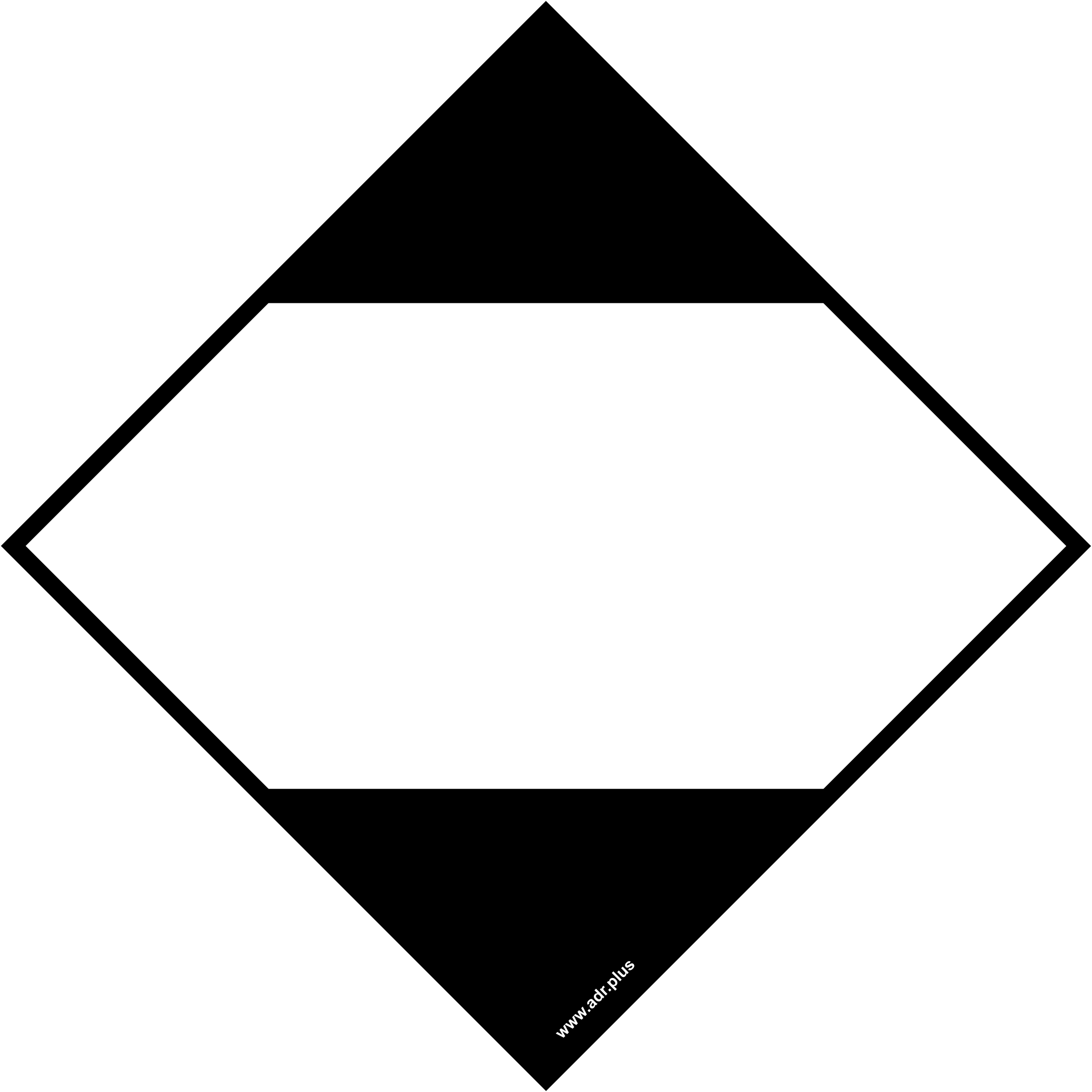
Size and form on packages.
- Minimum 100 × 100 mm, with the line forming the diamond at least 2 mm wide (ADR 3.4.7.1)
- Readily visible, legible and able to withstand open weather exposure without a substantial reduction in effectiveness (ADR 3.4.7.1)
- If the size of the package so requires, the mark may be reduced to not less than 50 × 50 mm with the line reduced to 1 mm, provided it remains clearly visible (ADR 3.4.7.2)
Plain mark or the “Y” mark. Packages packed in conformity with Part 3, Chapter 4 of the ICAO Technical Instructions — the air-transport limited quantities — may instead bear the same diamond with the symbol “Y” placed in the centre (ADR 3.4.8.1). A package bearing the Y mark is deemed to meet the ADR limited-quantity provisions and does not need the plain mark as well (ADR 3.4.9), so the Y variant is the practical choice when the same package will also travel by air. Its dimensions and reduction rules are the same, and the “Y” must stay in approximate proportion when the mark is reduced (ADR 3.4.8.2). For road-only carriage, the plain mark of 3.4.7 is the standard.
On overpacks. Unless the marks representative of all dangerous goods in the overpack are visible from outside, the overpack must be marked with the word “OVERPACK” in lettering at least 12 mm high, plus the marks required by Chapter 3.4 (ADR 3.4.11).
On transport units and containers. Transport units with a maximum mass exceeding 12 tonnes carrying limited quantities must display the mark at the front and at the rear, and containers carried on such units are marked on all four sides (ADR 3.4.13). This is the same diamond enlarged to a minimum of 250 × 250 mm, and it must be removed or covered when no LQ goods are carried (ADR 3.4.15). The marking may be dispensed with when the total gross mass of LQ packages does not exceed 8 tonnes per transport unit (ADR 3.4.14). When the unit also carries other dangerous goods requiring orange-coloured plates, it may display the orange plates alone, or both markings (ADR 3.4.13).
What still goes on the package. Combination packagings whose inner packagings contain liquids also carry package orientation arrows on two opposite vertical sides (ADR 5.2.1.10.1), with exceptions such as inner packagings of not more than 120 ml packed with sufficient absorbent material, or hermetically sealed inner packagings of not more than 500 ml (ADR 5.2.1.10.2).
Common mistake — applying the LQ mark to packages that do not qualify — for example, when an inner packaging exceeds the Column 7a limit for its substance. The mark is a legal claim that Chapter 3.4 applies. The thresholds and packing conditions behind that claim are explained in ADR limited quantities.
Ready-printed LQ marks — self-adhesive 100 × 100 mm for packages and 250 × 250 mm for transport units — are available in the shop’s placards and labels category.
References — ADR 2025 3.4.7 (mark on packages), 3.4.8 (ICAO “Y” variant), 3.4.11 (overpacks), 3.4.13-3.4.15 (transport units).