
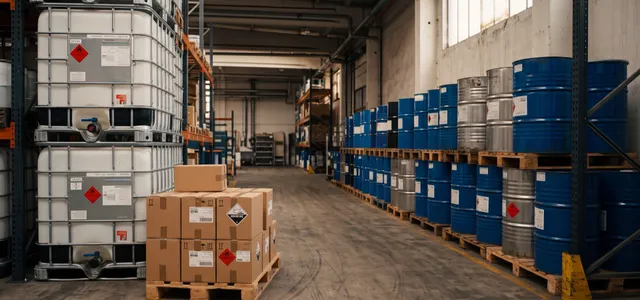



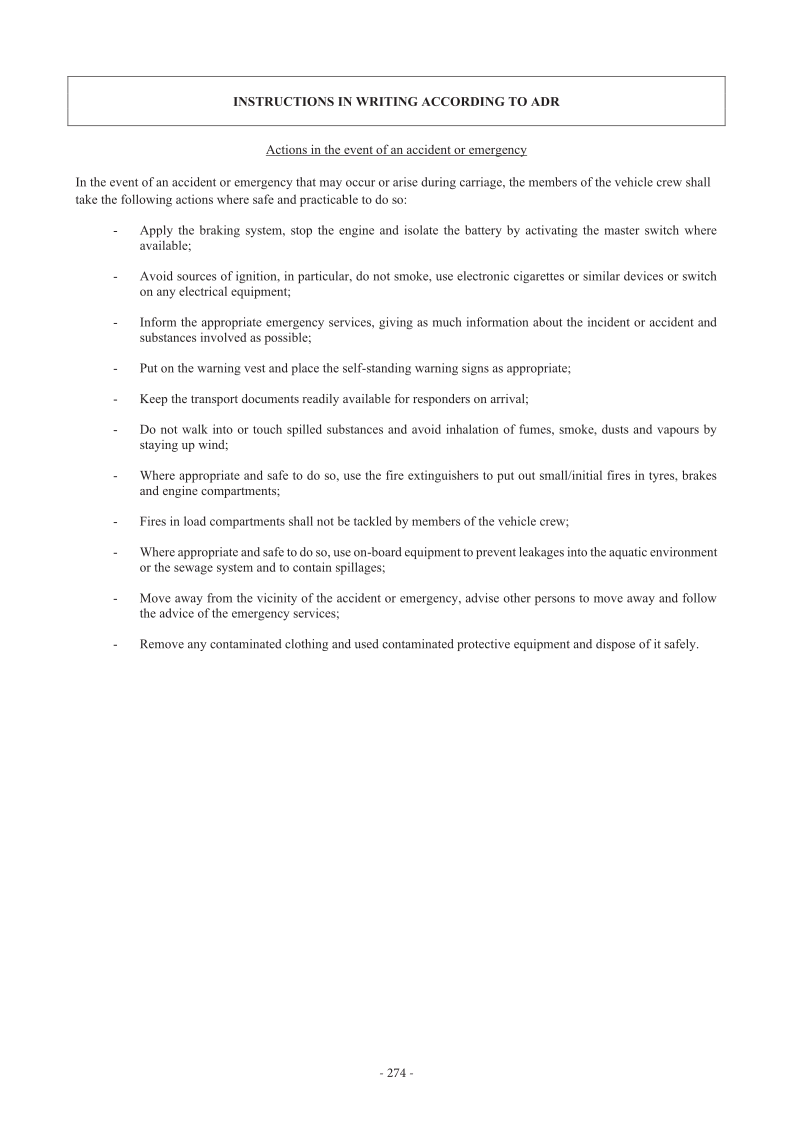
When you move dangerous goods, the vehicle has to be visibly marked so that emergency services know what’s on board. Two marking systems do the work — orange plates on the transport unit, and placards where ADR requires them.
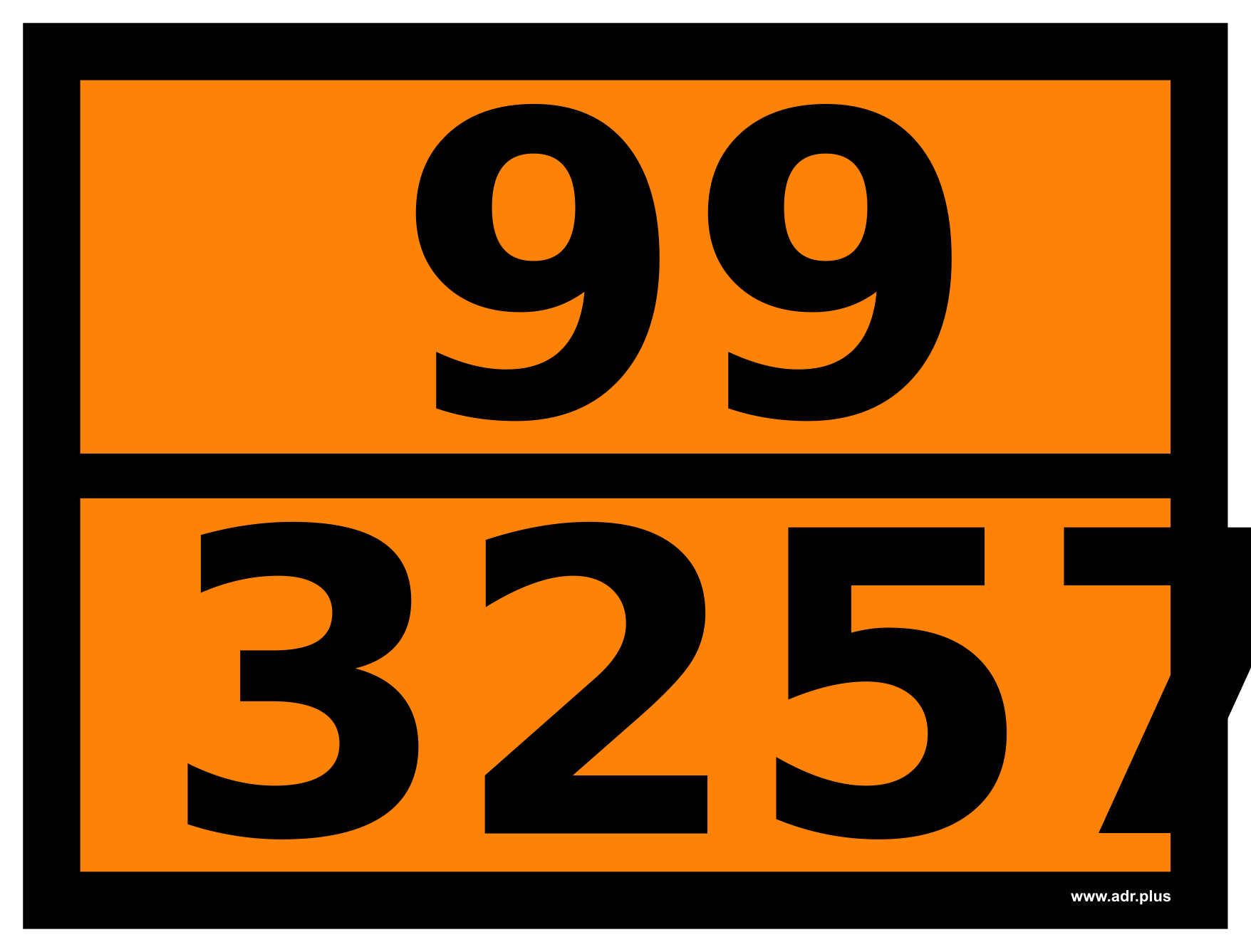
Orange plates — 400 × 300 mm, reflectorized, with a 15 mm black border. Every transport unit carrying dangerous goods displays two of them, set in a vertical plane at the front and at the rear, perpendicular to the longitudinal axis (5.3.2.1.1, 5.3.2.2.1). If you’re carrying packages only, plain orange is enough. For tanks or bulk loads you add two numbers — the hazard identification number on top (the one from Column 20 of Table A) and the UN number below.
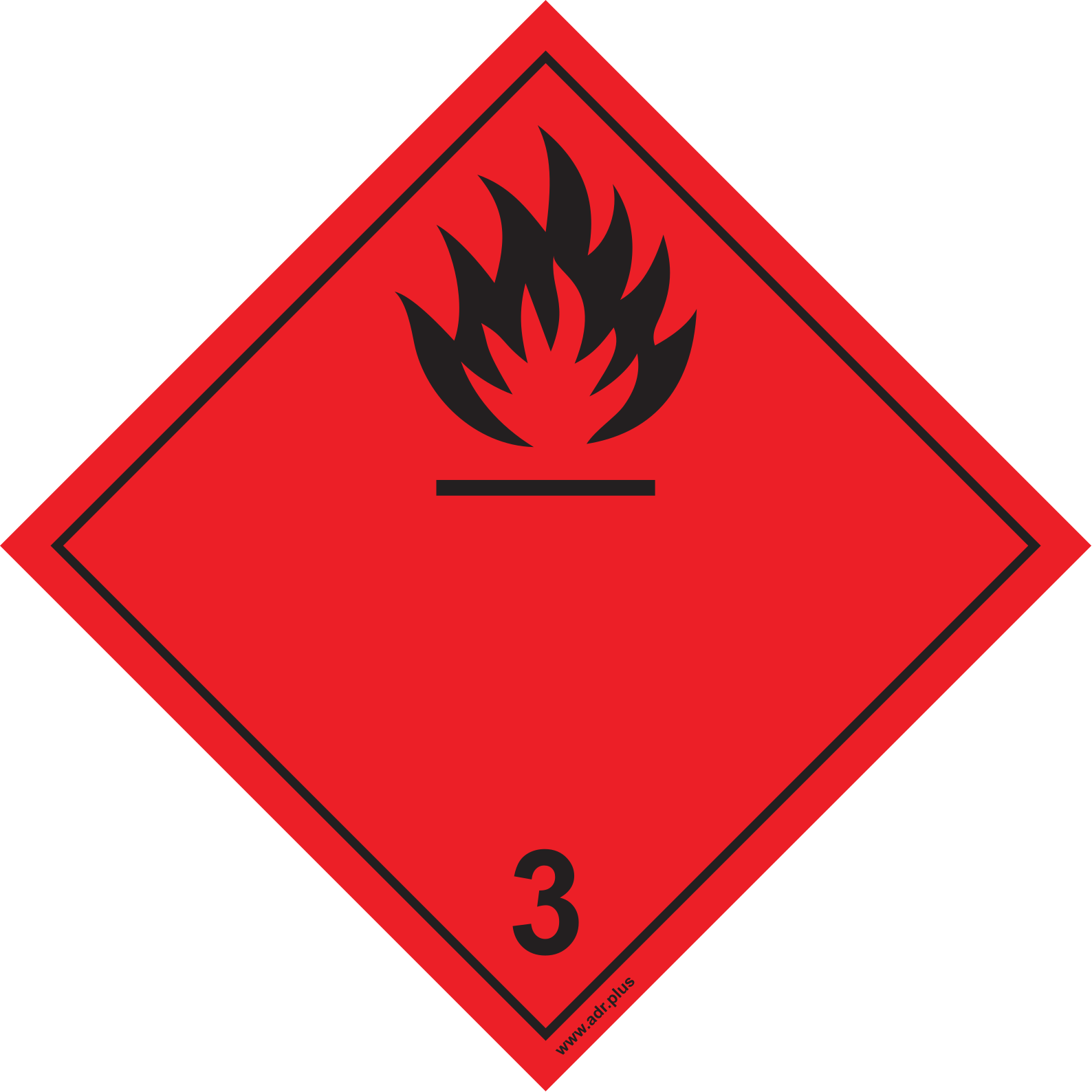
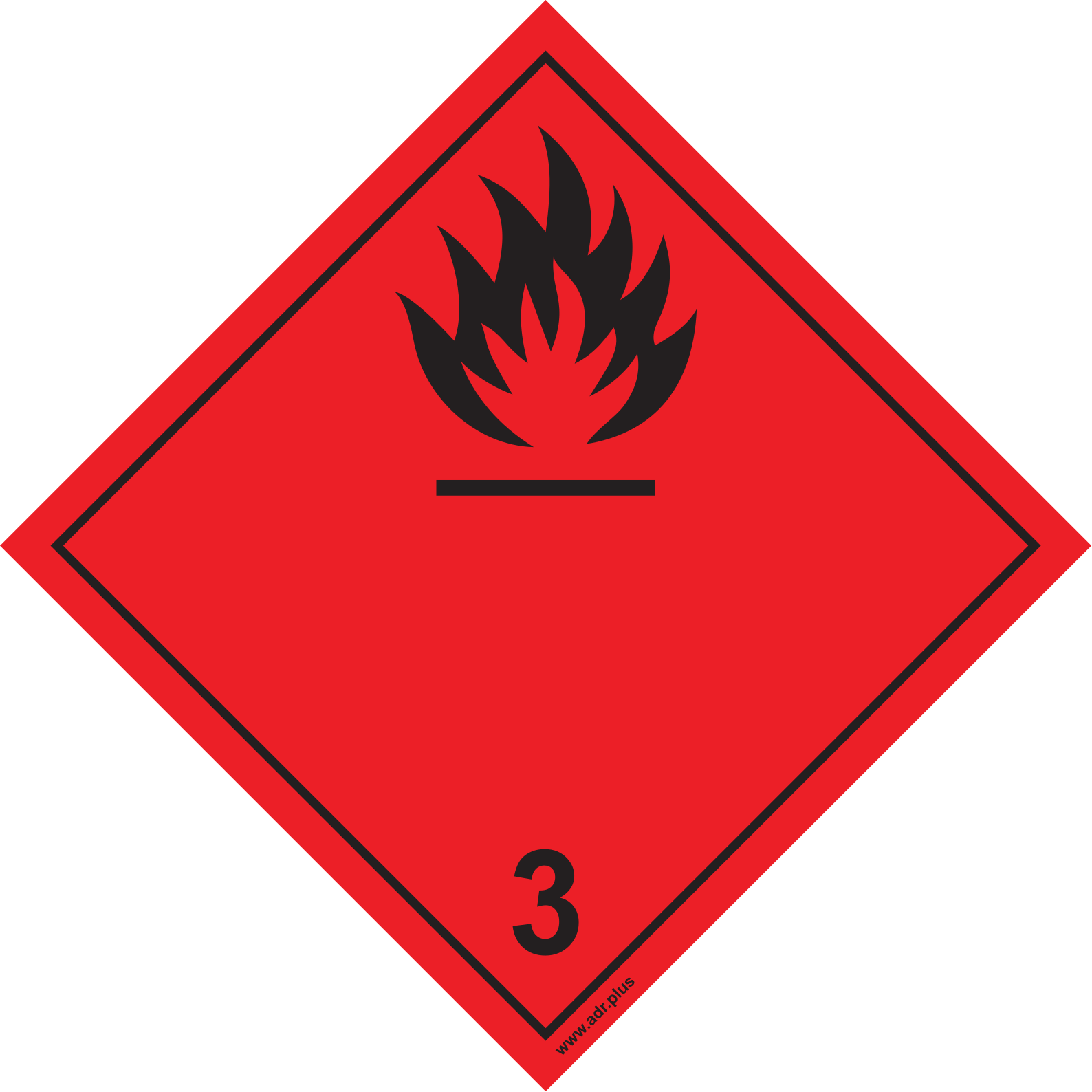
Placards — 250 × 250 mm class labels, larger versions of what’s on the packages. They go on both sides and each end of a container, bulk container, MEGC, tank-container or portable tank — two opposite sides for a flexible bulk container (5.3.1.2). On a tank-vehicle, a bulk-carrying vehicle or a battery-vehicle they go on both sides and the rear (5.3.1.4.1). Vehicles carrying packages need placards only for goods of Class 1 other than Division 1.4 Compatibility Group S, and for Class 7 radioactive material other than excepted packages (5.3.1.5). The placard matches the primary class of the substance (class 3 for flammable liquids, class 2.3 for toxic gases, and so on).
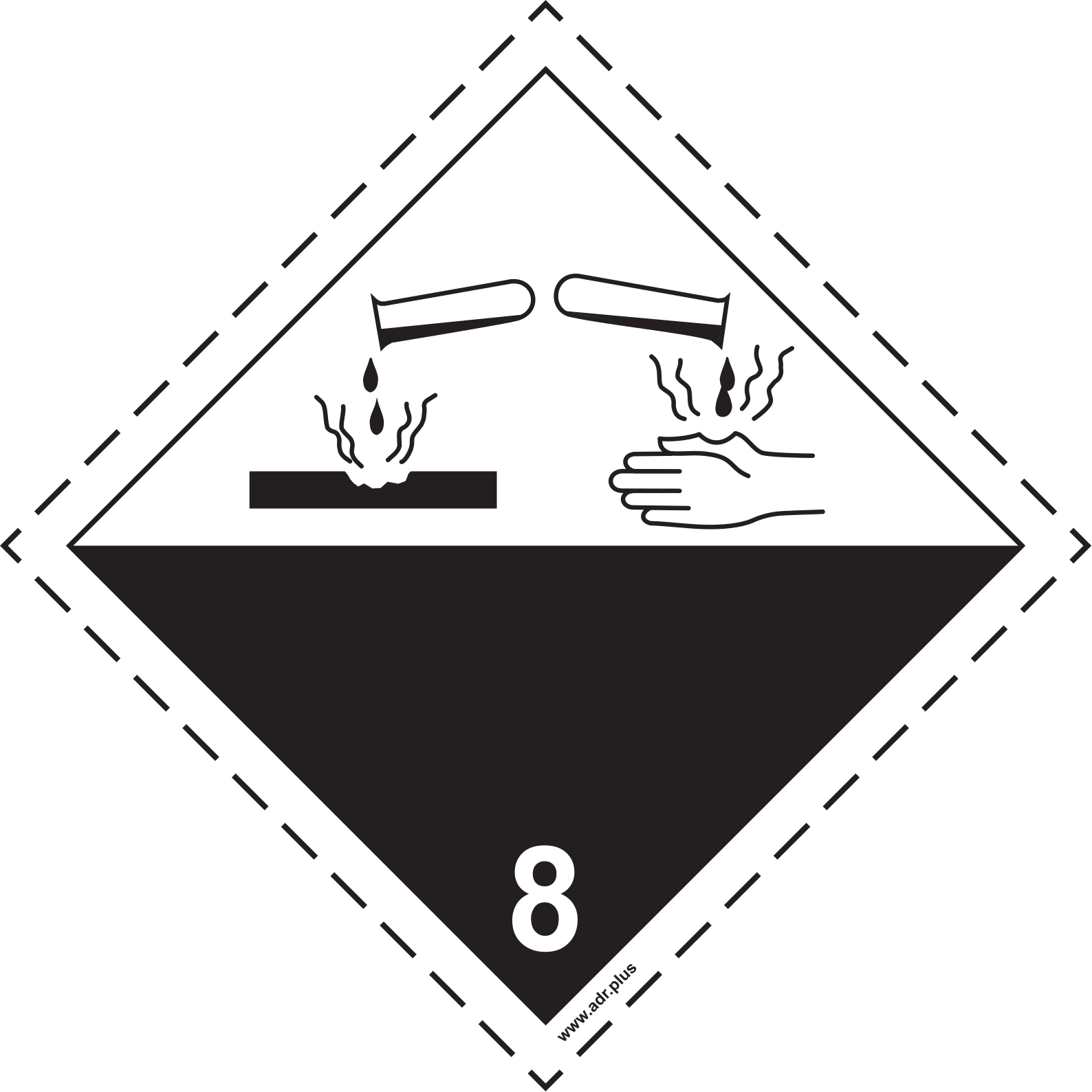
If the substance has a subsidiary risk — for example chlorine (UN 1017) is primarily 2.3 but also 5.1 and 8 — you place all three placards side by side.
One thing drivers often forget — the plates and placards stay on the vehicle during the empty return trip too, as long as there is any residue or vapour inside. They come off only after the tank or container is fully cleaned and documented.
References — ADR 2025 5.3.1.2 (containers and tank-containers), 5.3.1.4 (tank-vehicles and bulk), 5.3.1.5 (vehicles carrying packages of Class 1 and Class 7), 5.3.1.6 (empty uncleaned), 5.3.2.1.1 (orange plates on the transport unit), 5.3.2.2.1 (plate dimensions).