

A company shipping paint, batteries or gas cylinders for the first time usually asks one question — “which rules apply to us”. The answer depends on how the goods travel. Every mode of transport has its own rulebook, and each is binding on its own leg of the journey. The good news is that all the rulebooks are built the same way. The bad news is that the differences turn up exactly where the goods change mode.
Five rulebooks
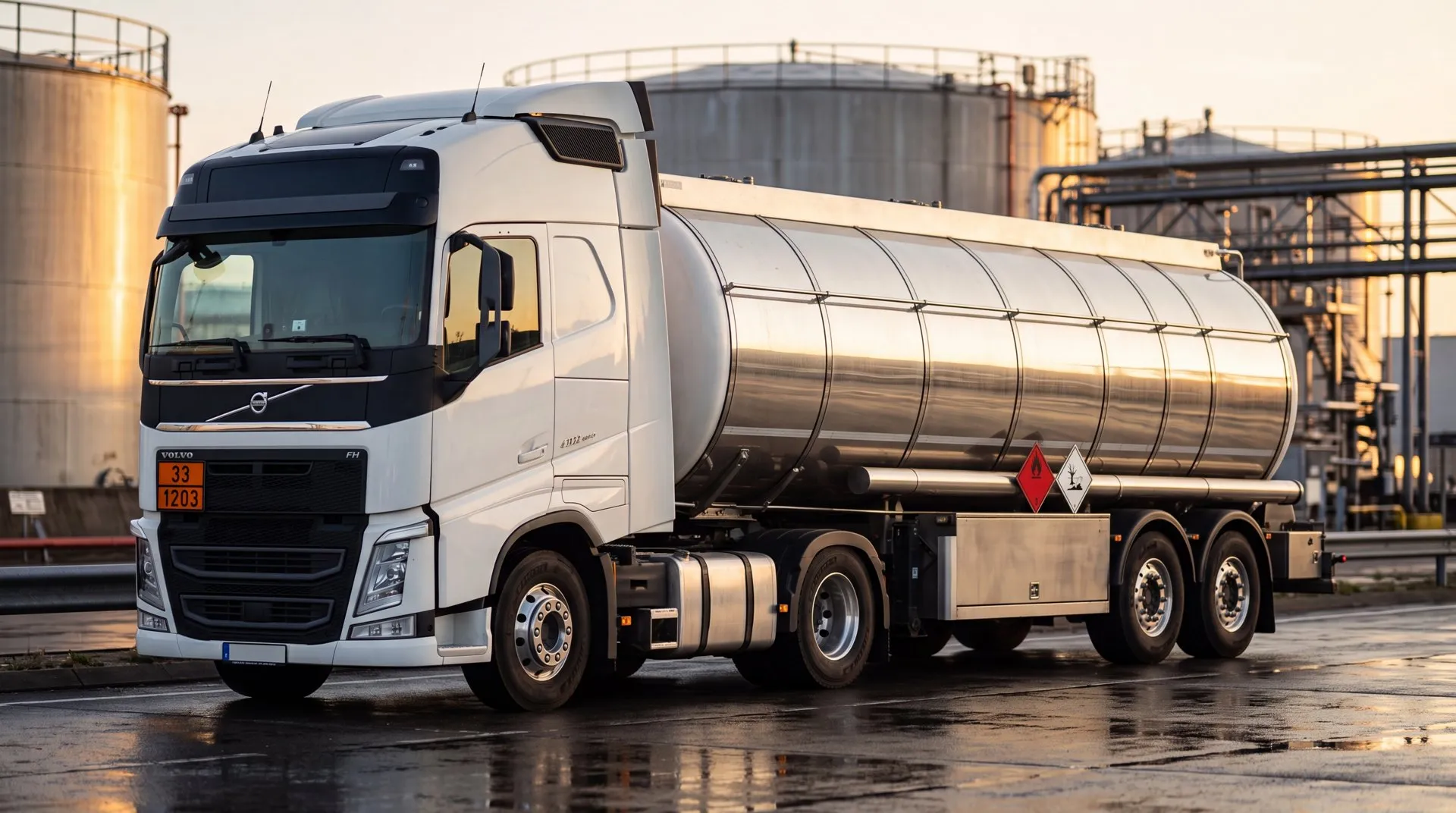
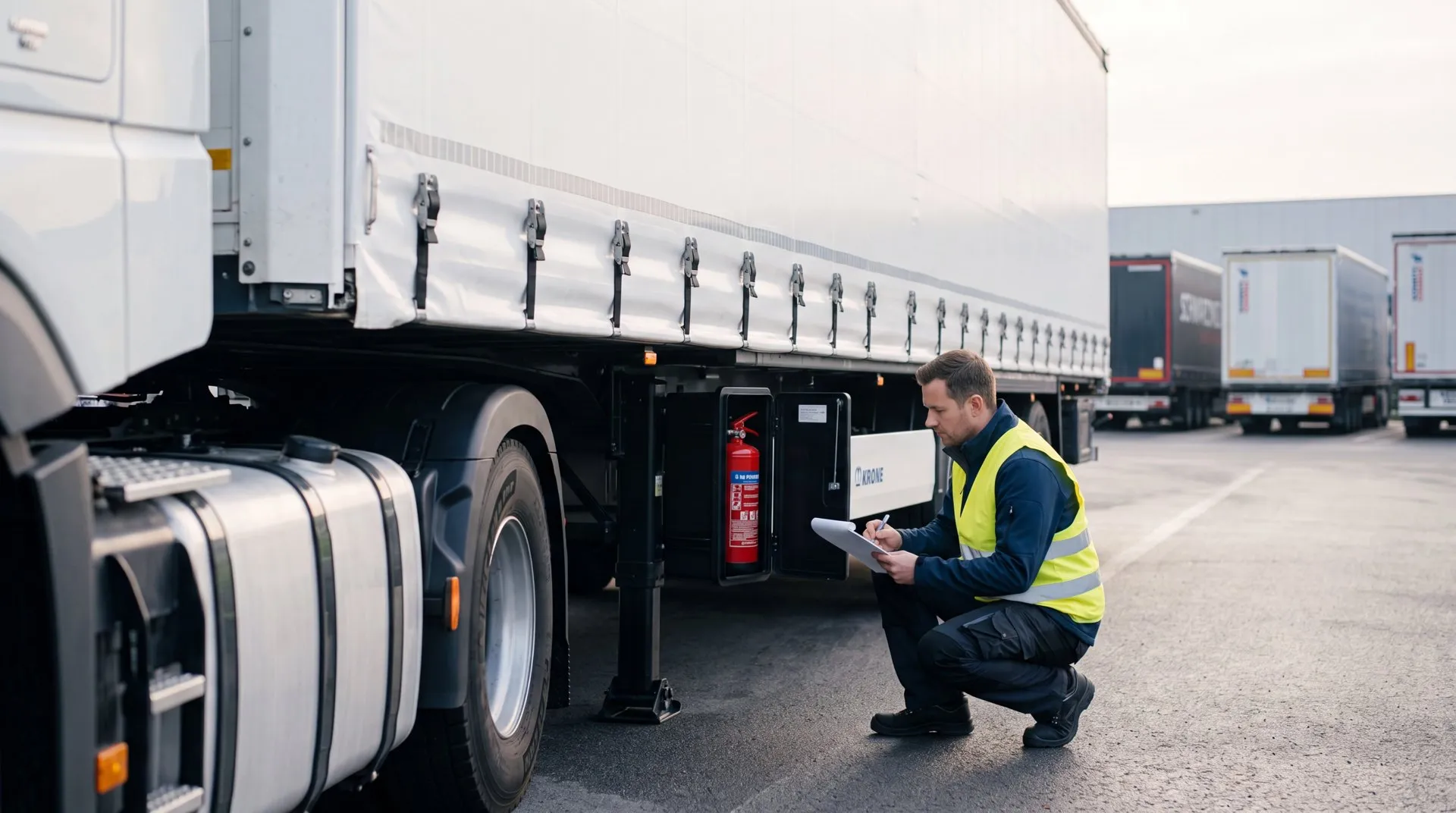
Road — ADR. The European Agreement concerning the International Carriage of Dangerous Goods by Road applies in every contracting party, and inside the European Union Directive 2008/68/EC extends it to domestic transport. ADR is where orange plates, tunnel codes, the 1.1.3.6 exemptions and the requirements for the vehicle and crew come from.
Rail — RID. The Regulations concerning the International Carriage of Dangerous Goods by Rail are Appendix C to COTIF, the Convention concerning International Carriage by Rail. Directive 2008/68/EC covers road, rail and inland waterways in one act, so RID binds domestic rail transport in the EU the same way ADR binds the road.
Sea — the IMDG Code. The International Maritime Dangerous Goods Code implements Chapter VII, Part A of the SOLAS Convention and is published by the International Maritime Organization in London. At sea the unit itself carries more information than on the road — the UN number in the cases listed in IMDG 5.3.2.1.1, the proper shipping name under 5.3.2.0.1 and the marine pollutant mark wherever placards go.
Air — the ICAO Technical Instructions. The Technical Instructions complement Annex 18 to the Chicago Convention on International Civil Aviation and are published by ICAO in Montreal. The air rules are the narrowest, which is why the multimodal form in ADR 5.4.5 has a field where the consignor states whether the shipment stays within the limits for passenger and cargo aircraft or for cargo aircraft only.
Inland waterways — ADN. The European Agreement concerning the International Carriage of Dangerous Goods by Inland Waterways governs barge traffic on European rivers and canals and sits under the same Directive 2008/68/EC. For the Baltics it is a rare case, but a forwarder sending goods into Germany or the Netherlands meets ADN on the final leg.
What they have in common
All five rulebooks grow out of the UN Recommendations on the Transport of Dangerous Goods. ADR 2025 builds on the Model Regulations annexed to their twenty-third revised edition (ST/SG/AC.10/1/Rev.23), so the foundation is the same everywhere.
- Nine hazard classes and packing groups.
- The UN number and proper shipping name of the substance.
- One system of packaging tests and marks — the UN code on a package reads the same in a port, at an airport and on the motorway.
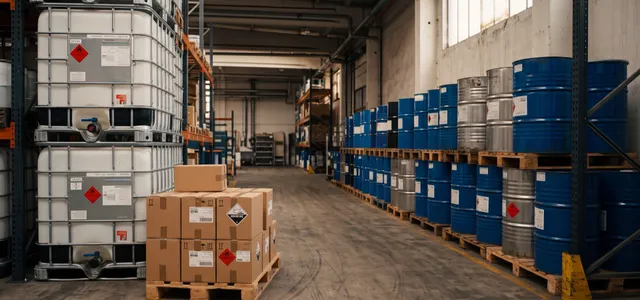
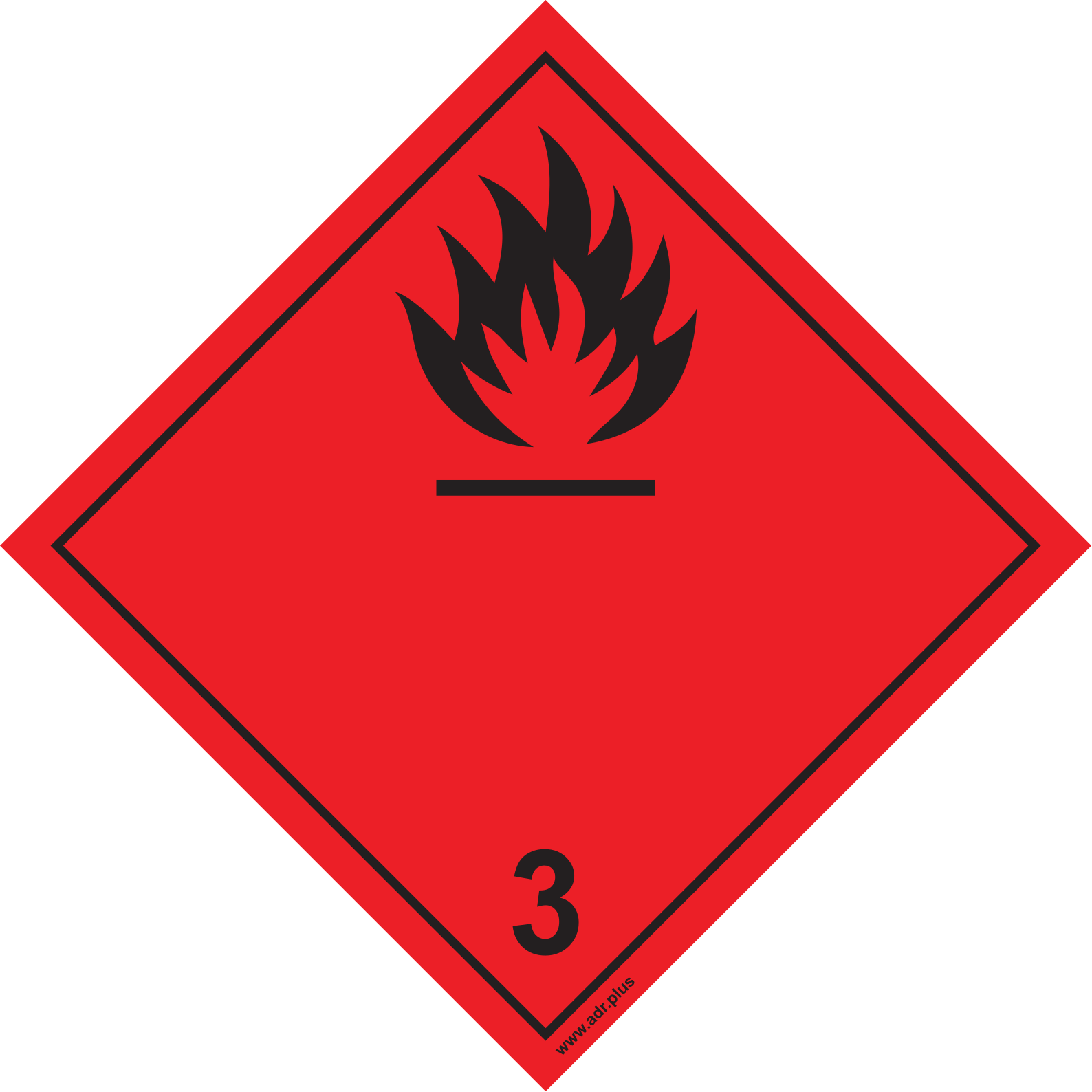
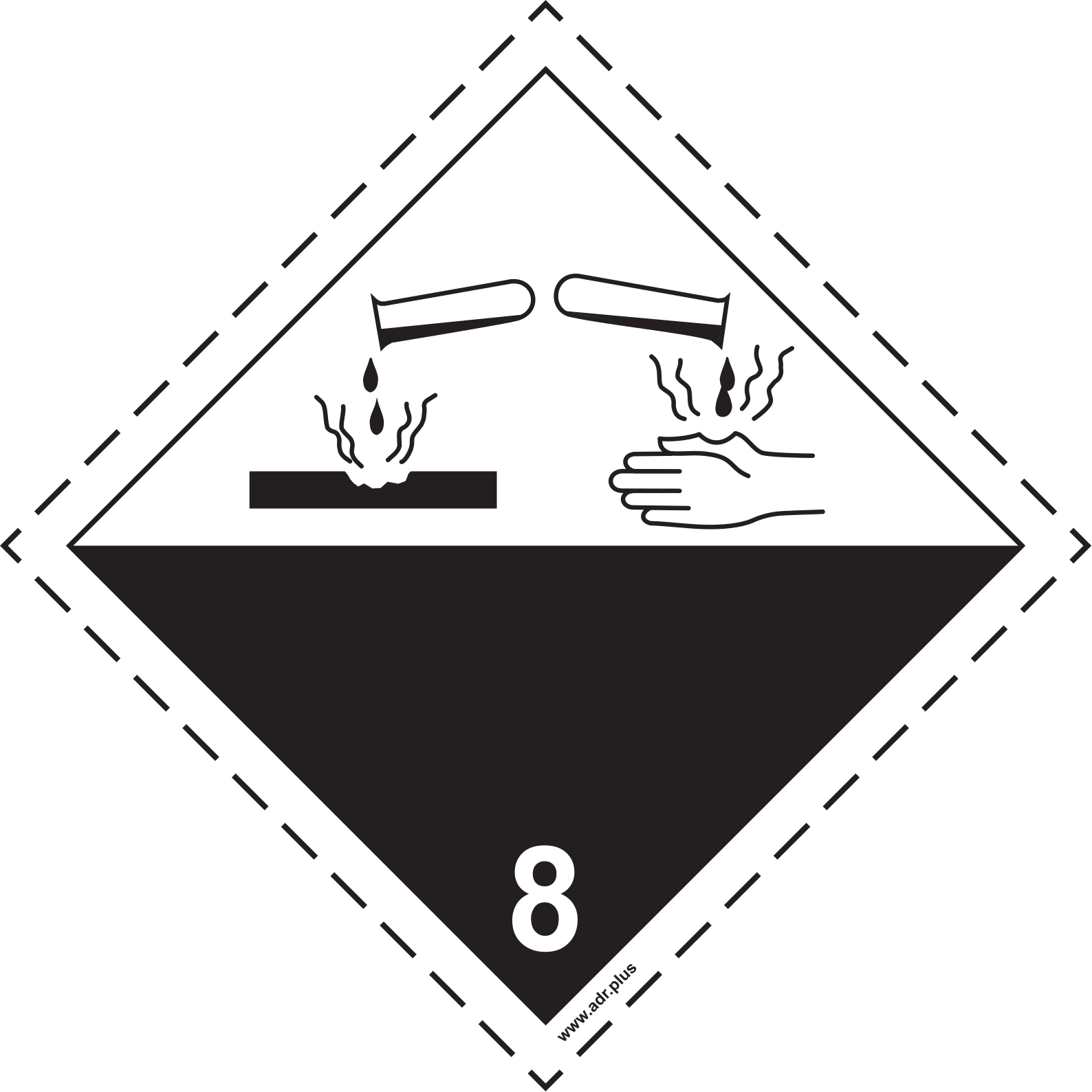
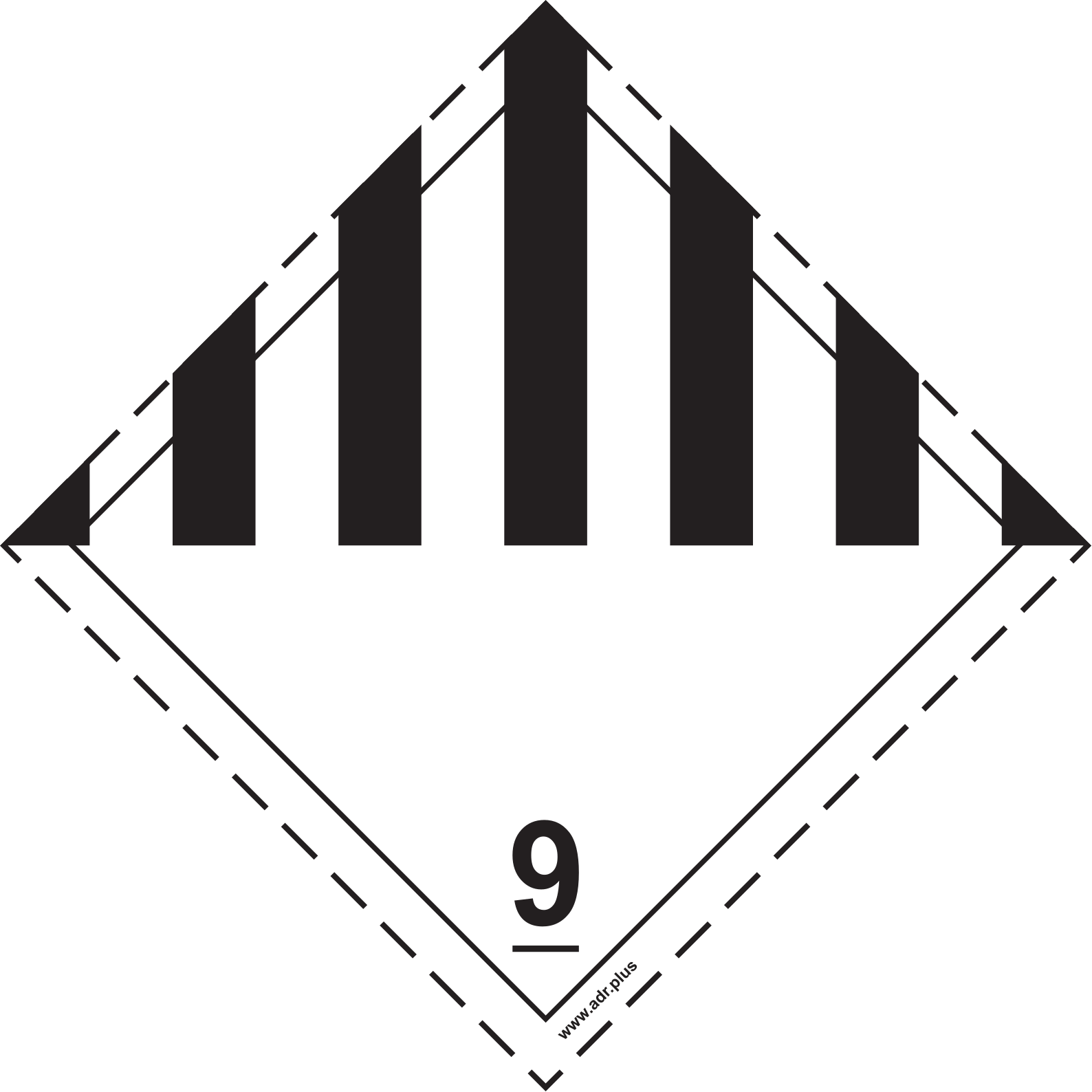
- Diamond-shaped hazard labels of one design, differing only in size and placement.
The practical conclusion is that goods are classified once. The class, UN number and packing group established from the safety data sheet and Table A of Chapter 3.2 stay with the consignment for the whole journey.
Where they differ
| What | Road (ADR) | Sea (IMDG) | Air (ICAO) |
|---|---|---|---|
| Document | transport document under 5.4.1 | dangerous goods transport document and container/vehicle packing certificate | shipper’s declaration in the ICAO format |
| Marking of the unit | orange plates under 5.3.2, placards under 5.3.1 | placards, UN number and proper shipping name on the cargo transport unit, marine pollutant mark | marking on packages only |
| Quantities | 1.1.3.6 exemptions, limited quantities | limited and excepted quantities with their own limits | strict limits per package, part of the goods held to cargo aircraft |
| Who is responsible | participants under chapter 1.4 | consignor, container packer, carrier | consignor and operator |
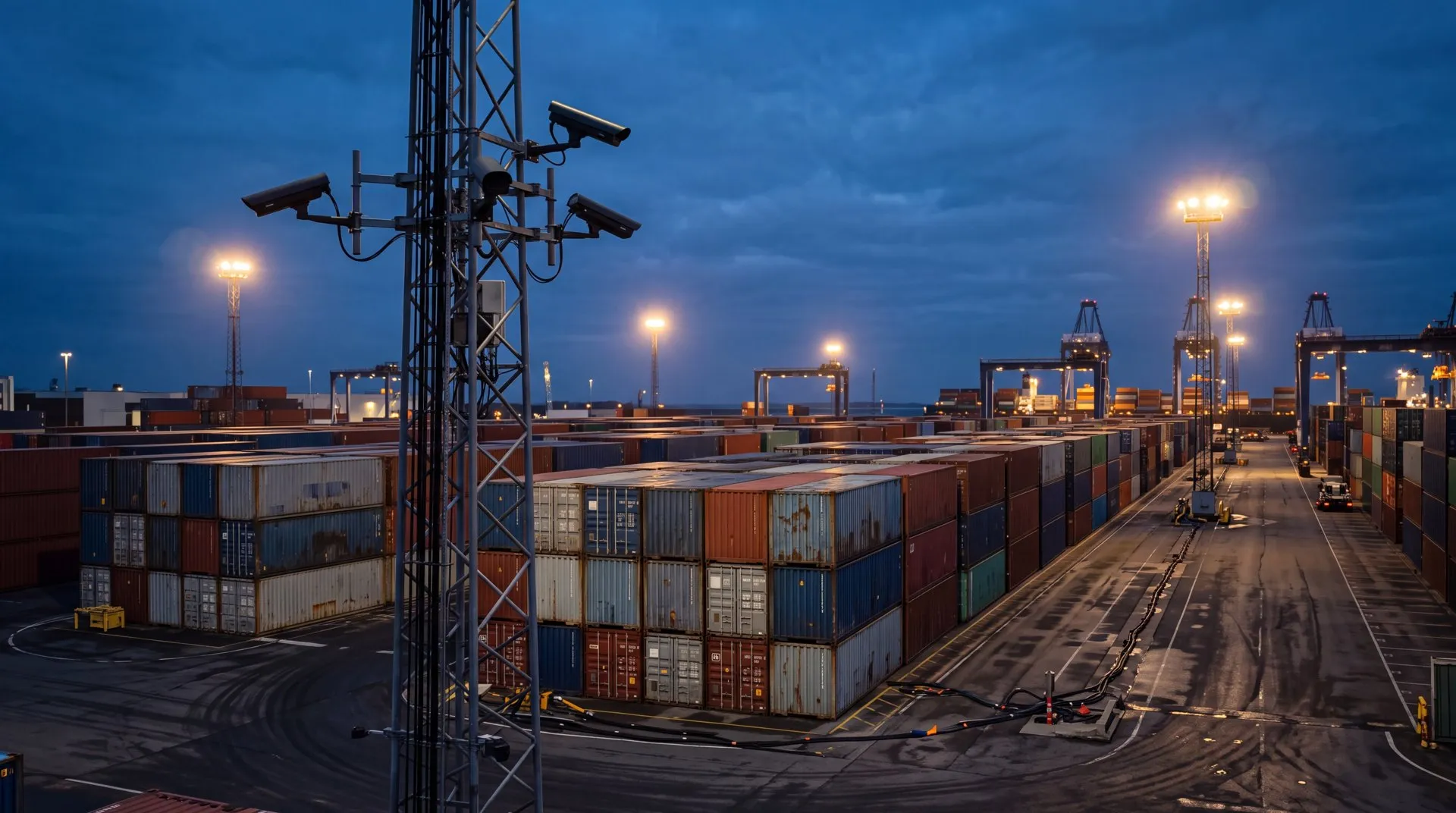
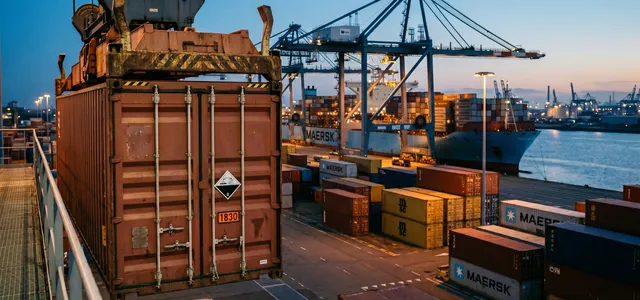
The differences are not cosmetic. Placards go on all four sides of a freight container under both rulebooks, but only the sea leg adds the UN number and the proper shipping name to the unit, and only the road leg identifies the load by the orange plates on the transport unit. A container prepared for the road alone therefore reaches the port short of marking.
Multimodal carriage — what ADR provides for
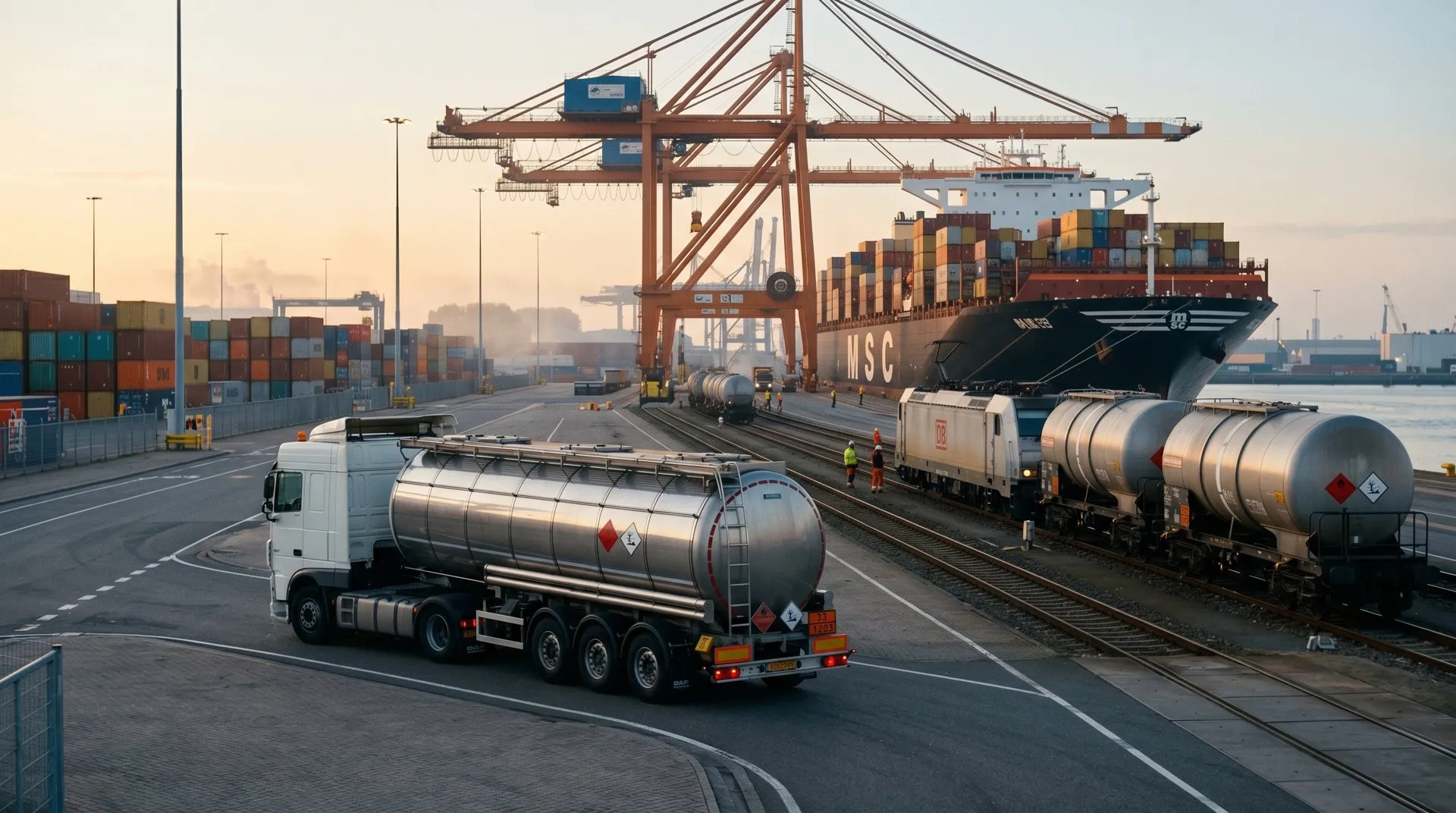
Goods rarely travel by one mode. A typical route from Riga is a truck to the port, a ferry or container ship, then a truck again. ADR describes such chains directly in sub-section 1.1.4.2.
Paragraph 1.1.4.2.1 accepts packages, containers and tanks marked to the IMDG Code or the ICAO Technical Instructions for road carriage inside such a chain, on three conditions — the packages bear the marks and danger labels of that other rulebook, its mixed packing rules govern what goes inside one package, and a container not placarded to ADR chapter 5.3 is placarded to chapter 5.3 of the IMDG Code. In that case only 5.3.2.1.1 of ADR applies to the vehicle itself, so the orange plates stay. The derogation stops at goods that ADR classifies in classes 1 to 9 while the IMDG Code or the ICAO Instructions treat them as non-dangerous.
Paragraph 1.1.4.2.3 does the same for paperwork. The information required by 5.4.1 and 5.4.2 and by any special provision of Chapter 3.3 may be replaced by the IMDG or ICAO document, provided every additional item ADR requires is also there, such as the tunnel restriction code. ADR 5.4.5 shows the form built for exactly this — a multimodal dangerous goods form that carries the declaration and the container packing certificate together.
Paragraph 1.1.4.5.1 answers the ferry question. Where the vehicle is conveyed otherwise than by road haulage, only the rules governing that mode apply over that section. On a Baltic ferry that is the IMDG Code, unless the contracting parties involved have agreed under 1.1.4.5.2 to apply ADR to the crossing.
What the consignor should check
- Establish the full route before packing. The strictest rule on the route sets the packaging and the quantity.
- Check the substance against each rulebook. One UN number can carry different special provisions at sea and in the air.
- Prepare the documents for the most demanding leg. A multimodal form under 5.4.5 with the tunnel code added covers the road leg as well.
- Watch the environmental entry. Under 5.4.1.1.18 the transport document reads “ENVIRONMENTALLY HAZARDOUS” or, in a chain with a sea leg, “MARINE POLLUTANT”, with UN 3077 and UN 3082 and the exceptions of 5.2.1.8.1 left out.
- Do not leave the ferry to chance. Lines publish their own dangerous goods requirements, and the booking is made in advance.
Mistakes at the junction between modes cost the most — the goods sit in the port, the truck waits, and the consignor repacks the batch. A certified DGSA does this for a specific consignment on a specific route, taking the rules of every leg into account.