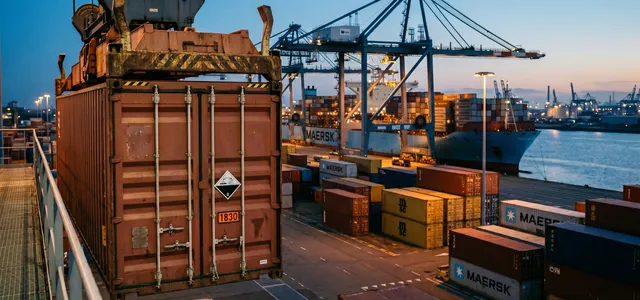
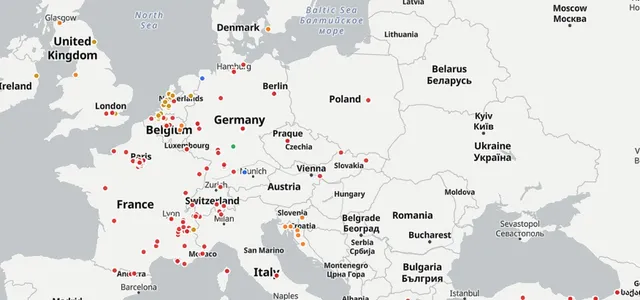



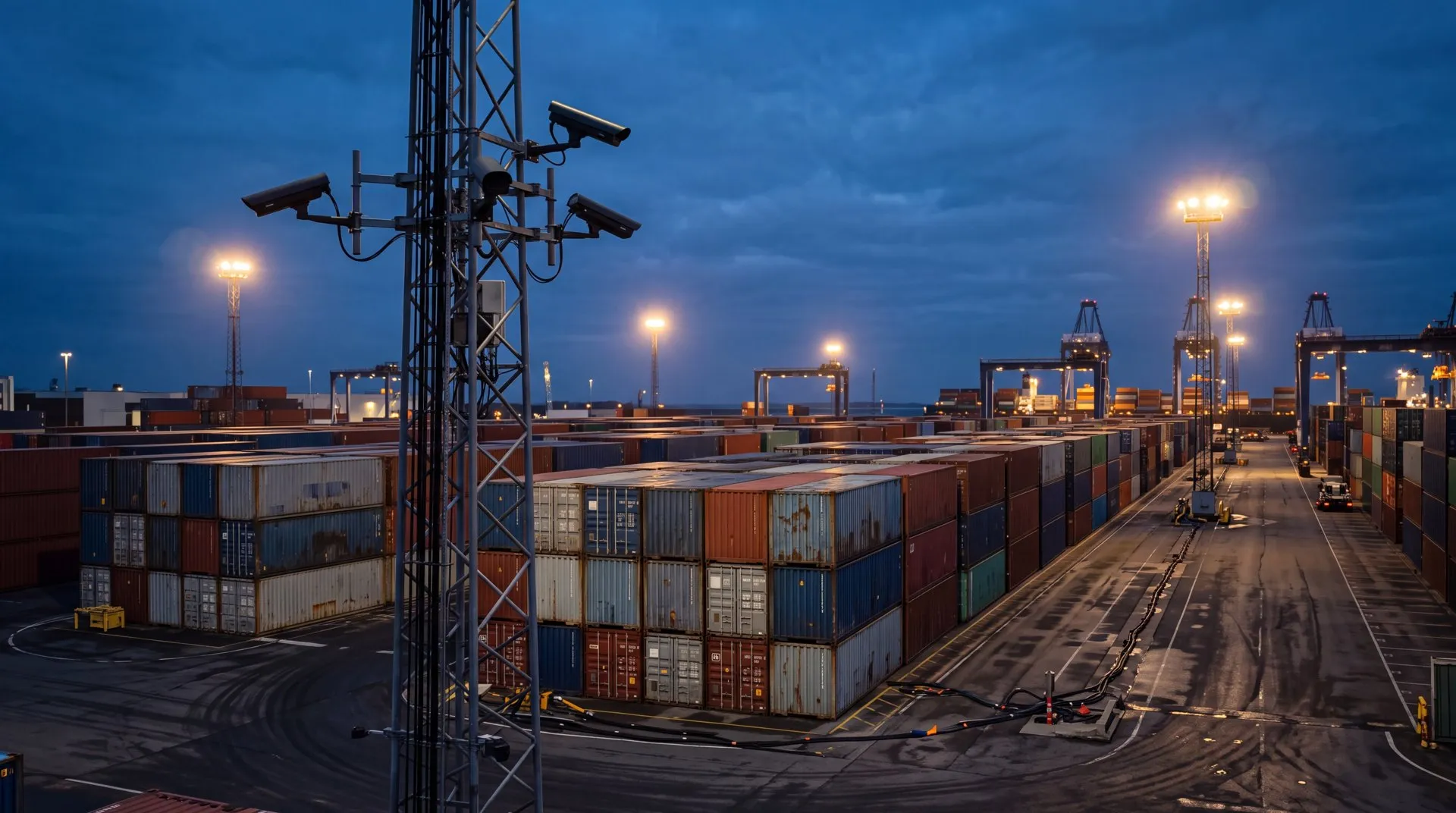
Most of ADR is about safety in the familiar sense — that the goods do not leak, ignite or explode. Chapter 1.10 is about something else. It is about dangerous goods not being stolen or deliberately misused — security, as opposed to safety. Its provisions are known less well than the rest, although they apply to quite ordinary goods, petrol included.
What is mandatory for everyone
Section 1.10.1 addresses all participants in carriage, with no thresholds and no division by class.
- Dangerous goods are offered for carriage only to carriers that have been appropriately identified.
- Areas used for temporary storage during carriage — temporary storage terminals and sites, vehicle depots, berthing areas and marshalling yards — must be properly secured, well lit and, where possible and appropriate, not accessible to the general public.
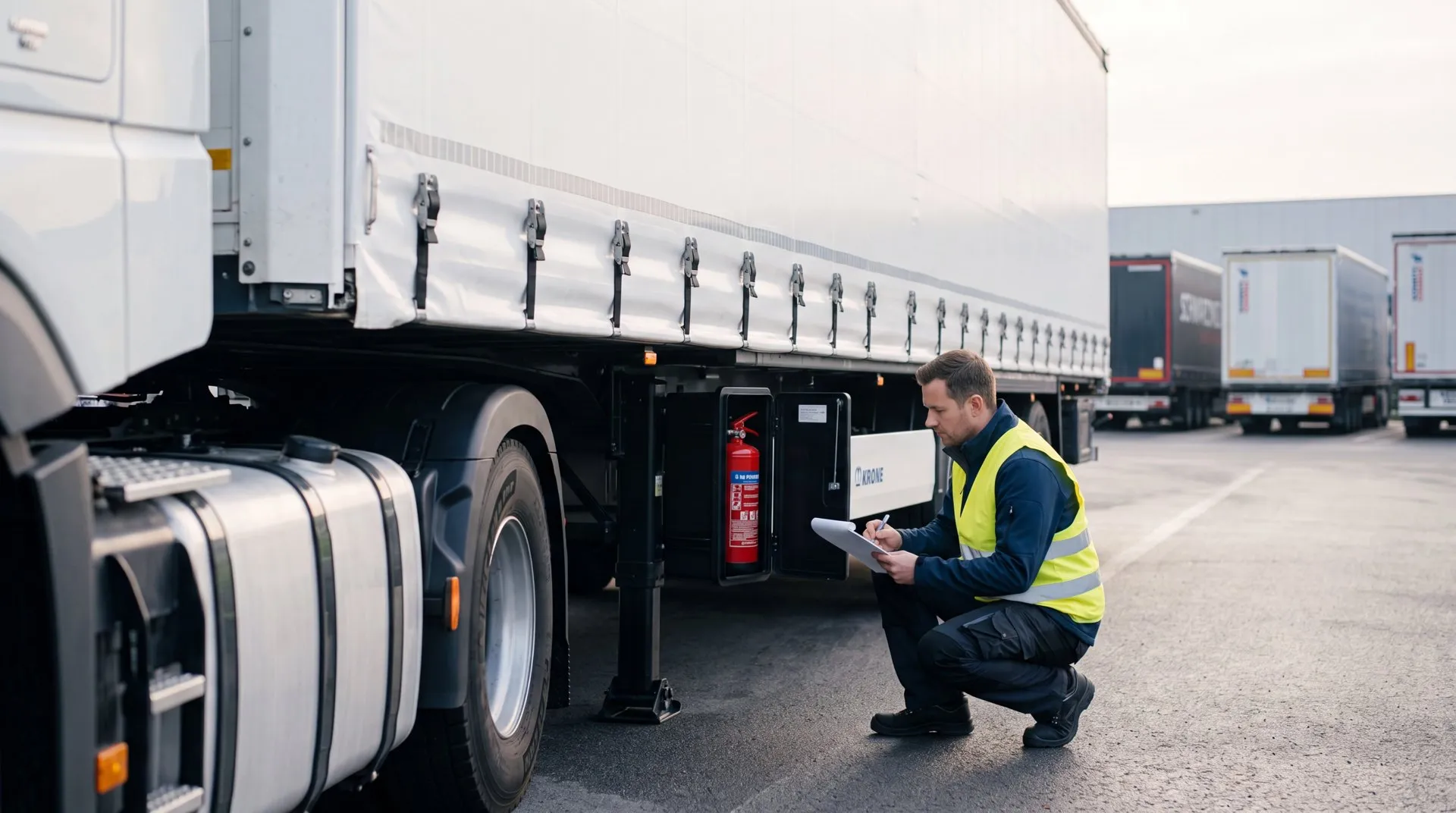
- Each member of the vehicle crew carries a means of identification that includes a photograph during the carriage of dangerous goods.
Section 1.10.2 adds training. Training and refresher training under chapter 1.3 must include elements of security awareness — the nature of security risks, recognising them, methods to reduce them, and actions to be taken in the event of a security breach. It also covers awareness of the plan itself, commensurate with each person’s part in implementing it.
High consequence dangerous goods
Paragraph 1.10.3.1.1 defines them as goods which have the potential for misuse in a terrorist event and which may produce serious consequences such as mass casualties, mass destruction or, particularly for class 7, mass socio-economic disruption. For every class but the seventh, the list is table 1.10.3.1.2, and it is tied to quantities.
| Class | Substance or article | Tank | Bulk | Packages |
|---|---|---|---|---|
| 1 | Explosives of divisions 1.1, 1.2, 1.3 compatibility group C, 1.4 (the UN numbers listed in the table) and 1.6 | not relevant | not relevant | any quantity |
| 1 | Explosives of division 1.5 | any quantity | not relevant | any quantity |
| 2 | Flammable, non-toxic gases (classification codes including only letters F or FC) | above 3 000 l | not relevant | not applicable |
| 2 | Toxic gases (codes including letters T, TF, TC, TO, TFC or TOC) excluding aerosols | any quantity | not relevant | any quantity |
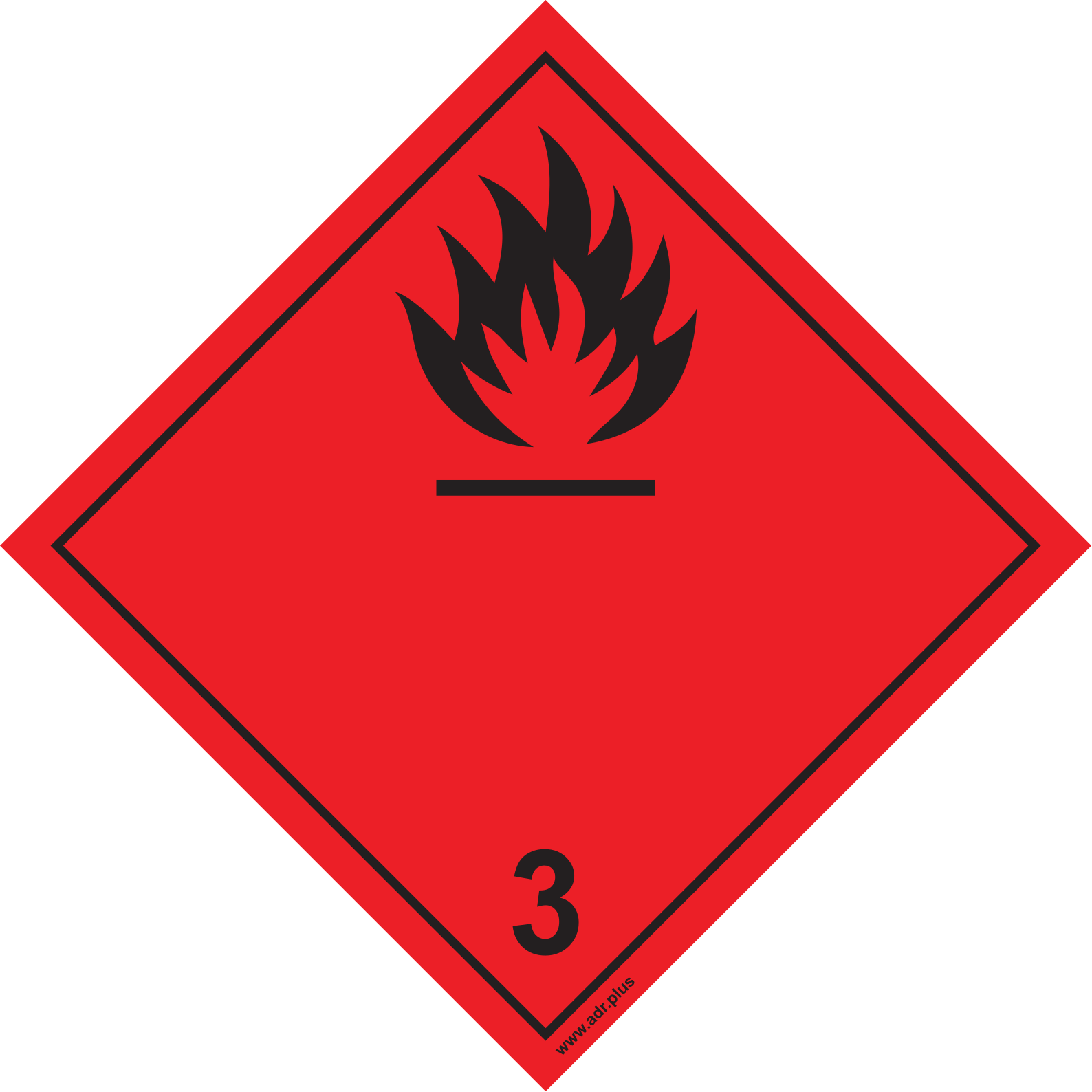
| 3 | Flammable liquids of packing groups I and II | above 3 000 l | not relevant | not applicable |
| 3 | Desensitized explosives | any quantity | not relevant | any quantity |
| 4.1 | Desensitized explosives | not relevant | not relevant | any quantity |
| 4.2 and 4.3 | Packing group I substances | above 3 000 l | not relevant | not applicable |
| 5.1 | Oxidizing liquids of packing group I | above 3 000 l | not relevant | not applicable |
| 5.1 | Perchlorates, ammonium nitrate, ammonium nitrate fertilisers and ammonium nitrate emulsions or suspensions or gels | above 3 000 l | above 3 000 kg | not applicable |
| 6.1 | Toxic substances of packing group I | any quantity | not relevant | any quantity |
| 6.2 | Infectious substances of category A (UN 2814 and 2900, except for animal material) and medical waste of category A (UN 3549) | not relevant | any quantity | any quantity |
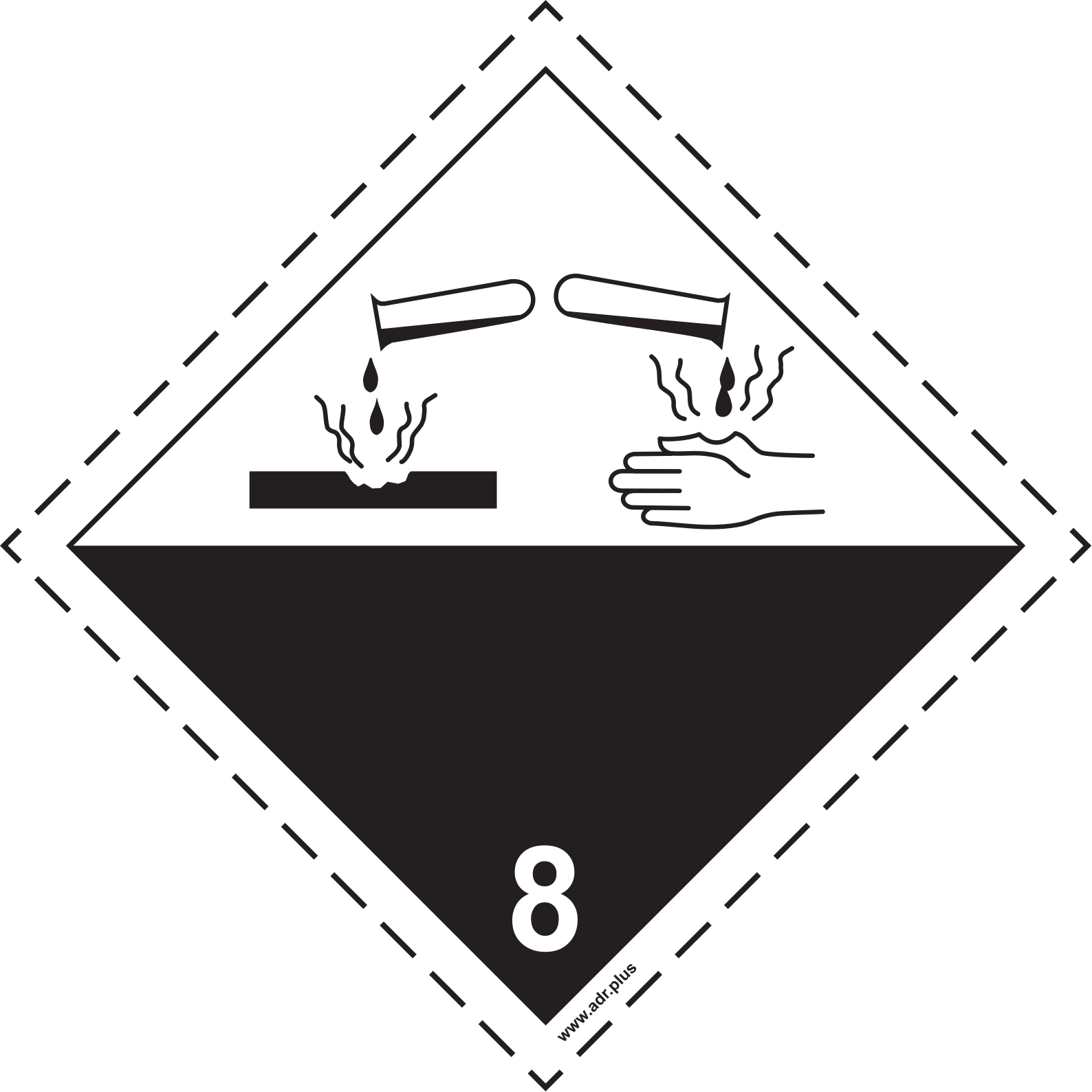
| 8 | Corrosive substances of packing group I | above 3 000 l | not relevant | not applicable |
“Not relevant” means the column does not bear on those goods. “Not applicable” means the provisions of 1.10.3 never reach packages of that entry, whatever the quantity. A tank or bulk figure counts only where that form of carriage is authorised at all by table A of chapter 3.2. Class 7 runs on its own scale — under 1.10.3.1.3 high consequence radioactive material starts at an activity of 3 000 A₂ per single package, with separate thresholds for twenty-five radionuclides.
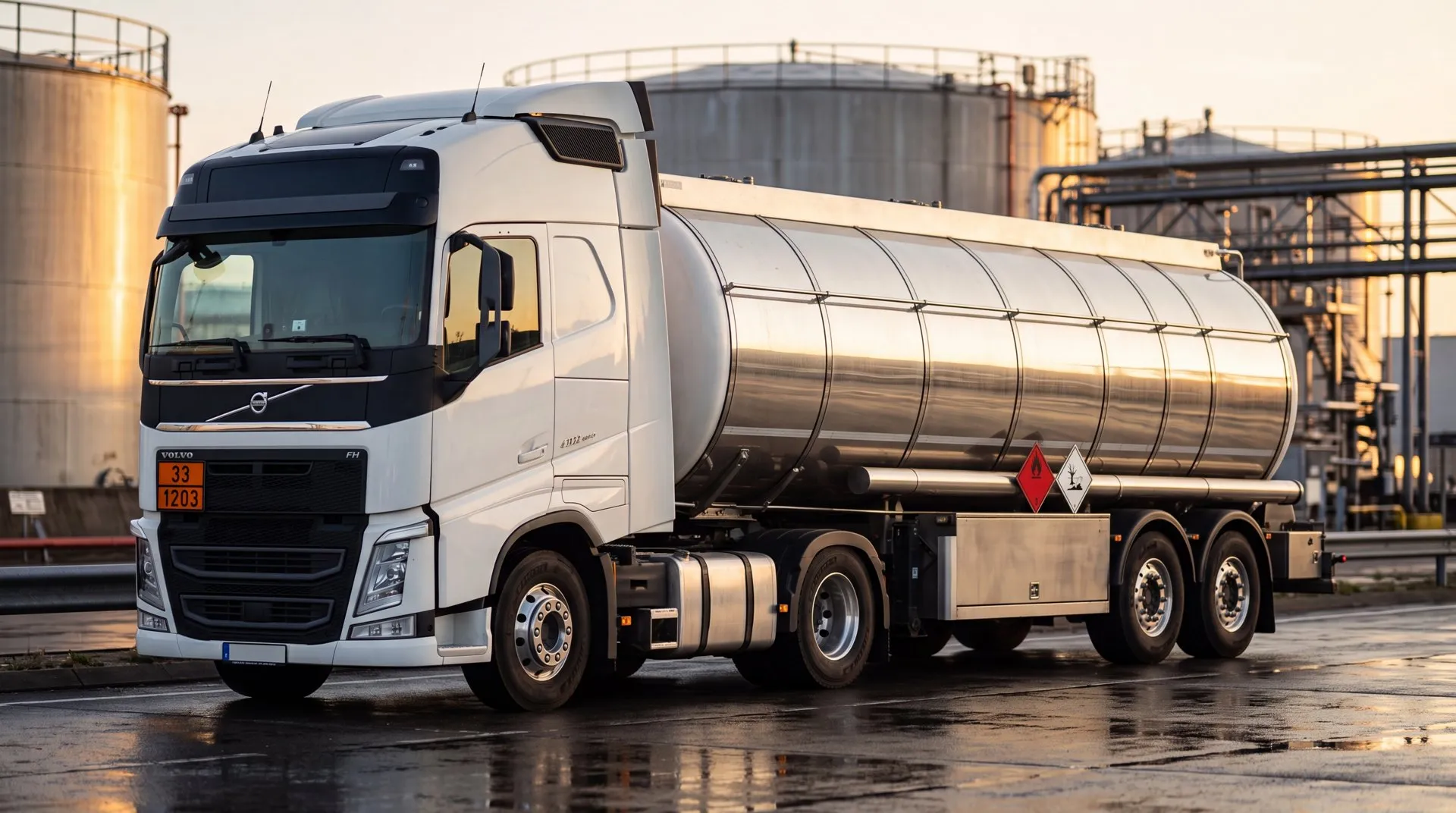
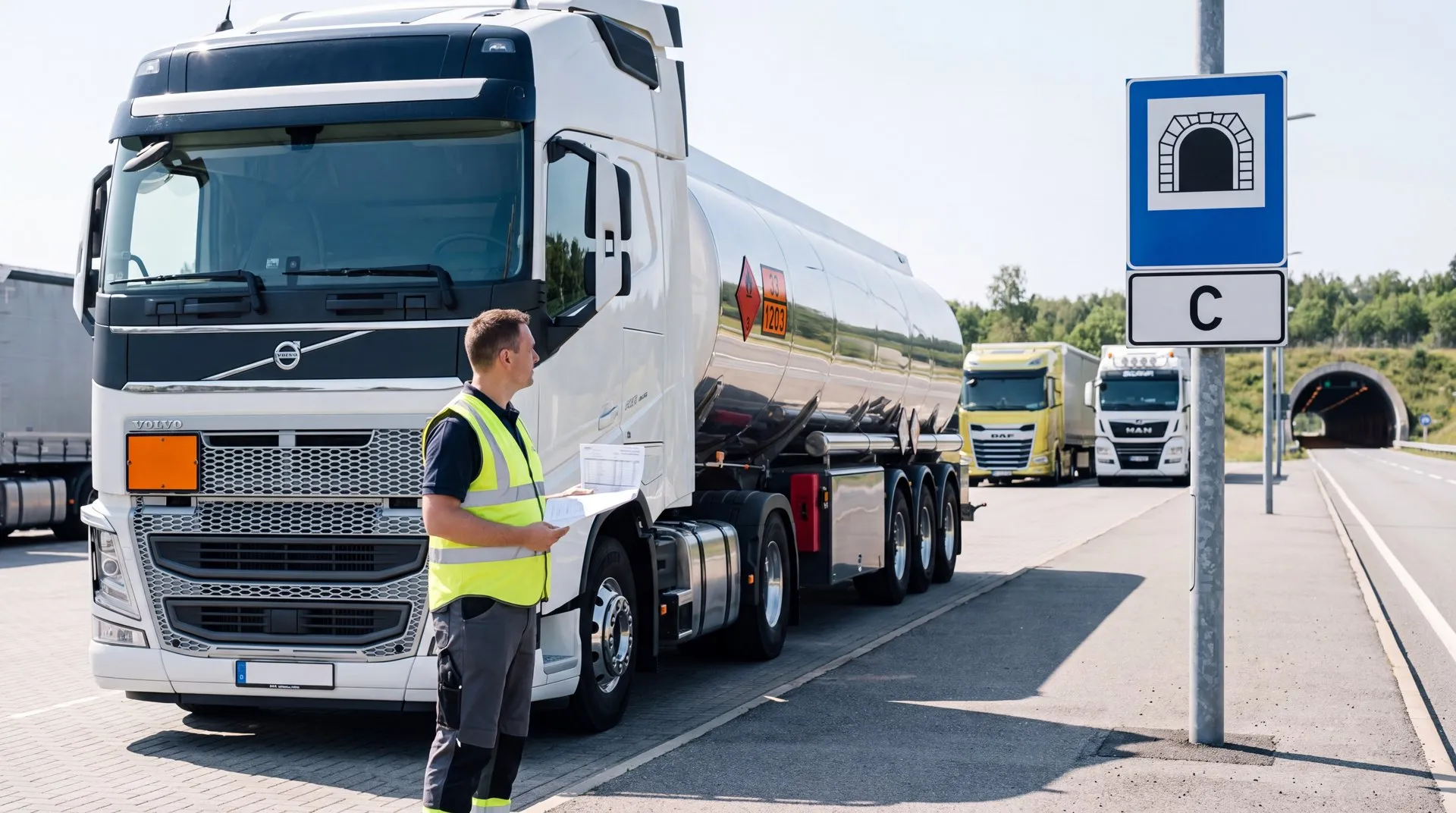
The most common case is a tank-vehicle carrying petrol, ethanol or a solvent. Petrol belongs to packing group II and is on the list. Diesel fuel belongs to packing group III and is not.
Section 1.10.4 provides an exemption — the requirements of 1.10.1, 1.10.2 and 1.10.3 do not apply when the quantities carried in tanks or in bulk on a transport unit do not exceed those referred to in 1.1.3.6.3.
Who must have a plan
Paragraph 1.10.3.2.1 names carriers, consignors and the other participants specified in 1.4.2 and 1.4.3 engaged in the carriage of high consequence dangerous goods or high consequence radioactive material. So the plan is not only for whoever drives. A fuel depot that fills tanks, a chemical plant as consignor, a warehouse where such goods are temporarily stored — each adopts a plan for its own part.
What the plan must contain
Paragraph 1.10.3.2.2 sets the minimum content.
- Specific allocation of responsibilities for security to competent and qualified persons with appropriate authority.
- Records of the dangerous goods or types of dangerous goods concerned.
- A review of current operations and assessment of security risks — any stops the transport operation needs, the keeping of goods in the vehicle, tank or container before, during and after the journey, and intermediate temporary storage during transfer or transhipment.
- Measures to reduce security risks in proportion to the participant’s duties — training, security policies down to response to higher threat conditions and verification of new employees, operating practices covering the choice of routes, access to goods in intermediate storage and proximity to vulnerable infrastructure, plus the equipment and resources used.
- Effective and up to date procedures for reporting and dealing with security threats, breaches of security and security incidents.
- Procedures for the evaluation and testing of the plan and for its periodic review and update.
- Measures to ensure the physical security of transport information contained in the plan.
- Measures to ensure that this information reaches only those who need to have it.
Besides the plan, paragraph 1.10.3.3 requires devices, equipment or arrangements to prevent the theft of the vehicle carrying such goods and of its load, kept operational and effective at all times. The protective measures must not jeopardise emergency response.
How it is checked
ADR does not require the plan to be approved by an authority. The model is different — the company adopts the plan itself, keeps it and produces it on request. The check is factual — whether a plan exists, whether it covers the eight elements, and whether what is written matches what happens on site.
National rules add their own detail. In Latvia, for example, a Cabinet regulation requires the documents to be kept permanently and handed over for inspection immediately on request, the supervisory body may issue corrective instructions, and for a serious breach the circulation of the goods concerned may be suspended. The law there also sets a separate fine for failing to draw up, incorrectly drawing up or failing to produce a security plan.
Where to start
A security plan is not written from an internet template — the third element requires an assessment of your own operations. But the order of work is clear.
- Compare your range of goods with table 1.10.3.1.2 and the quantities per transport unit.
- Identify the company’s roles under chapter 1.4 and the part of the chain it answers for.
- Describe the operations and the places where the goods stop or are stored.
- Appoint the responsible persons and include security in the training under chapter 1.3.
- Adopt the plan formally, keep it with restricted access and review it when anything changes.
Drawing up a security plan is one of the ADRplus services. A DGSA assesses the goods against the table, describes the operations on site and implements the plan together with your team, so that at an inspection it is a working document rather than a folder on a shelf.