




When a vehicle carrying dangerous goods is stopped and an infringement is found, the inspector’s first question is not “who is the driver” but “who is the consignor”. ADR is built so that responsibility is spread along the whole chain, and most of it does not rest with the person behind the wheel. Chapter 1.4 lists the participants and assigns a specific list to each. Here it is without the legal language.
The general principle
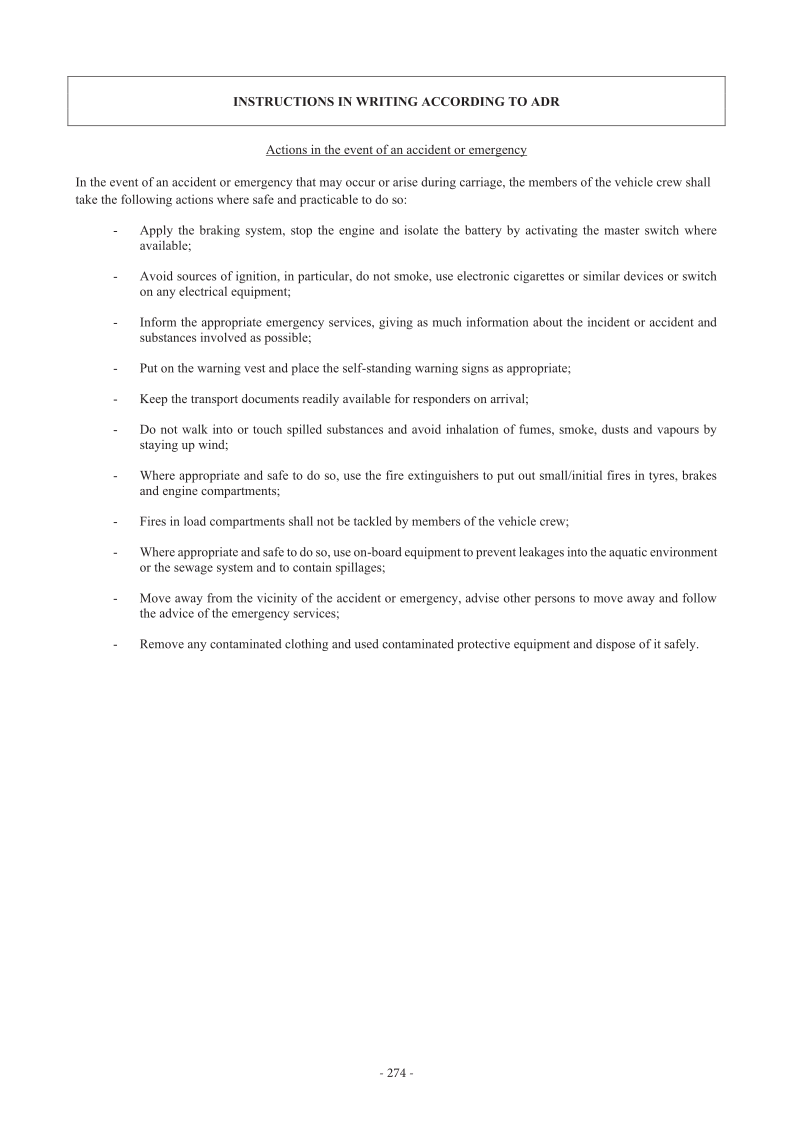
Paragraph 1.4.1.1 sets the rule for everyone — each participant takes measures appropriate to the nature and the extent of foreseeable dangers and complies with the requirements of ADR in its own field. Paragraph 1.4.1.2 adds that where there is an immediate risk to public safety, the participant notifies the emergency services at once and gives them the information they need to act.
The key words are “in its own field”. Obligations do not travel from one participant to the next together with the goods. The consignor does not stop being responsible for classification because the goods are now with the carrier, and the carrier cannot point to the consignor if it has not checked the marking. The one caveat is in 1.4.1.3 — a Contracting Party may in its domestic legislation transfer the obligations of one participant to one or several others, provided the obligations of 1.4.2 and 1.4.3 are still met.
The three main participants
The consignor — 1.4.2.1
The consignor must hand over for carriage only consignments that comply with ADR. This is the longest list.
- Ascertain that the goods are classified and authorized for carriage.
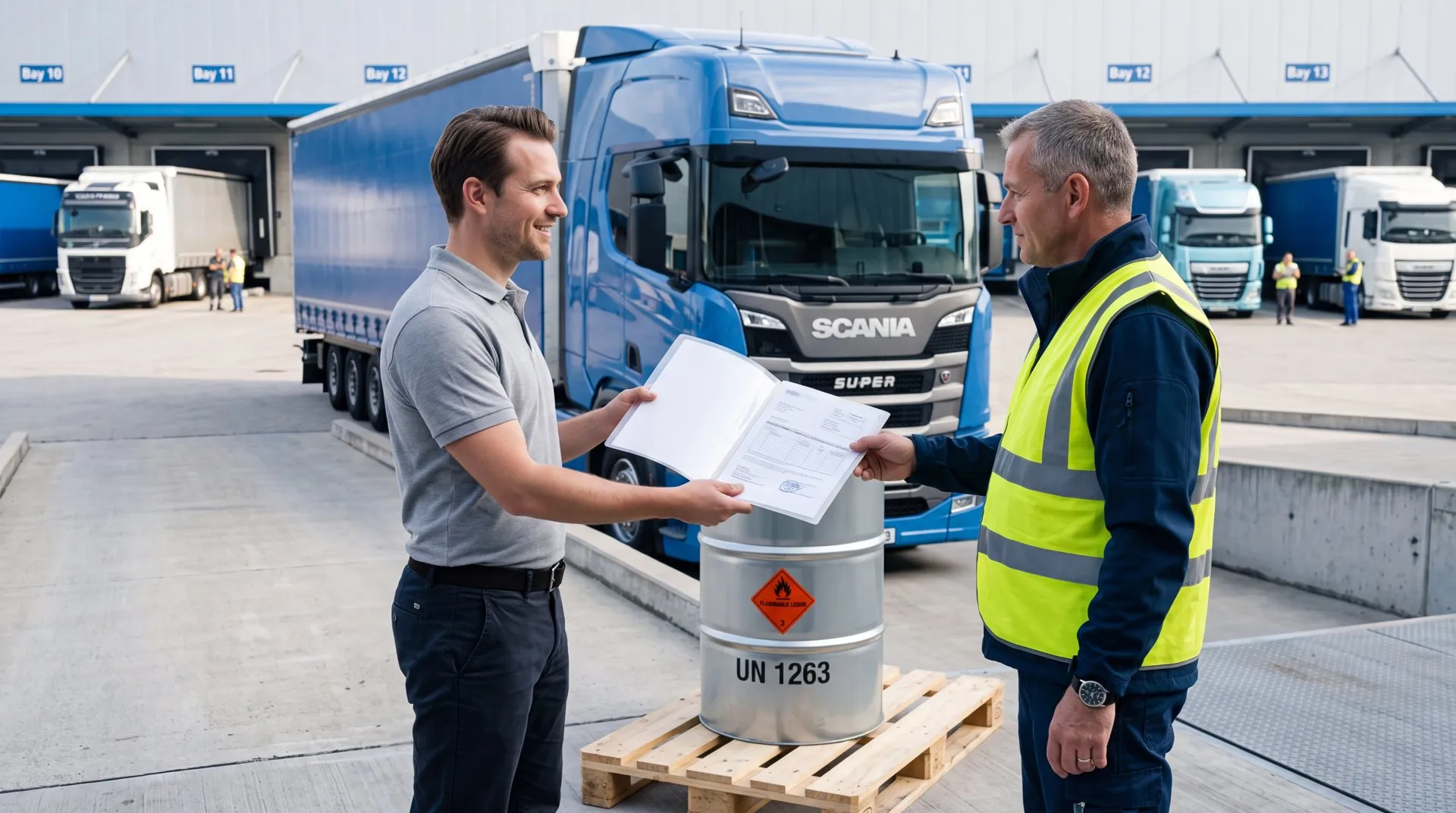
- Furnish the carrier with information and data in a traceable form and, where required, the transport and accompanying documents.
- Use only packagings, large packagings, IBCs and tanks that are approved for and suited to the substances concerned and bear the prescribed marks.
- Comply with the requirements on the means of dispatch and on forwarding restrictions.
- Ensure that empty uncleaned and not degassed tanks, and empty uncleaned vehicles and containers for carriage in bulk, are placarded and marked, and that empty uncleaned tanks are closed and as leakproof as when full.
The consignor may rely on information supplied by other participants — the packer, loader or filler — under 1.4.2.1.2. But it is the consignor who hands the goods over for carriage, and “that is what the supplier told us” relieves it of responsibility only for the part the supplier was responsible for.
The carrier — 1.4.2.2
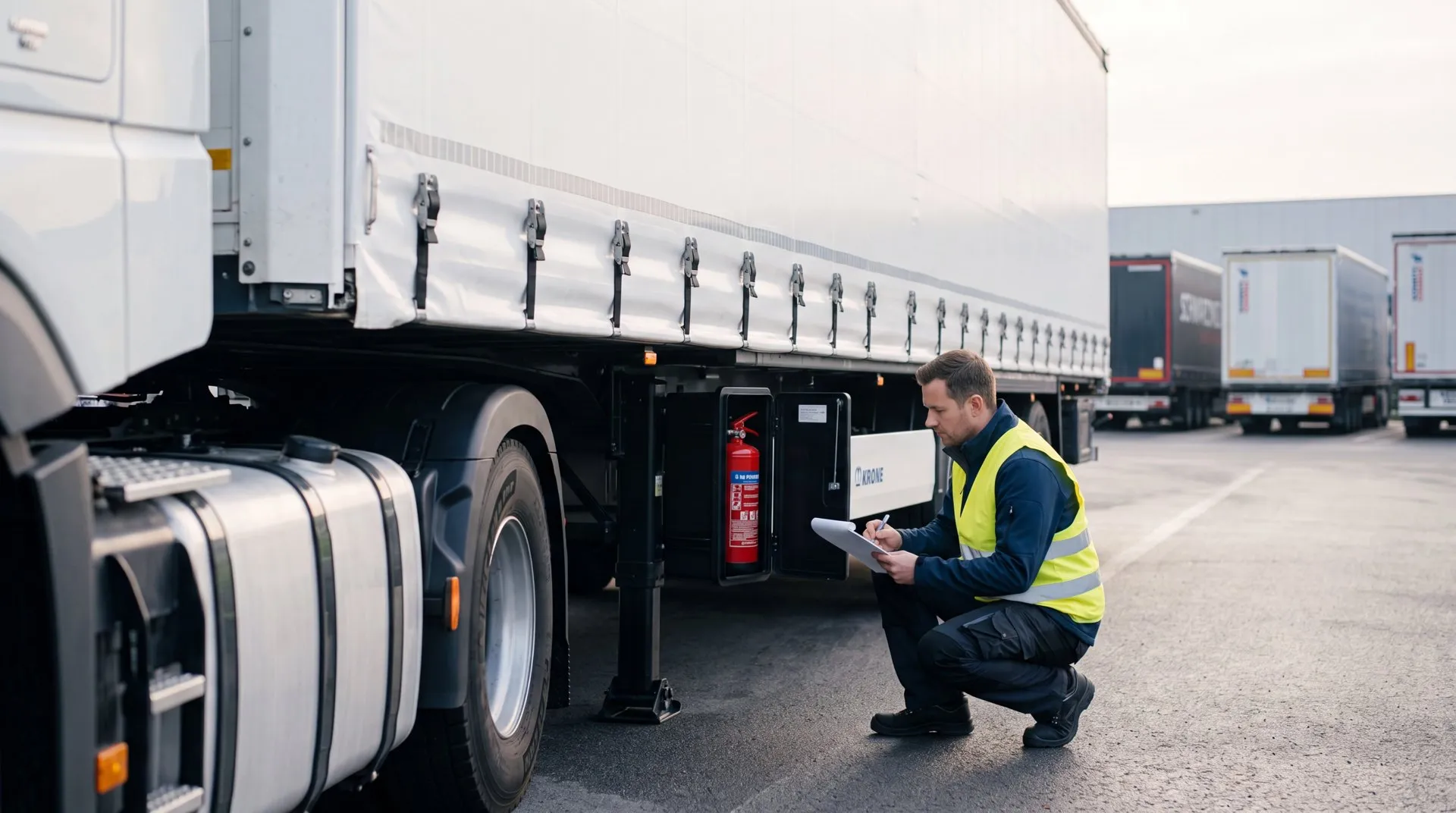
Before departure the carrier must, among other things, ascertain the following.
- The goods are authorized for carriage.
- All the prescribed information has been supplied by the consignor and the documentation is on the transport unit or available electronically.
- The vehicle and the load show no obvious defects, leaks or cracks, and no equipment is missing.
- The next inspection date of the tanks has not expired.
- The vehicle is not overloaded.
- The placards, marks and orange-coloured plates are affixed.
- The equipment prescribed in ADR for the transport unit, the vehicle crew and certain classes is on board.
Under 1.4.2.2.2 the carrier may rely on the consignor’s information as to authorization, documents, the absence of overloading and the placarding, and on the “container/vehicle packing certificate” as to the absence of visible defects. Where an infringement is found, the carrier does not forward the consignment until it has been rectified.
The consignee — 1.4.2.3
The consignee must not defer acceptance of the goods without compelling reasons and, after unloading, must verify that the requirements of ADR concerning it have been complied with. If that verification brings an infringement to light in the case of a container, the consignee returns the container to the carrier only after the infringement has been remedied. The unloader’s duties are a separate role, and the consignee often performs both.
The other participants — 1.4.3
The list of other participants is not exhaustive, and their obligations flow from section 1.4.1 insofar as they know or should have known that their work is part of a transport operation subject to ADR.
The loader (1.4.3.1) hands dangerous goods to the carrier only if they are authorized for carriage, checks packagings for damage and does not hand over a package whose packaging is damaged, complies with the special requirements on loading and handling, observes the mixed loading prohibitions and the rules on separation from foodstuffs and animal feedstuffs, and after loading a container affixes the placards, marks and orange-coloured plates. A warehouse that loads a truck is a loader, even if it is not the consignor.
The packer (1.4.3.2) complies with the packing and mixed packing conditions and, when preparing packages for carriage, applies the marks and labels.
The filler (1.4.3.3) is responsible for tanks — checks their condition and next inspection date, fills them only with goods authorized for those tanks, observes the degree of filling, closes all closures and checks for leakage, makes sure no dangerous residue adheres to the outside, and affixes the placards, marks and orange-coloured plates.
The tank-container or portable tank operator (1.4.3.4) ensures compliance with the requirements for construction, equipment, inspections, tests and marking, arranges maintenance, and has an exceptional inspection made whenever the safety of the shell or its equipment may have been impaired by a repair, an alteration or an accident.
The unloader (1.4.3.7) verifies against the transport document that the correct goods are unloaded, checks the packagings, tank, vehicle or container for damage before and during unloading, complies with the unloading and handling requirements, removes residues from the outside surfaces, closes the valves and inspection openings, ensures the prescribed cleaning and decontamination, and makes sure a fully unloaded and cleaned container no longer displays placards, marks or orange-coloured plates.
What this means in practice
One company often performs several roles at once. A paint manufacturer that packs its products, loads them into the haulier’s vehicle and issues the documents is at the same time a packer, a loader and a consignor. A logistics warehouse that receives a batch and sends it on the next day acts as consignee, unloader, loader and consignor. Each role carries its own list, and an inspector checks them separately.
Hence the practical rule — identify your roles before the first consignment, not after the first inspection. Every role has a clear checklist, and most of its items are closed once, with documents and procedures. The DGSA that 1.8.3.1 requires every undertaking consigning or carrying dangerous goods, or doing the related packing, loading, filling or unloading, to appoint does exactly that — works out which roles the company actually performs and puts a process in place for each. Paragraph 1.8.3.2 lets competent authorities lift the requirement for some undertakings, and the exemptions differ from country to country. Whether your company needs a DGSA can be checked in two minutes.