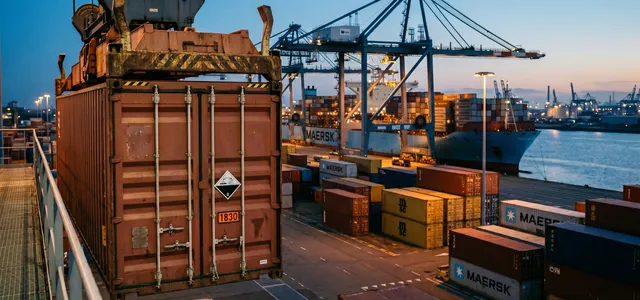


Companies usually learn about dangerous goods fines the minute the report has already been written. Yet the system is predictable — it is known who checks, against which list, and what each group of infringements costs. Here it is in a form that goes on a manager’s desk.
How the checks work
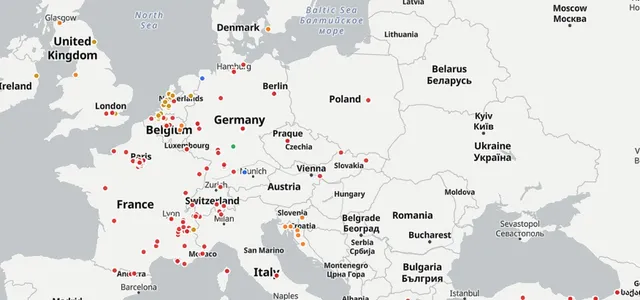
Roadside checks on dangerous goods in the EU are harmonised by Directive (EU) 2022/1999. An inspector in any member state works from the single checklist in Annex I, while Annex II sets out what counts as an infringement and how serious it is. The right to check a consignment at any time and in any place comes from ADR 1.8.1.1 itself.
Infringements fall into three risk categories.
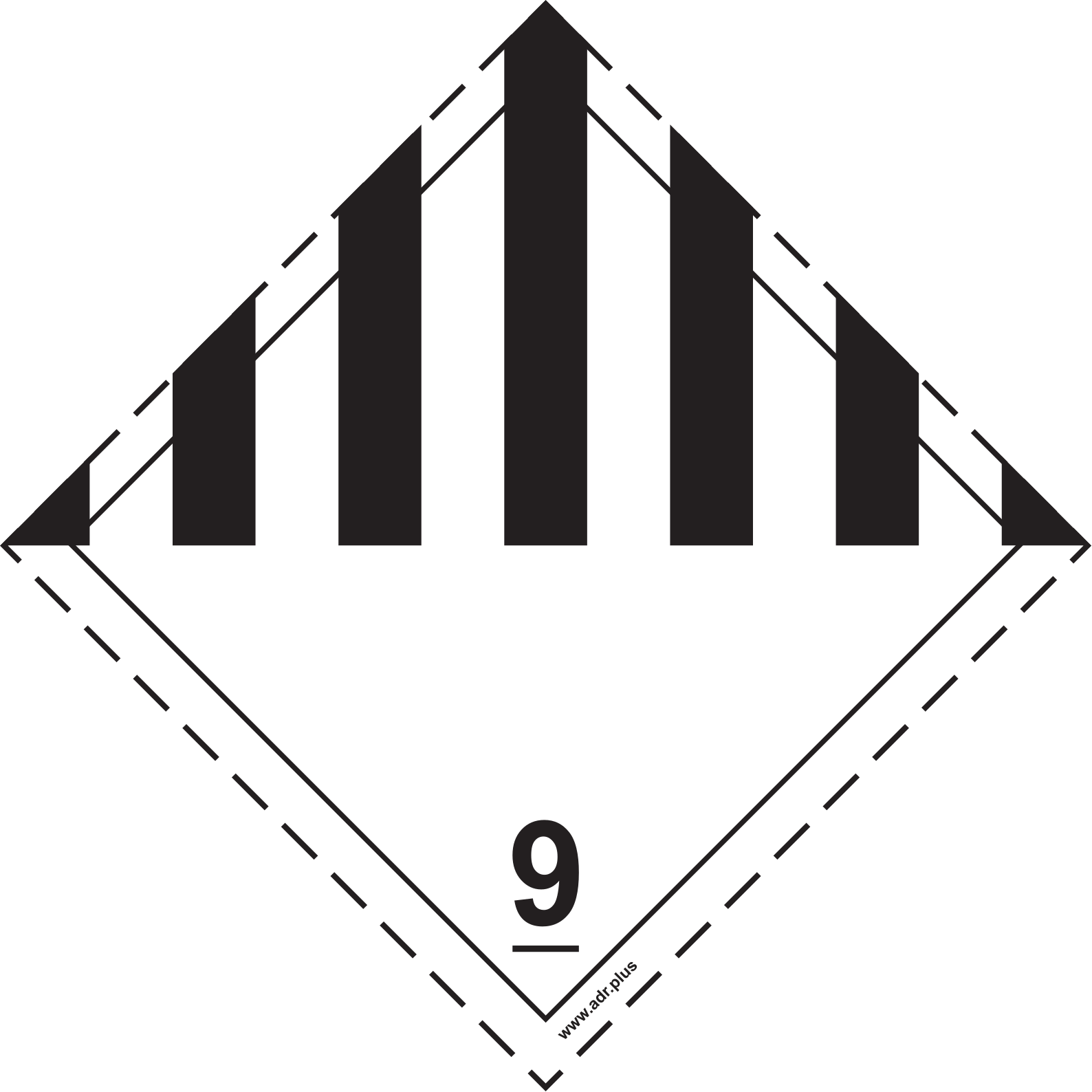
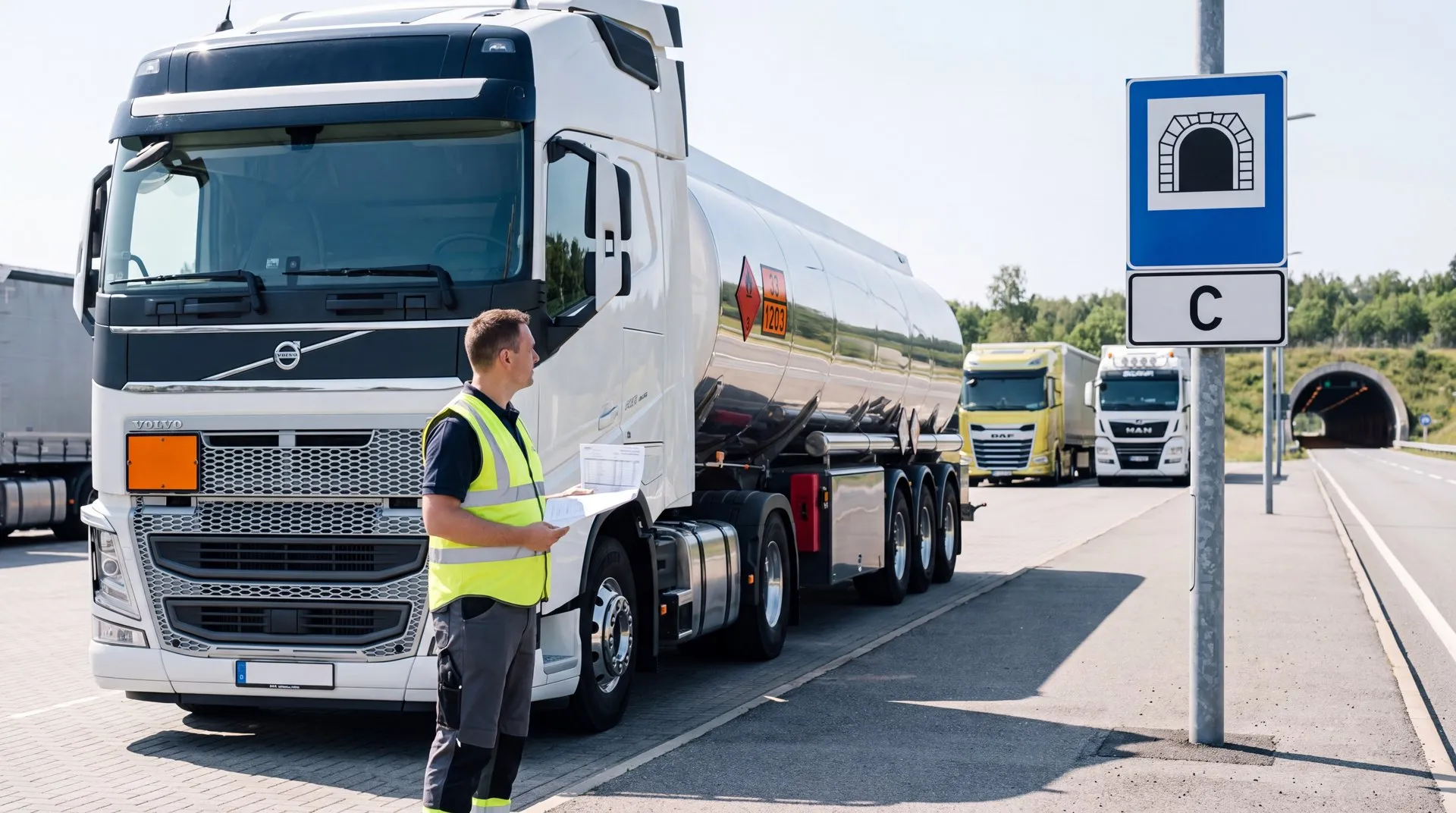
- Category I — a high risk of death, serious personal injury or significant damage to the environment. Requires immediate corrective measures, usually immobilisation of the vehicle. Examples — leaking goods, carriage in unapproved packaging, no orange plates or placards, a driver without a certificate, no DGSA appointed.
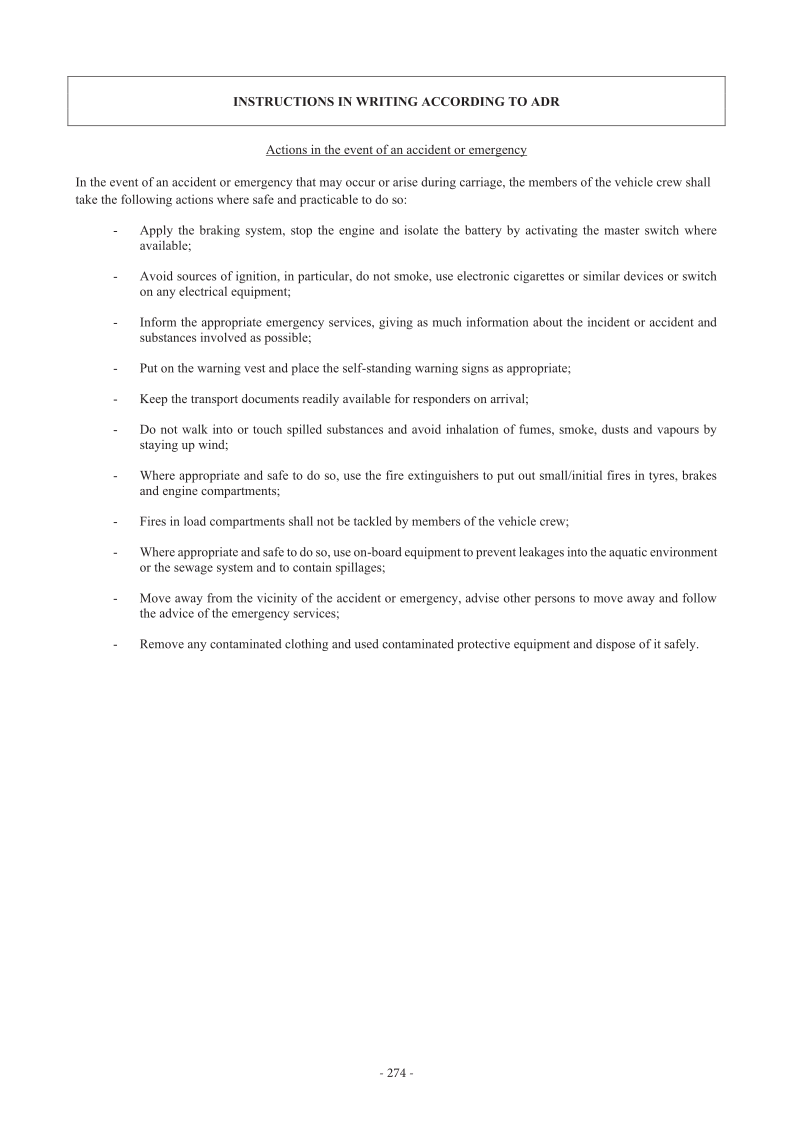
- Category II — a risk of personal injury or damage to the environment. Corrected on the spot where possible, and at the latest on completion of the journey. Examples — incomplete equipment, a fire extinguisher that does not work, no instructions in writing.
- Category III — a low risk. Correction can wait, but the infringement still goes on the record. Examples — a placard or its lettering of the wrong size, a driver certificate left at home although it is valid.
The check does not end on the road. Both the Directive and ADR 1.8.1.3 provide for checks at the premises of undertakings — preventive, or after infringements recorded at the roadside. That is where the questions about the DGSA, staff training and the annual report are asked.
What an infringement costs
The EU has not harmonised the amount of the fine — it is set by each country’s law. On the active markets of ADRplus the picture is as follows.
| Latvia | Lithuania | Estonia | |
|---|---|---|---|
| Main law | Law on the Movement of Dangerous Goods, Sections 13–15 | Code of Administrative Offences, Articles 435 and 436 | Road Transport Act § 66, Chemicals Act § 13 |
| No DGSA appointed | €1,400–7,000 for a legal person | €120–220 for the manager | up to €2,400 for a person and up to €32,000 for a legal person |
| Most serious carriage infringements | carrier €430–2,900, consignor as a legal person €1,400–7,000 | €300–600 for the manager, for goods prohibited from carriage | up to €400, €1,600 or €2,400 for a person by risk level, up to €32,000 for a legal person |
| No security plan | €280–2,900 for a legal person | no separate offence | a breach of ADR 1.10 counts as category I under § 66 |
| Who checks at the roadside | State Police | Transport Safety Administration and the police | Police and Border Guard Board, Tax and Customs Board |
Three observations from the table.
Lithuania fines in person. The Code addresses fines to company managers and other responsible persons, drivers and loaders. There is no separate fine on the legal entity under these articles, and the amounts are modest. But a report in the director’s own name is a very different conversation inside the company.
Estonia ties fines to the risk categories. § 66 of the Road Transport Act mirrors the three risk levels of the Directive, and since 1 January 2025 the fine unit has been €8. The ceiling for a company is €32,000 at every level.
Latvia counts in fine units. One unit is €5, and the law separately names the offences companies learn about last — no DGSA appointed, no training records, no security plan.
Who is actually fined
A common mistake is to assume that the driver answers. Under chapter 1.4 of ADR the obligations are spread along the whole chain, and national laws follow that logic. Wrong classification, packaging and documents are attributed to the consignor. Damaged packages and breaches of the mixed loading prohibitions — to the loader. The absence of a DGSA — to the company itself or its manager.
Hence the practical conclusion — a warehouse, a manufacturer and a forwarder are exposed no less than the carrier, even though they are never on the road.
What is found most often
- A transport document without mandatory elements — the UN number, the proper shipping name, the packing group, the tunnel code.
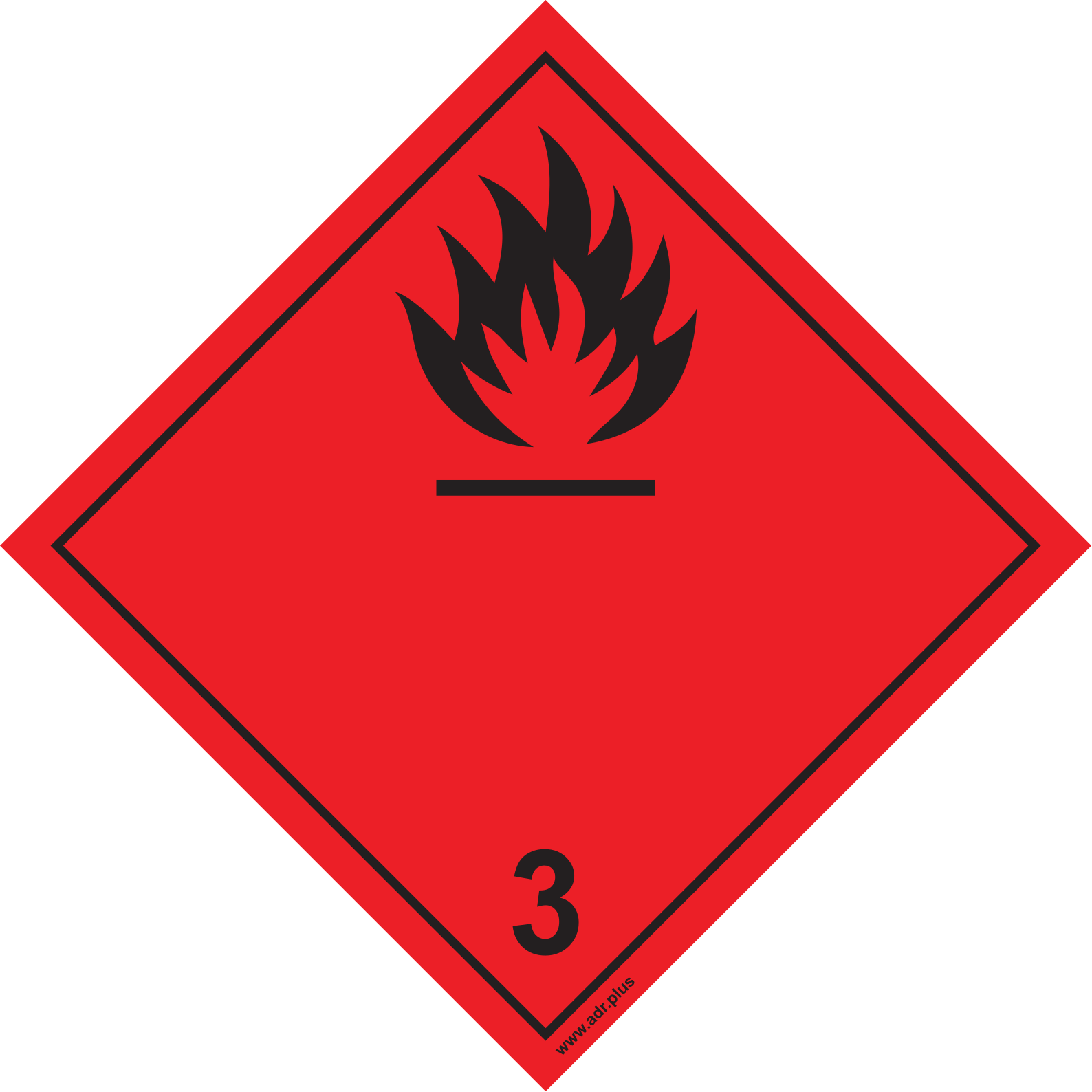
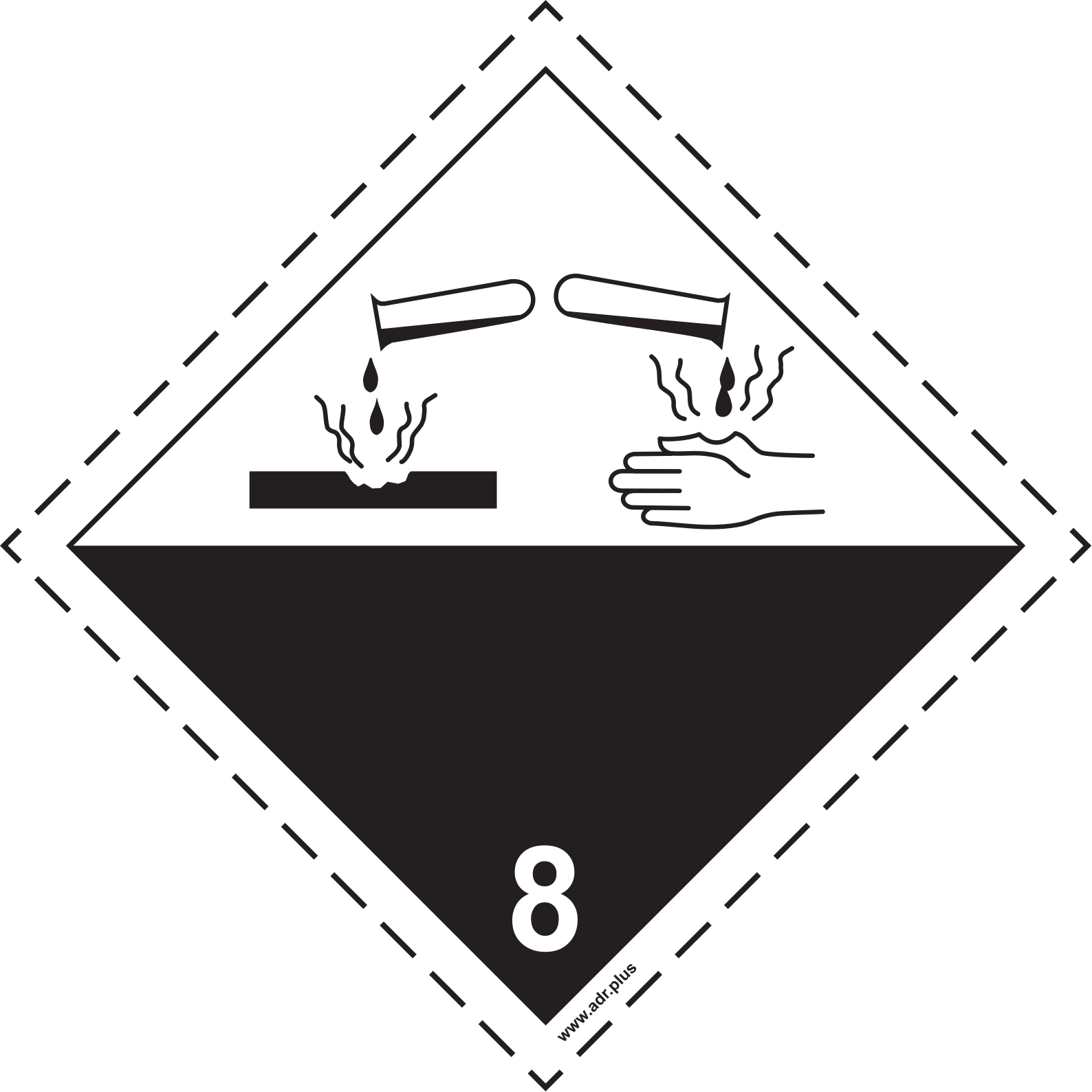
- Placards and orange plates not to ADR — wrong size, faded, printed on an office printer.
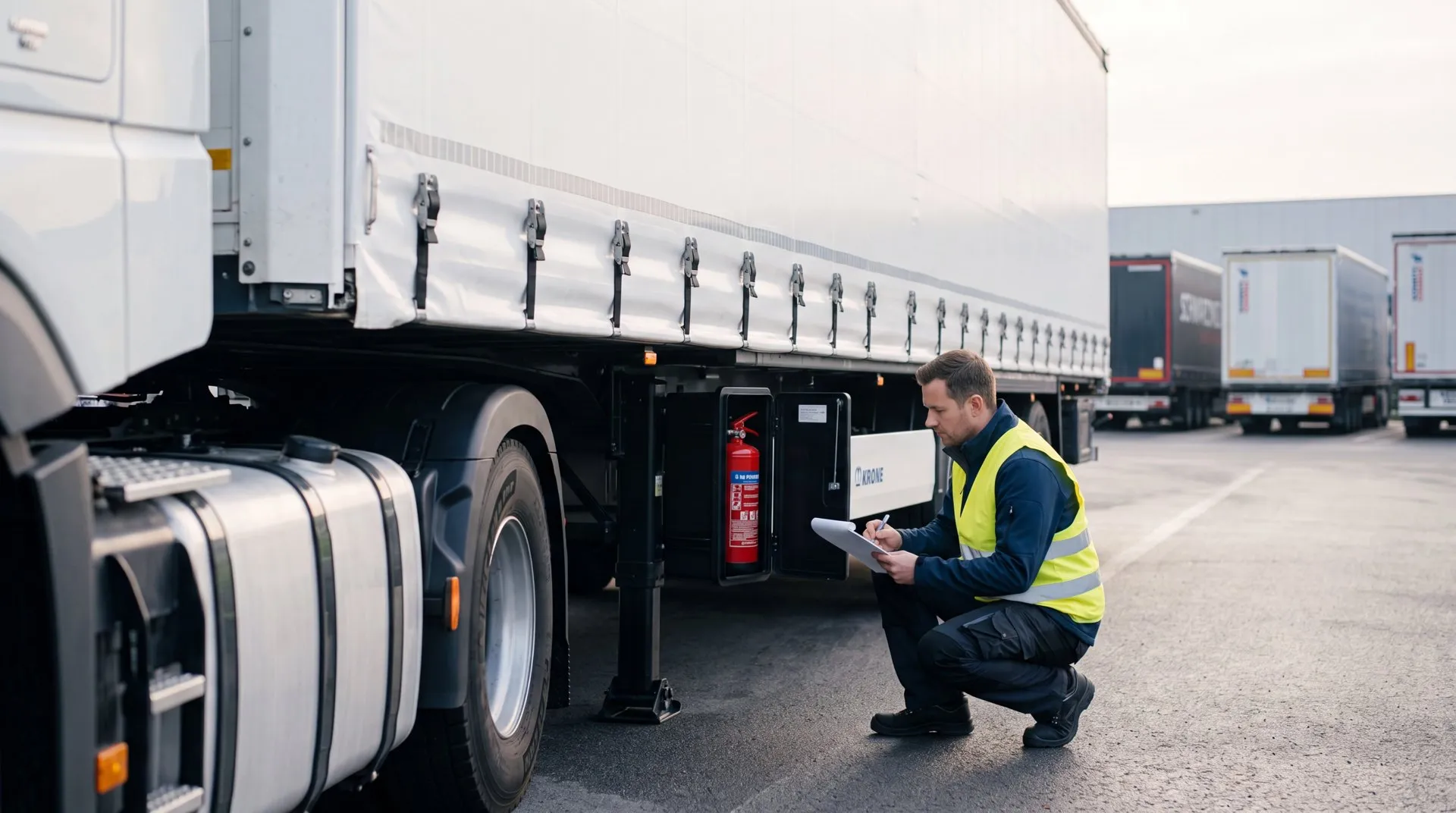
- Incomplete equipment — no wheel chock, no eye rinsing liquid, an expired fire extinguisher.
- No instructions in writing in a language the crew can read and understand.
- A 1.1.3.6 exemption calculated in the head, with no record.
- At the premises — no DGSA, no training records under chapter 1.3, no annual report.
Almost everything on this list is closed once — with a procedure, a document template, an equipment kit. A compliance audit follows the same checklist as the inspector, only before the check rather than during it. More on the single checklist in the knowledge base article Unified ADR checks.