
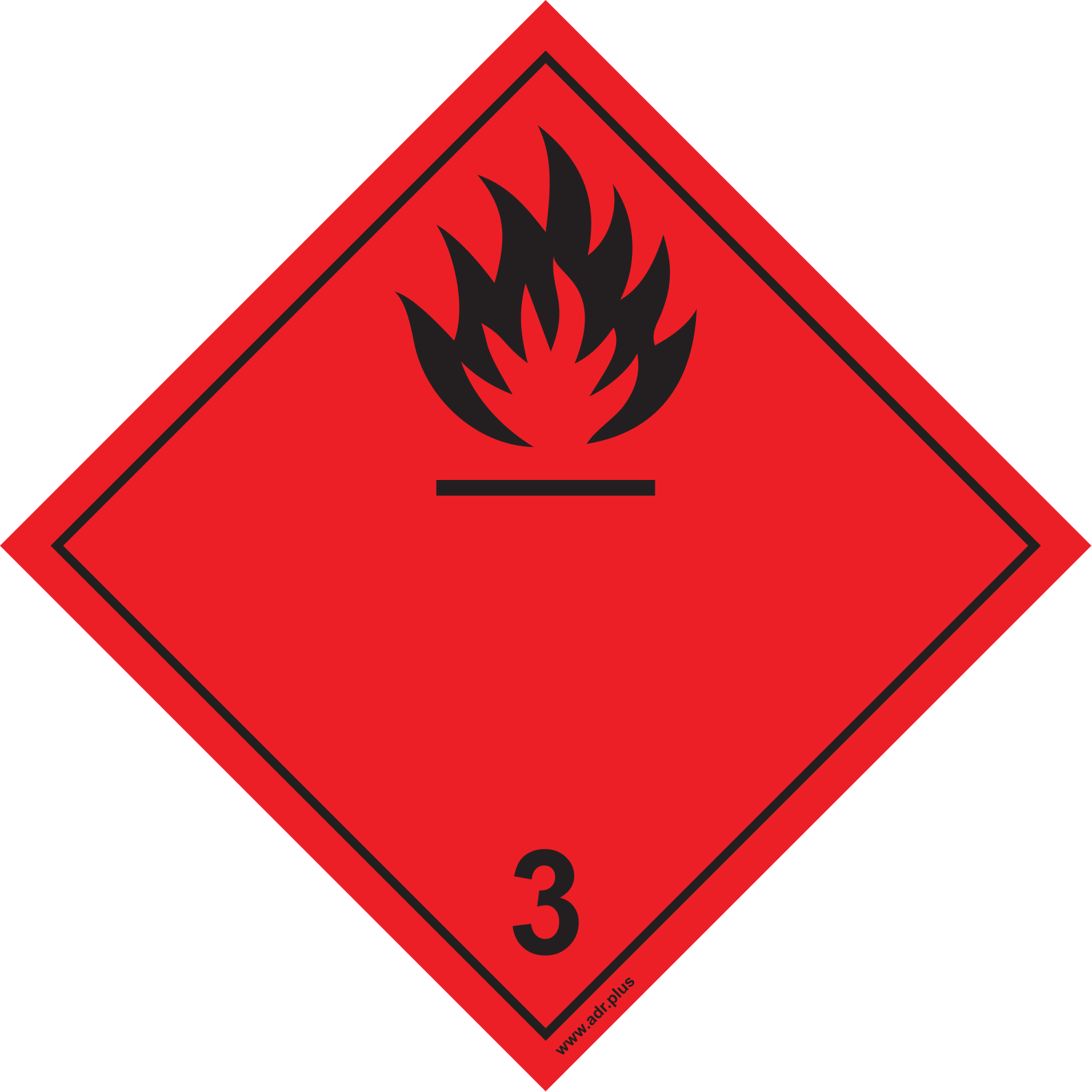
Class 3 — flammable liquids
Liquids that give off flammable vapour at or below 60 °C — fuels, solvents, paints and alcohols, one of the most common classes on the road.
- Packing groups
- I–III
- UN entries
- 552
What belongs in this class?
A substance is in Class 3 if it is a liquid, has a vapour pressure at 50 °C of not more than 300 kPa (3 bar), is not completely gaseous at 20 °C, and has a flash-point of not more than 60 °C. (ADR 2.2.3.1.1)
The class also covers liquids and molten solids with a flash-point above 60 °C that are carried while heated at or above that flash-point (assigned to UN 3256), and liquid desensitized explosives — explosives dissolved or suspended in liquid to suppress their explosive properties. (ADR 2.2.3.1.1)
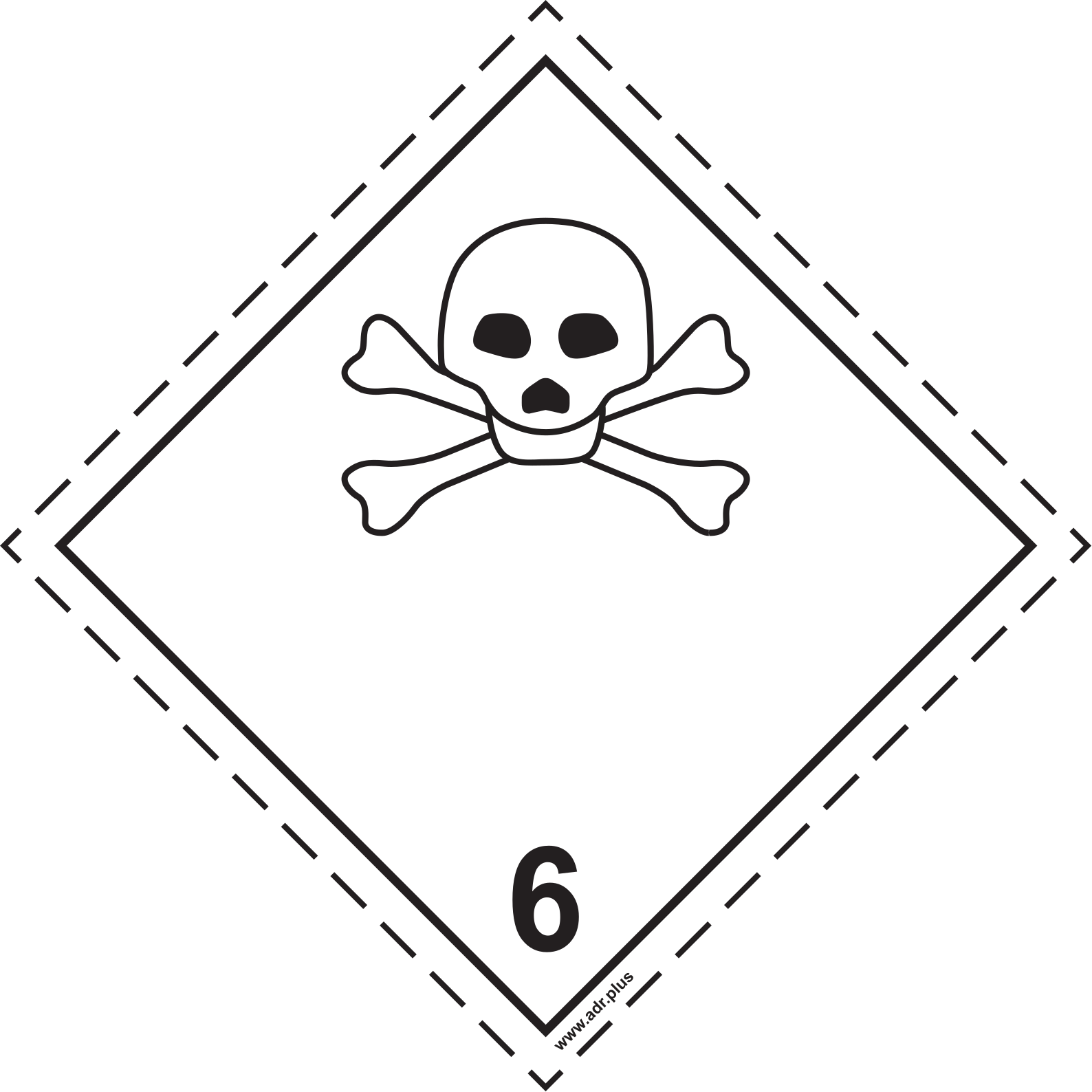
A name alone rarely settles the carriage picture. Highly toxic-by-inhalation flammable liquids, and toxic liquids with a flash-point of 23 °C or above, are Class 6.1 rather than Class 3 — so the specific UN entry always has the final word. (ADR 2.2.3.1.1)
Classification rules
- ADR 2.2.3.1.2
Class 3 is subdivided by classification code — F for flammable liquids without a subsidiary hazard, FT toxic, FC corrosive, FTC toxic and corrosive, and D for liquid desensitized explosives.
- ADR 2.2.3.1.4
Viscous flammable liquids such as paints, lacquers and adhesives with a flash-point below 23 °C may drop to packing group III when they meet the viscosity, solvent-separation and receptacle-capacity conditions (receptacles of not more than 450 litres).
- ADR 2.2.3.1.1
By derogation, diesel fuel, gas oil and light heating oil with a flash-point above 60 °C and up to 100 °C are still treated as Class 3 under UN 1202.
- ADR 2025
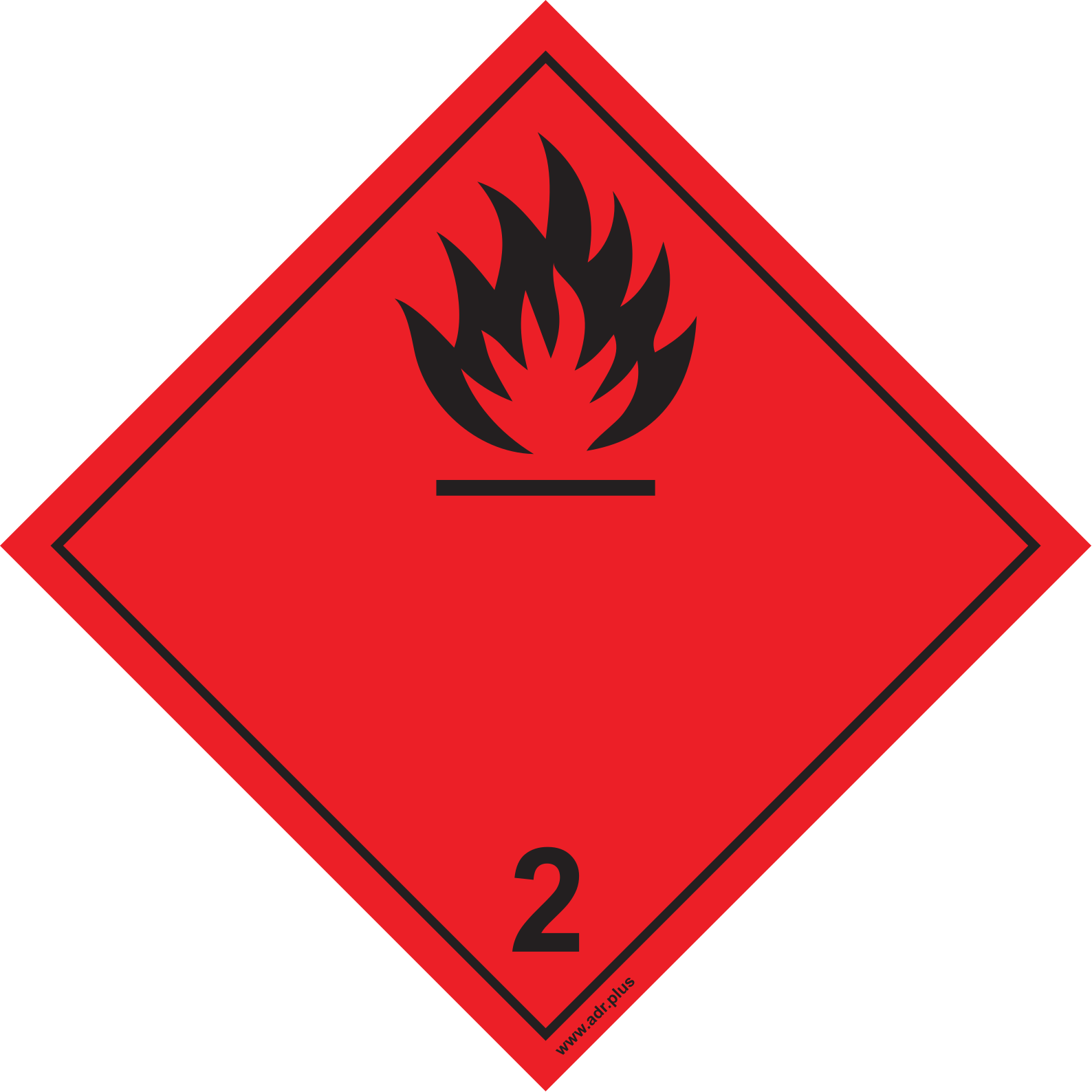
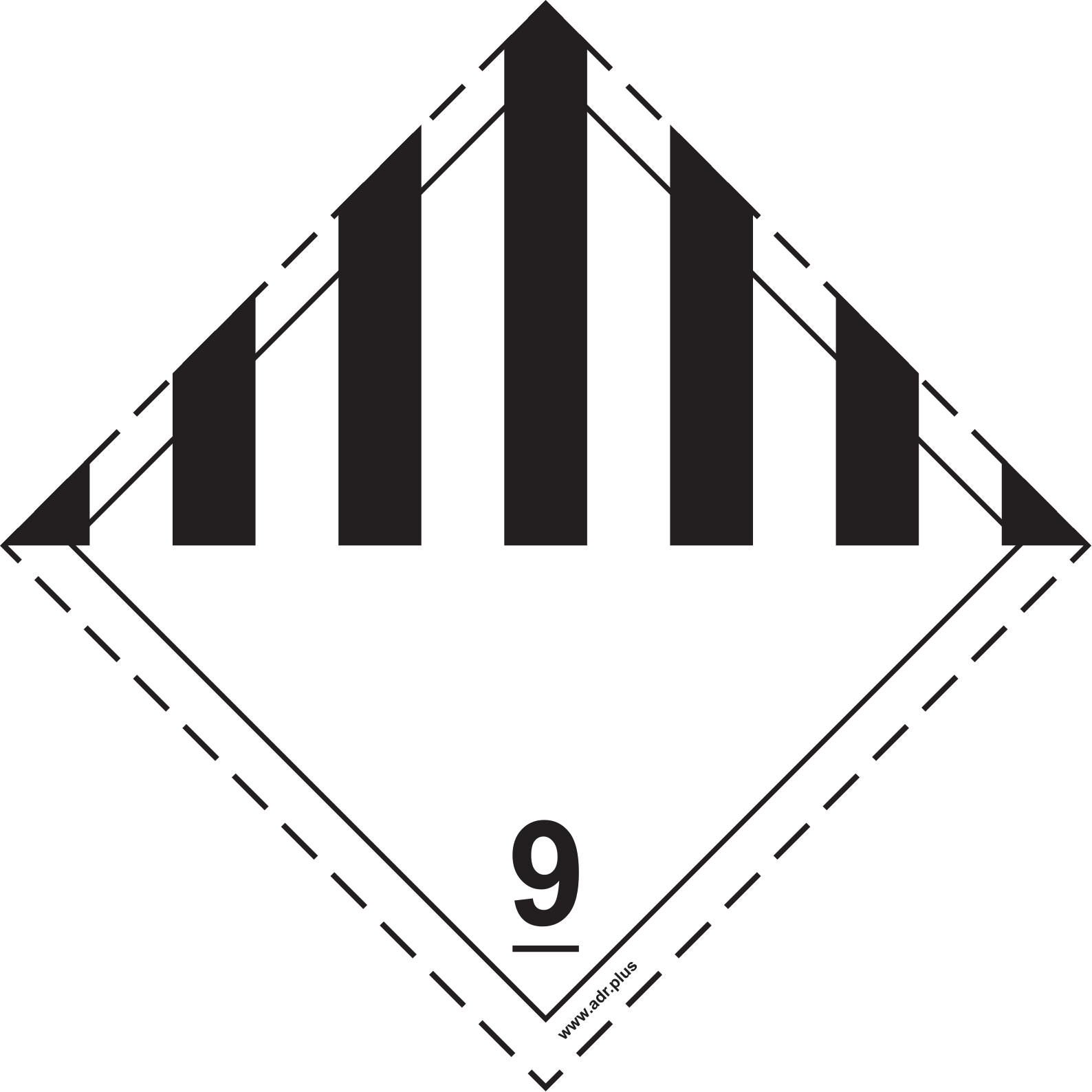
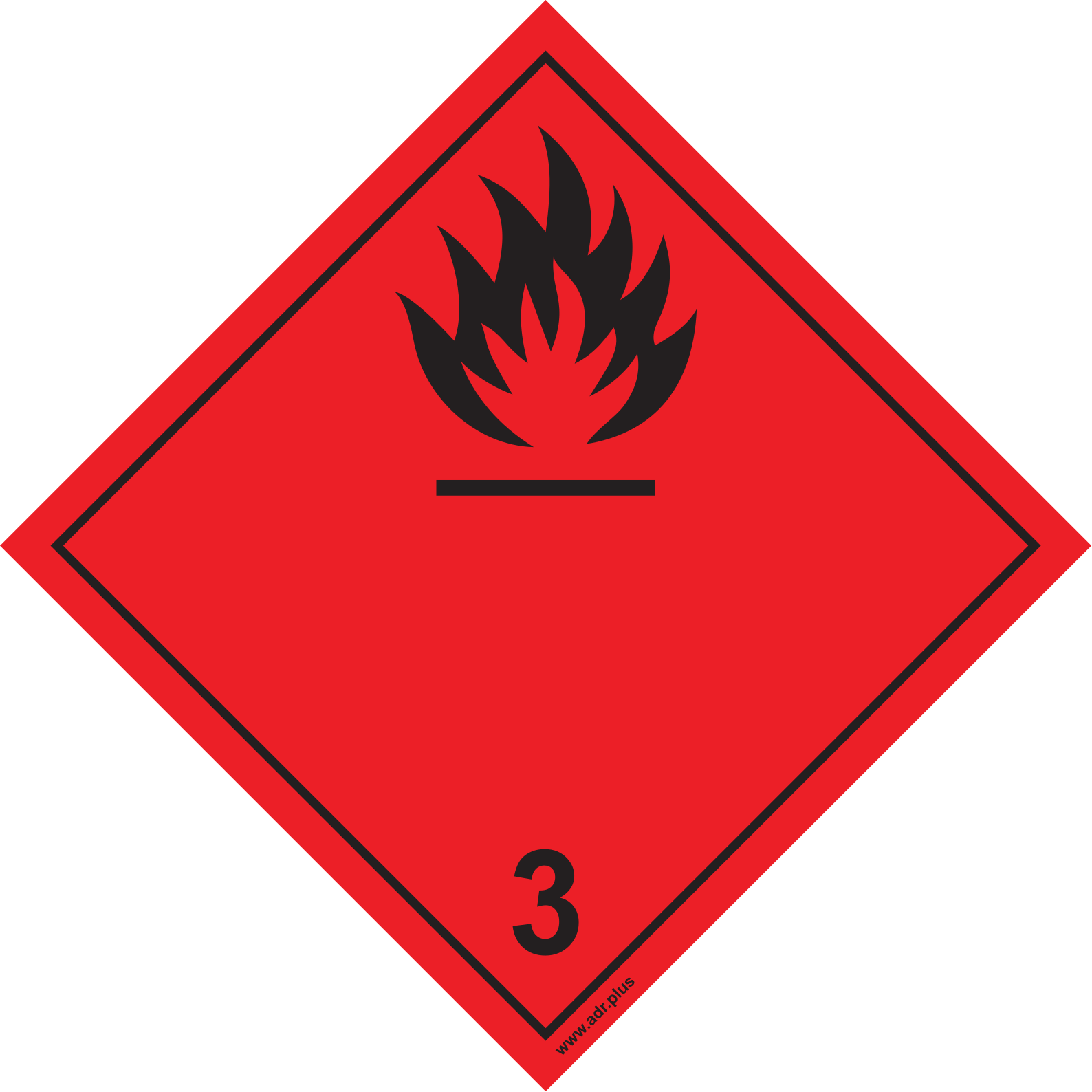
The danger label for Class 3 is label No. 3.
Packing groups in this class
How many UN numbers in this class fall under each packing group.
Flammable liquids are assigned to a packing group by the degree of danger they present, using flash point and initial boiling point. (ADR 2.2.3.1.3)
- PG I — initial boiling point of 35 °C or below. (ADR 2.2.3.1.3)
- PG II — flash point below 23 °C with an initial boiling point above 35 °C. (ADR 2.2.3.1.3)
- PG III — flash point of 23 °C up to and including 60 °C, with an initial boiling point above 35 °C. (ADR 2.2.3.1.3)
The lower the flash point, the more readily the vapour ignites — which is why the packing group, and the tunnel restriction that follows from it, matter so much for these goods. Where a liquid also carries a subsidiary hazard, the packing group is settled through the table of precedence of hazards. (ADR 2.2.3.1.3)
Class 3 in Table A
Transport categories, tunnel codes and quantity reliefs across the 552 Table A entries of this class.
Transport categories
The category feeds the 1.1.3.6 calculation — the lower the number, the stricter the limit.
Tunnel codes
The column 15 code decides which tunnel categories the load may pass.
Limited quantities (LQ)
entries allow LQ
of 552 in the class
For the rest there is no relief — the full ADR applies to any quantity.
Excepted quantities (EQ)
entries allow EQ
of 552 in the class
For the rest there is no relief — the full ADR applies to any quantity.
Marking and signs for Class 3
What must be on every package — and what the transport unit carries on the road.
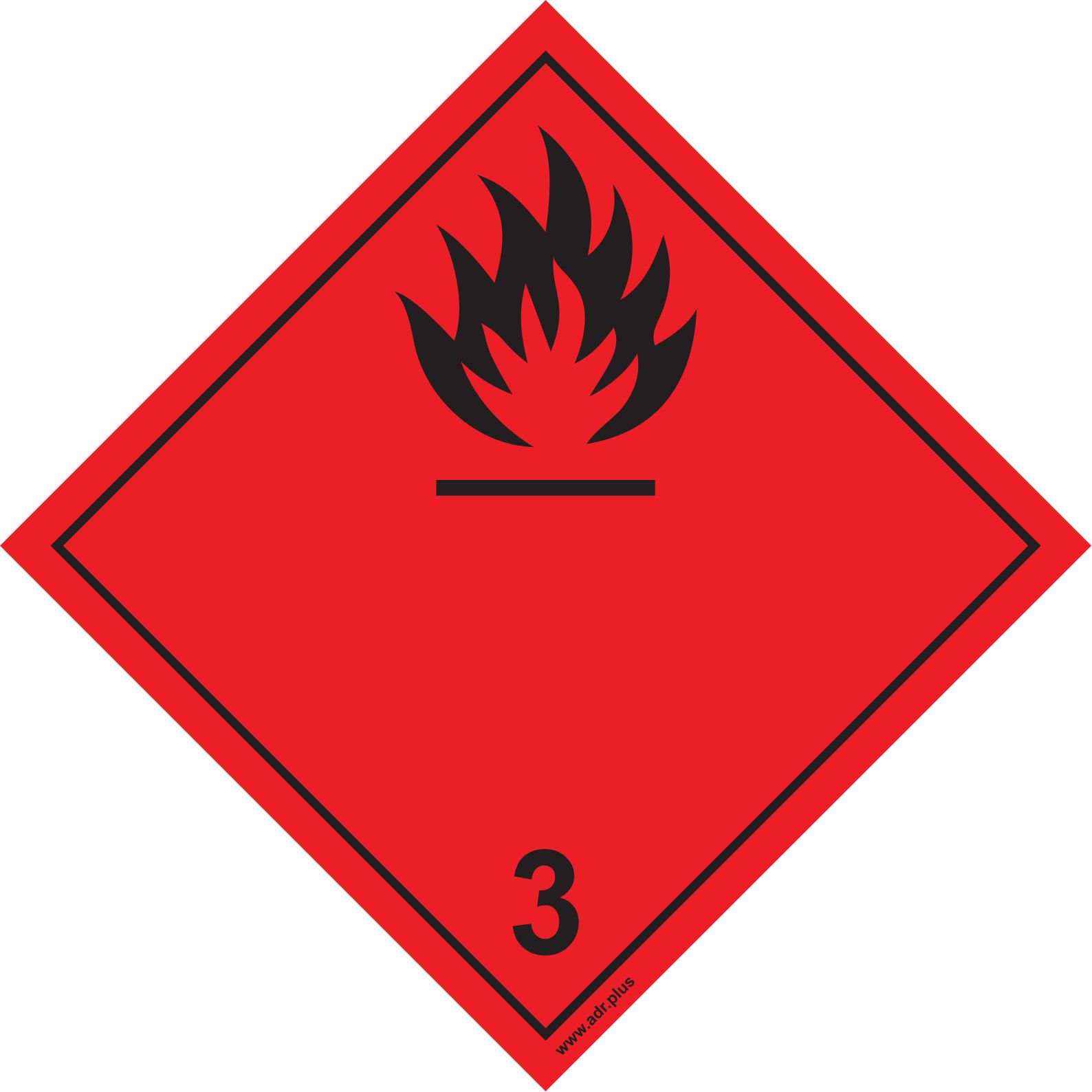
On the package
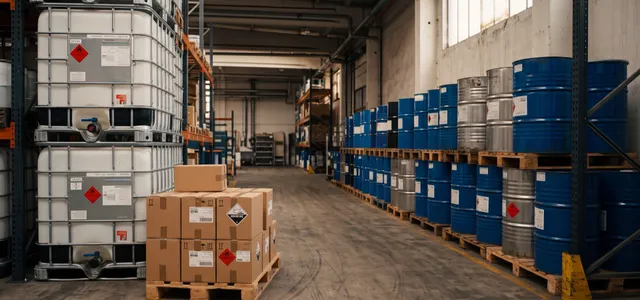
Every package carries the danger label of its Table A entry and the UN number with the letters "UN" (ADR 5.2.1, 5.2.2).
On the transport unit
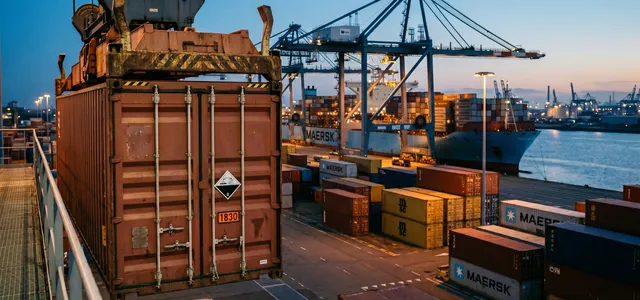
Orange plates at the front and rear — and for tanks and bulk also enlarged placards 250 × 250 mm on the sides and rear (ADR 5.3.1, 5.3.2).

Limited quantities
Goods packed under Chapter 3.4 carry the LQ mark instead of the danger label and UN number (ADR 3.4.1, 3.4.7).
Class 3 specifics
- ADR 5.2.1.10.1
Combination packagings having inner packagings containing liquids must be legibly marked with package orientation arrows on two opposite vertical sides.
Transport document
What must be written in the transport document when you ship Class 3 goods.
- ADR 5.4.1.1.1
The transport document entry shows the packing group, which may be preceded by the letters PG — for example, UN 1090, ACETONE, 3, PG II, (D/E).
- ADR 5.4.1.1.6.2.1
For empty packagings, uncleaned, the information of the goods last loaded may be replaced by "WITH RESIDUES OF " — for example, "EMPTY PACKAGINGS, WITH RESIDUES OF 3, 6.1, 8".
- ADR 5.4.1.1.3.1
For wastes, the proper shipping name is preceded by the word "WASTE" — for example, "UN 1230, WASTE METHANOL, 3 (6.1), PG II, (D/E)".
Reliefs and restrictions
How much may travel under lighter regimes — and where tunnels restrict the route — is set per UN entry in Table A.
Limited quantities (LQ)
Column 7a caps each inner packaging. Within Chapter 3.4 most ADR requirements fall away, including the driver certificate.
ReadExcepted quantities (EQ)
E codes in column 7b let very small inner receptacles travel with almost no ADR overhead (Chapter 3.5).
ReadTunnel restrictions
Column 15 assigns the tunnel restriction code — it decides which tunnel categories the load may pass.
ReadLook up a Class 3 UN number
Get the full ADR profile for any UN number in this class.
Typical UN numbers
All 552 entries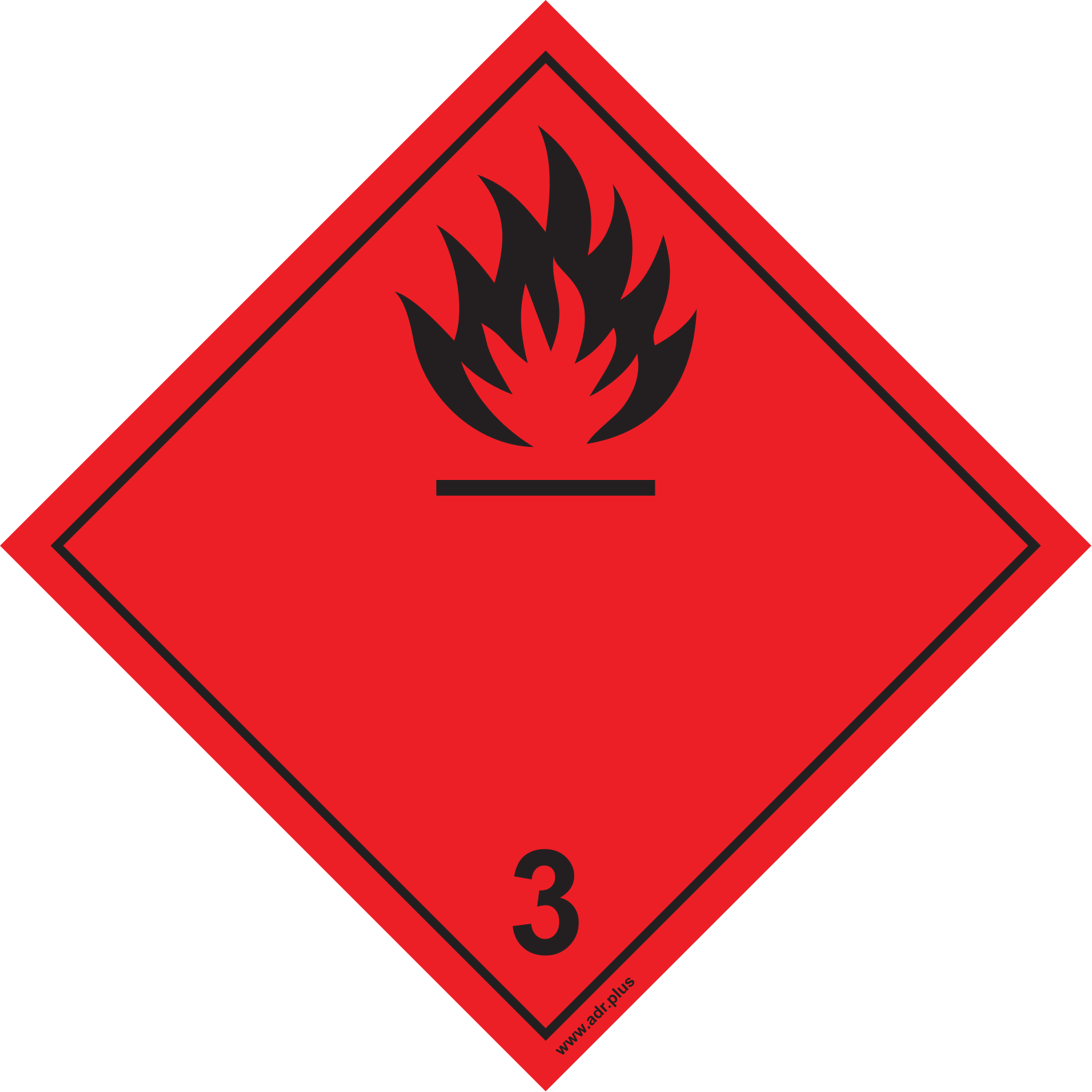
Help with Class 3 shipments
Not sure this class applies to you?
A DGSA can confirm the classification before your next load leaves the yard.
Train your team
Awareness training under ADR 1.3 for everyone who consigns, packs or loads dangerous goods.
Browse the courses