
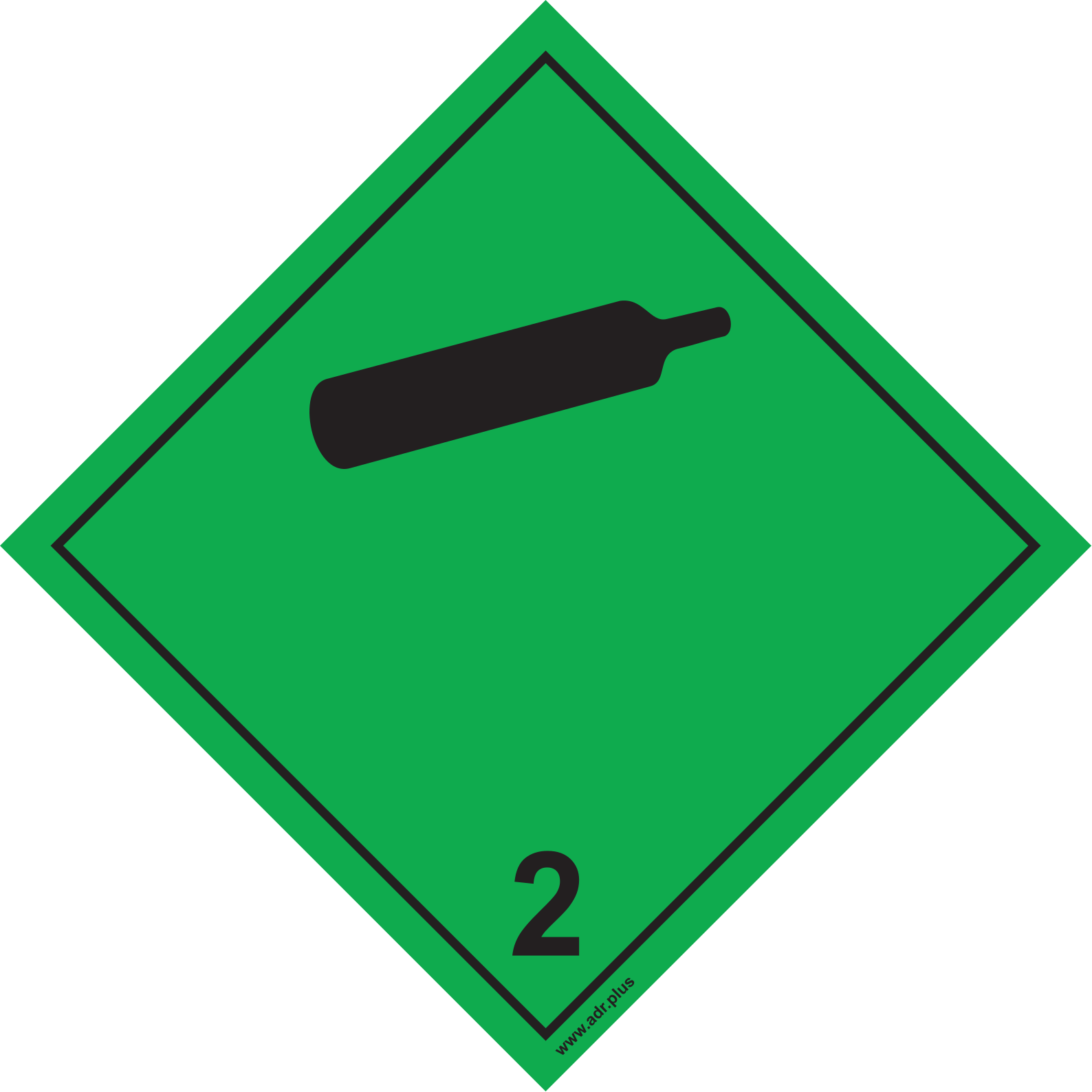
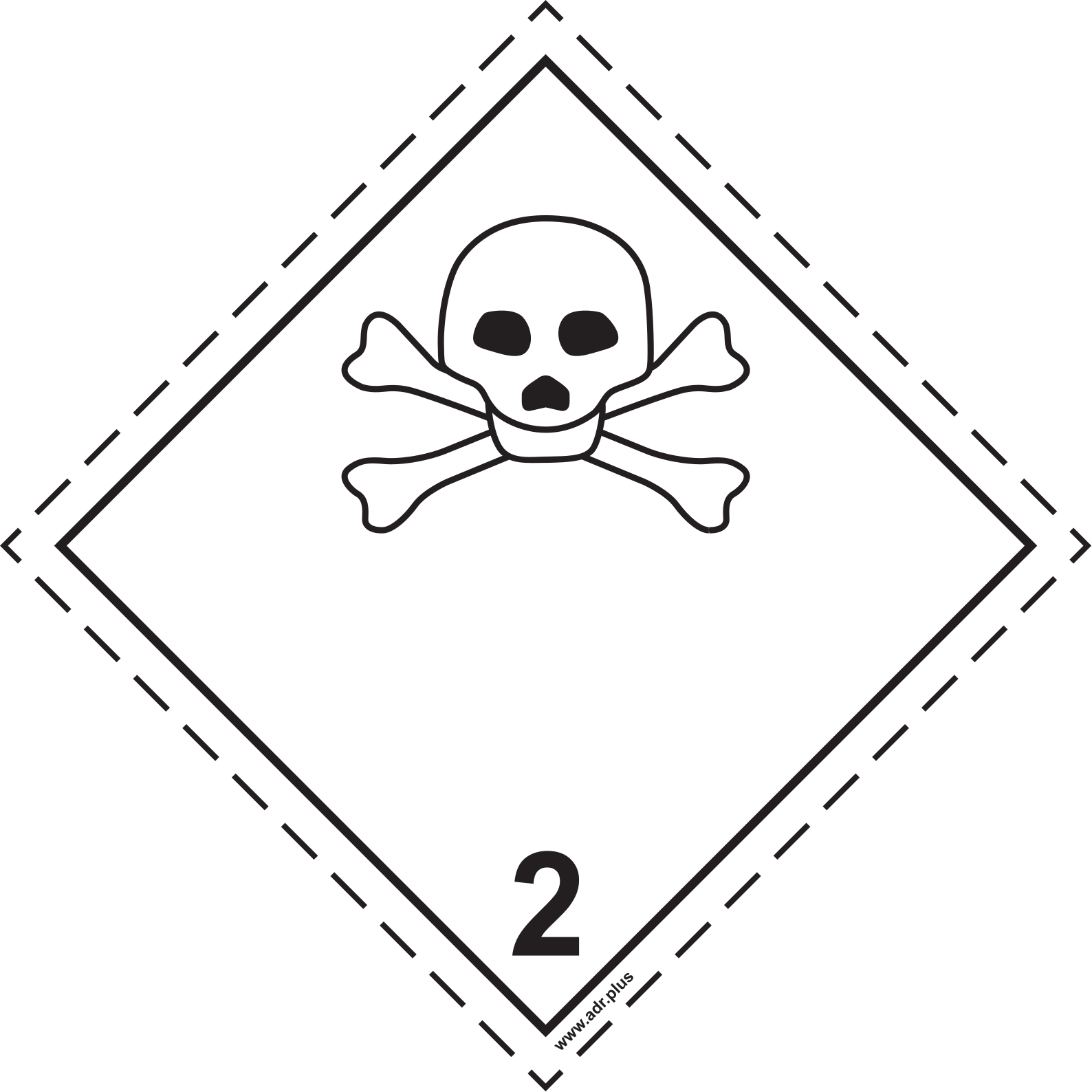
Class 2 — gases
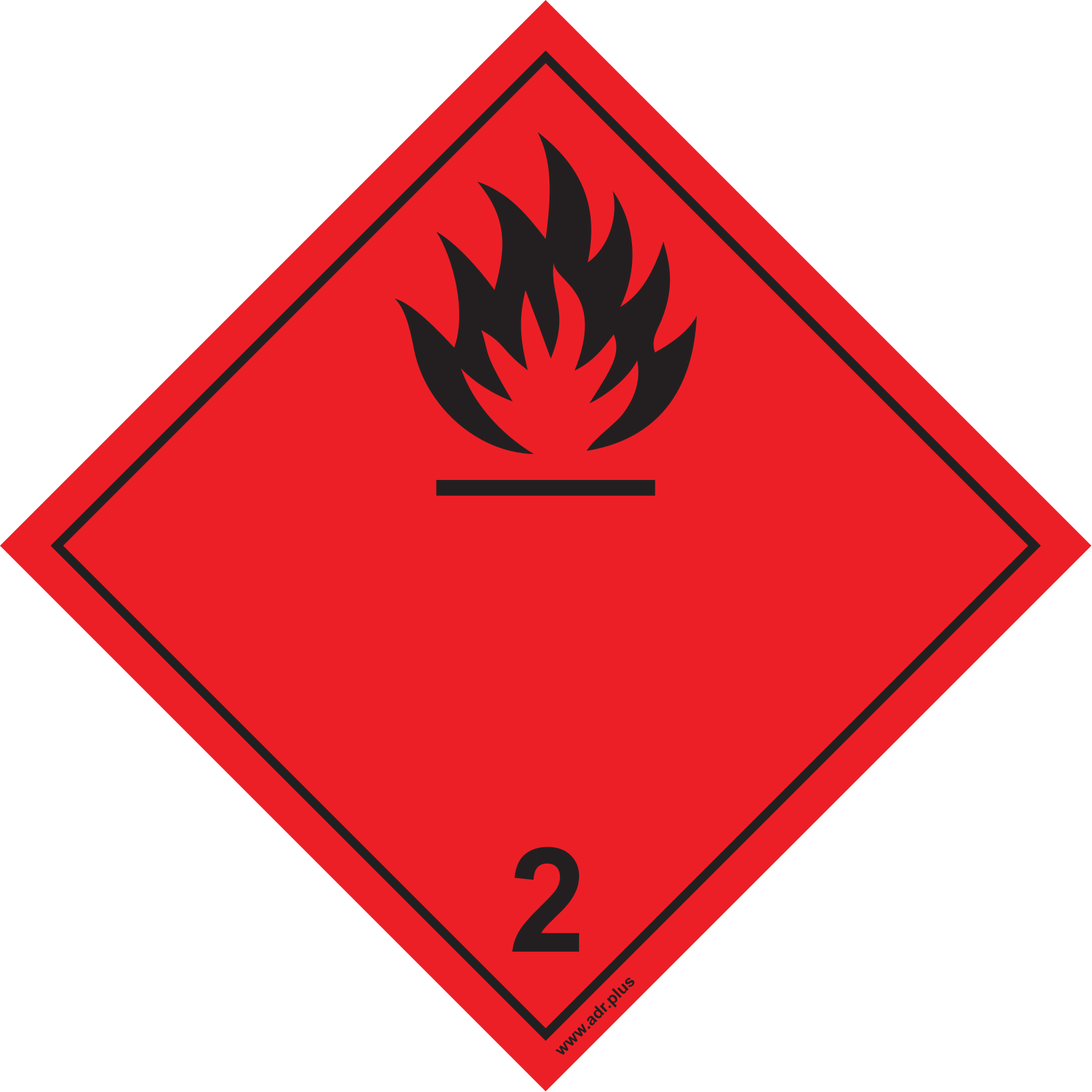
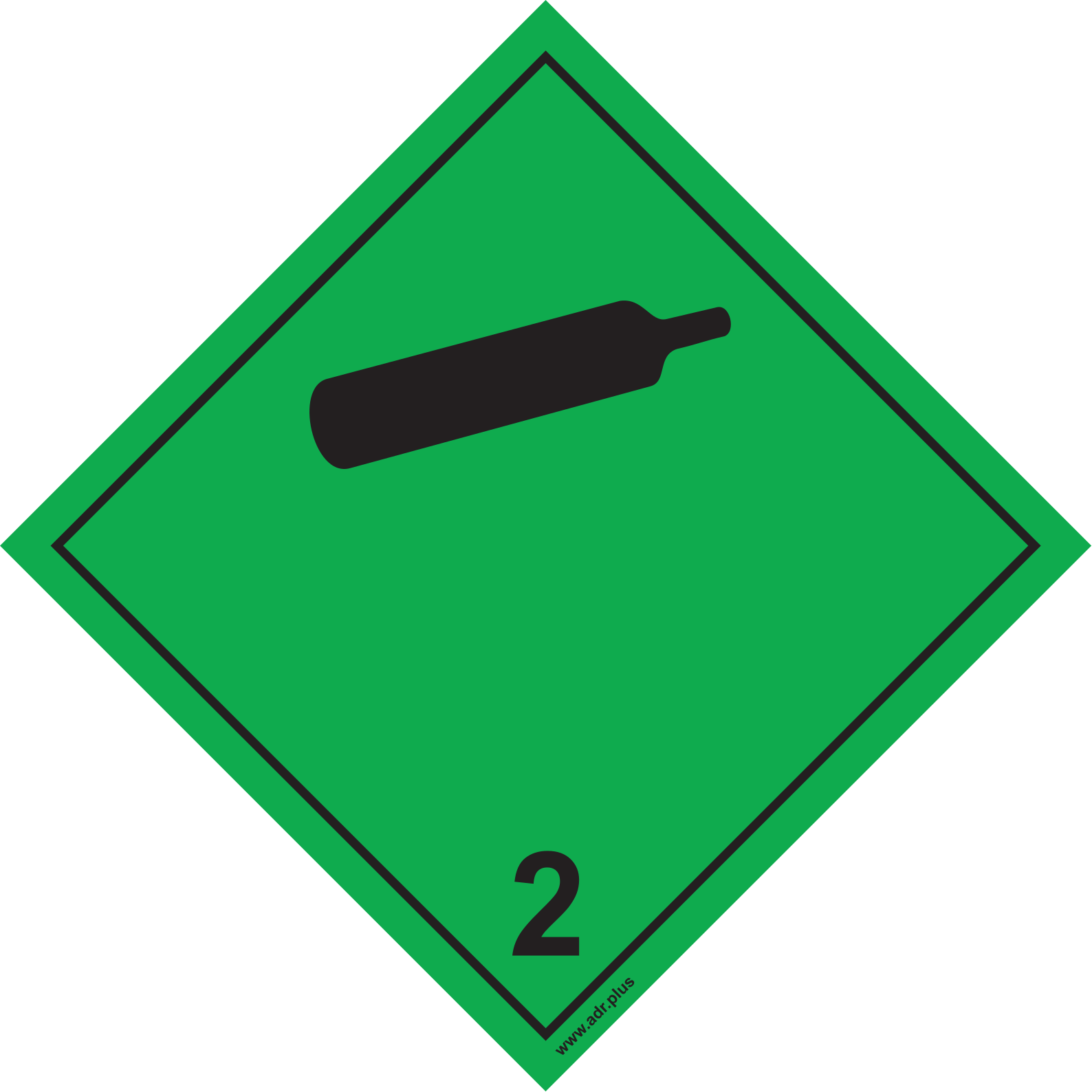
Compressed, liquefied, dissolved or refrigerated gases, divided into three groups — 2.1 flammable, 2.2 non-flammable non-toxic, and 2.3 toxic.
What belongs in this class?
Hazard divisions
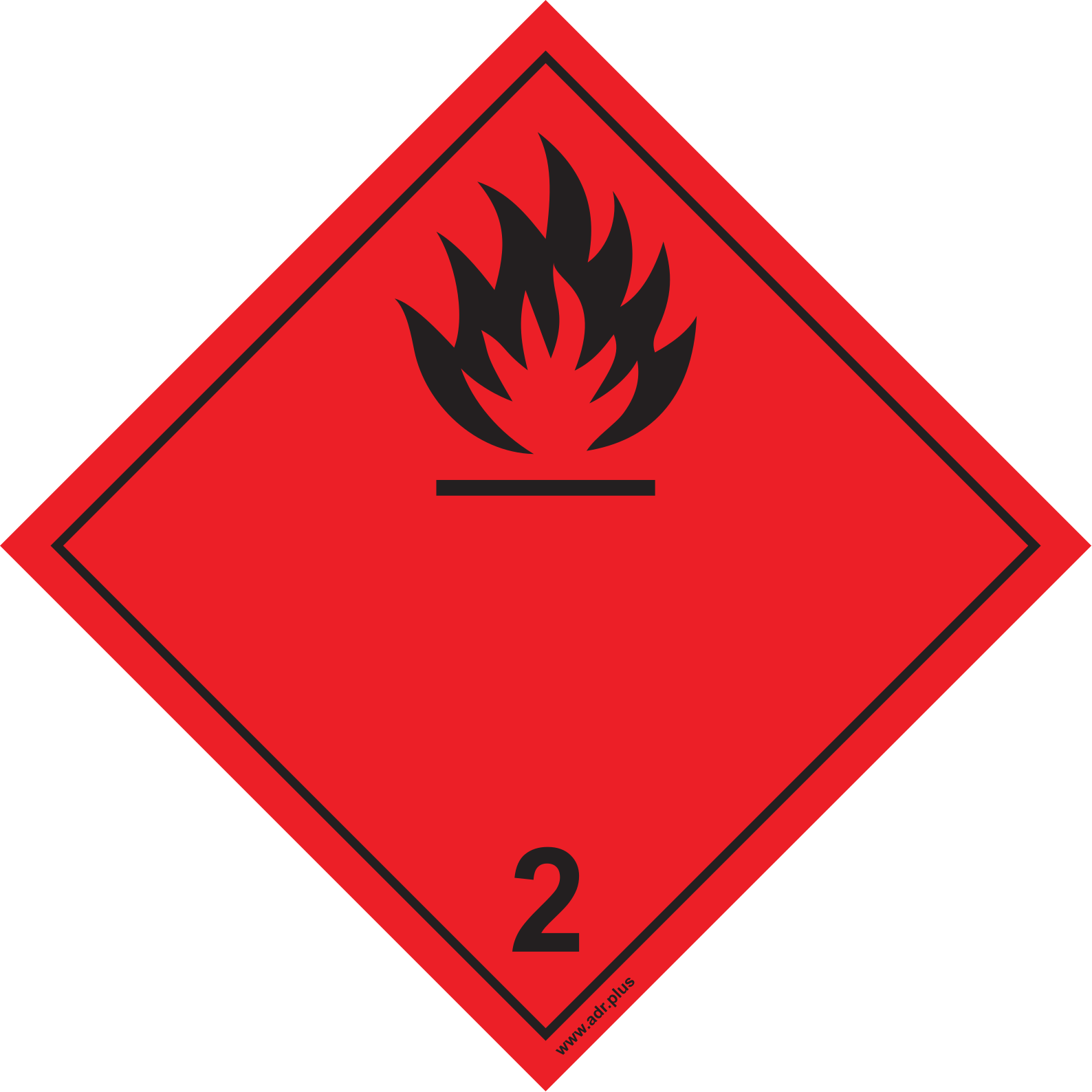
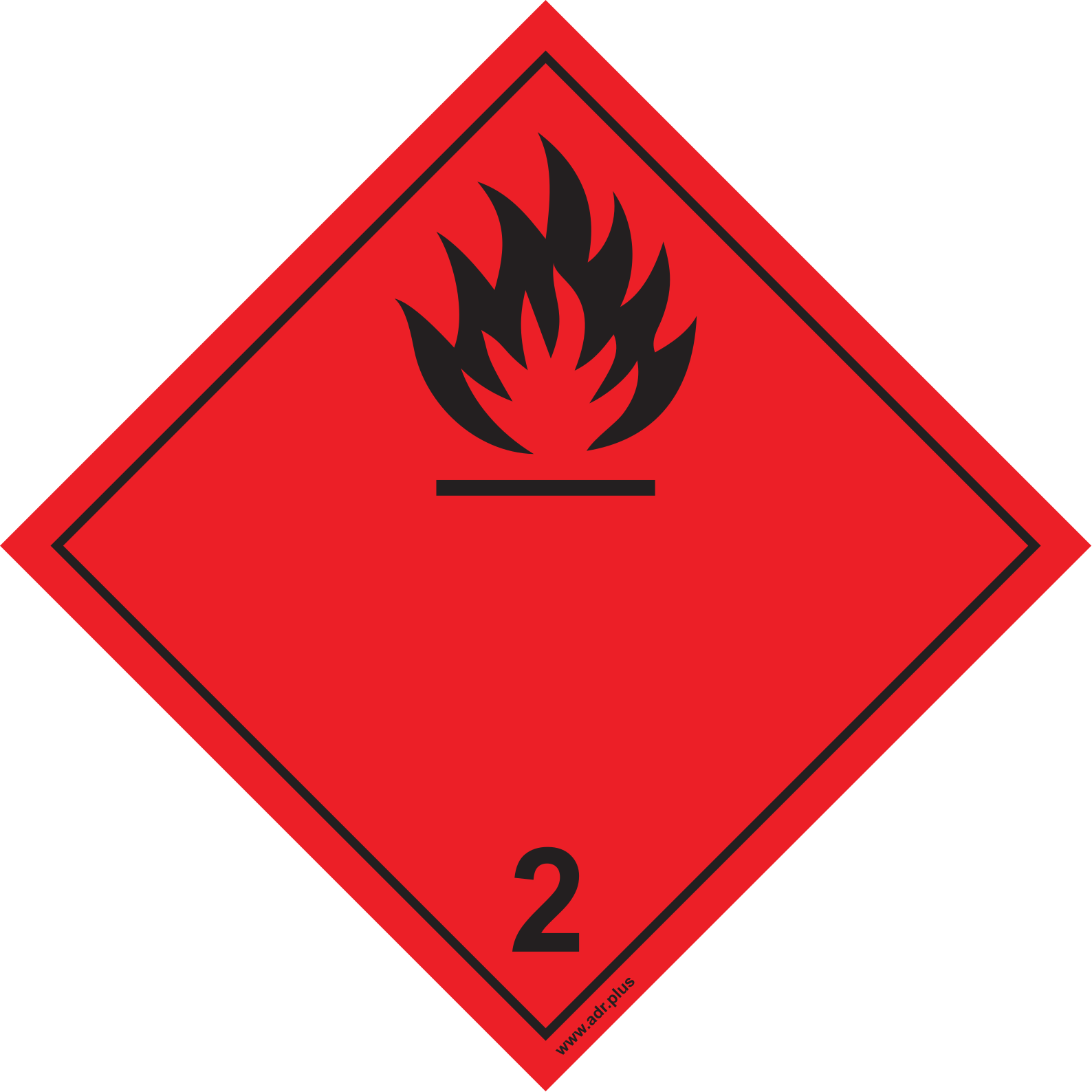
Class 2.1
Flammable gases
110 · entries
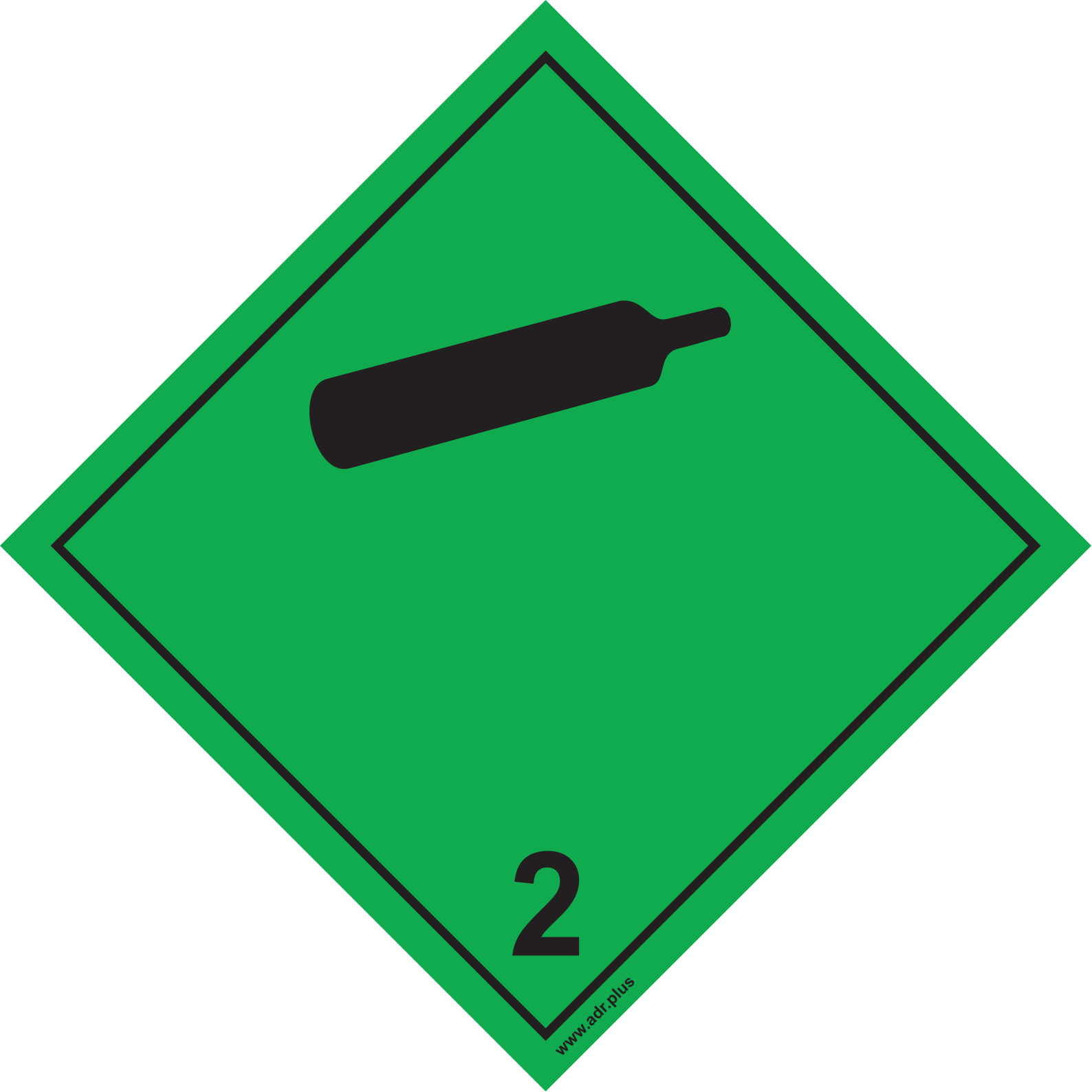
Class 2.2
Non-flammable gases
84 · entries
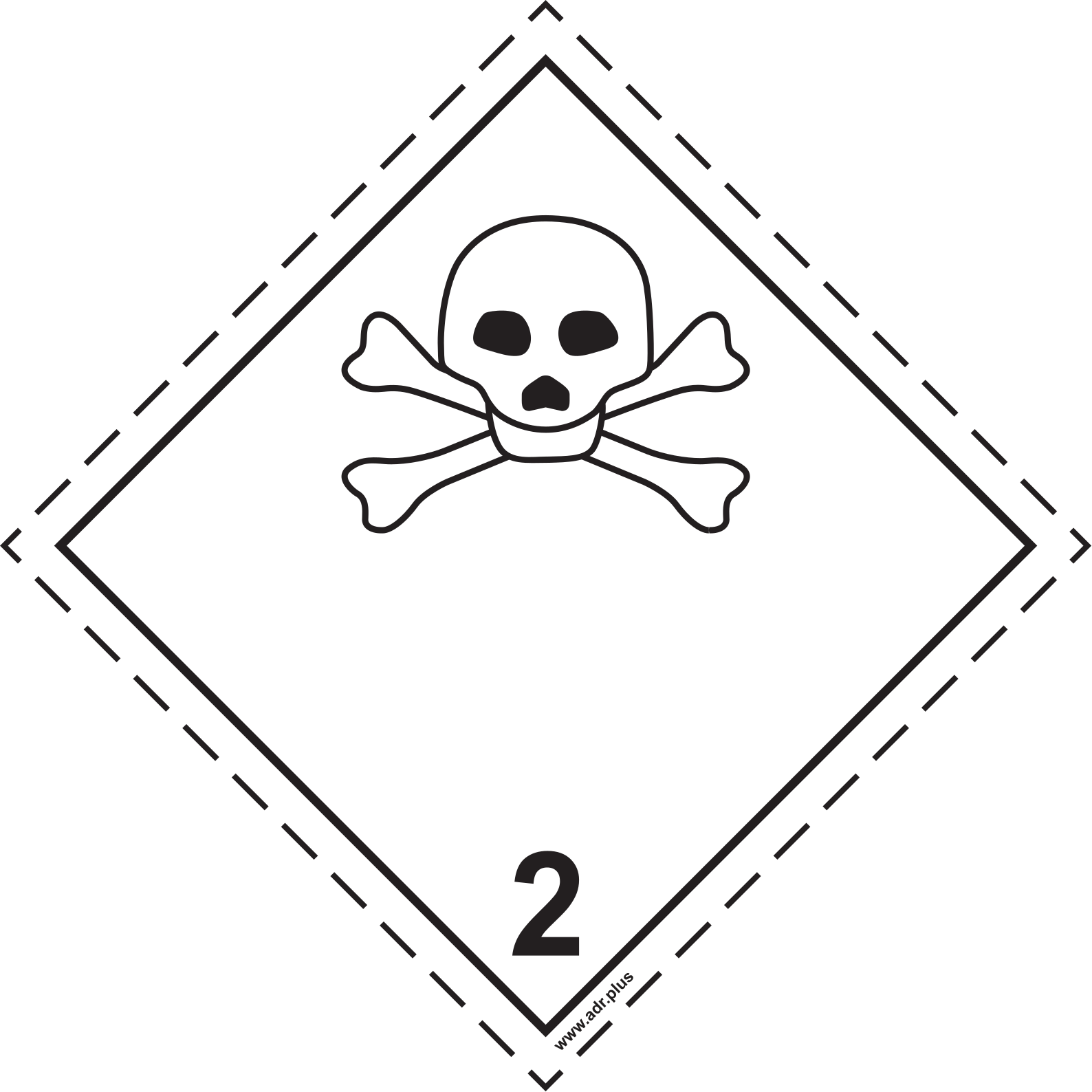
Class 2.3
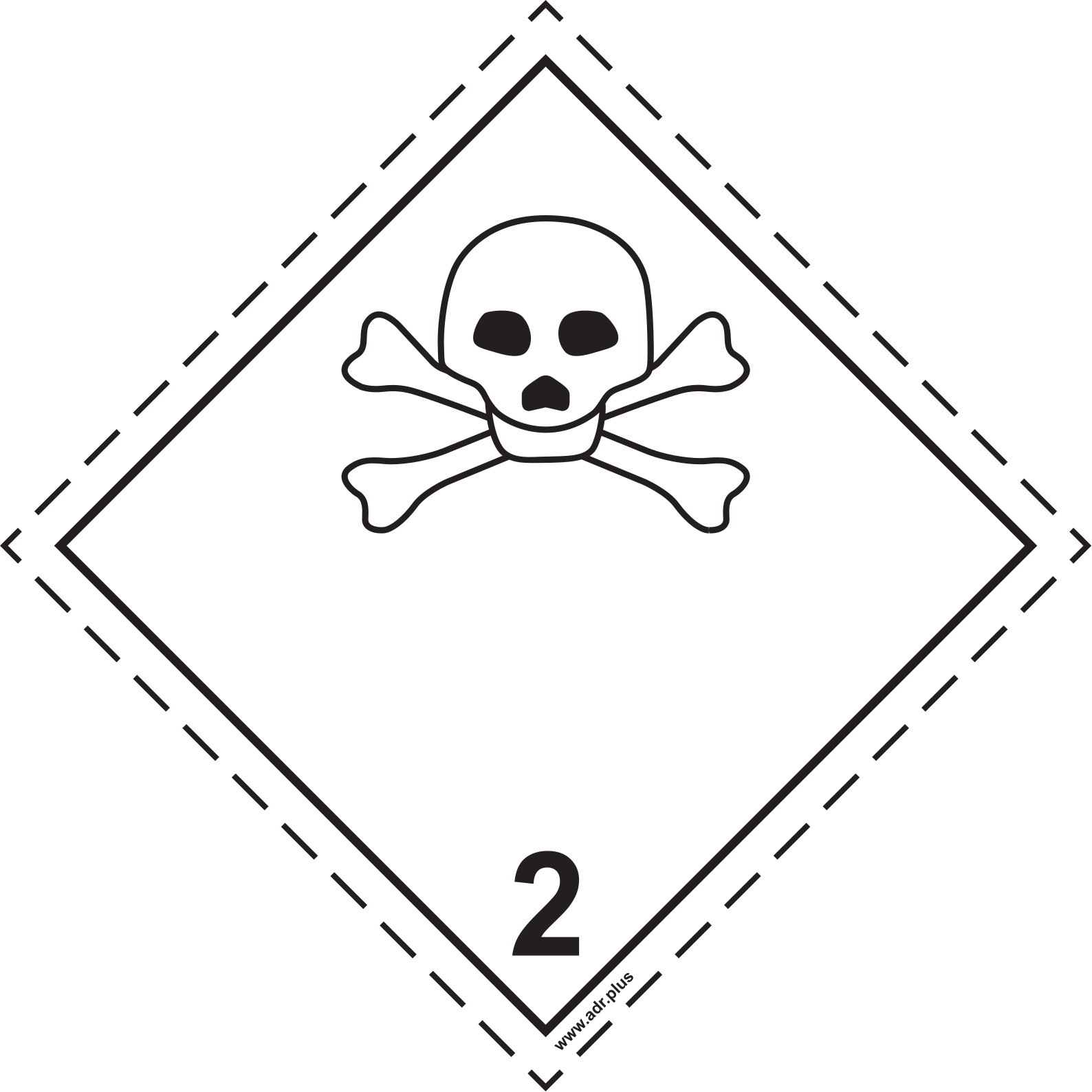
Toxic gases
90 · entries
Class 2 covers pure gases, mixtures of gases, mixtures of gases with other substances, and articles that contain them. (ADR 2.2.2.1.1)
A substance counts as a gas if, at 50 °C, it has a vapour pressure greater than 300 kPa (3 bar), or if it is completely gaseous at 20 °C at the standard pressure of 101.3 kPa. (ADR 2.2.2.1.1)
The physical state under which a gas is carried defines its sub-category — compressed, liquefied (high- or low-pressure), refrigerated liquefied, dissolved and adsorbed gases, along with aerosol dispensers, gas cartridges and chemicals under pressure. (ADR 2.2.2.1.2)
Classification rules
- ADR 2.2.2.1.2
The classification code combines the physical-state number (1 compressed, 2 liquefied, 3 refrigerated, 4 dissolved, 5 aerosol, 9 adsorbed) with the hazard letter — e.g. 2F for propane, 1A for compressed argon, 2TC for anhydrous ammonia.
- ADR 2.2.2.2.1
Chemically unstable gases are not accepted for carriage unless the necessary precautions have been taken to prevent dangerous decomposition or polymerization under normal conditions of carriage.
- ADR 2.2.2.1.6
Aerosols (UN 1950) have their own group scheme keyed to their contents. A toxic gas, or a gas considered pyrophoric, may not be used as an aerosol propellant, and aerosols meeting packing group I for toxicity or corrosivity are not accepted for carriage.
- ADR 2.2.2.1.1
A pure gas may still carry minor components from its production process, or added to preserve stability, provided they do not change its classification or its conditions of carriage such as filling ratio, filling pressure or test pressure.
Hazard groups in this class
Class 2 assigns no packing groups. Every gas carries a hazard group letter from its classification code instead.
Hazard letters
asphyxiant
66 · entries
oxidizing
12 · entries
flammable
73 · entries
toxic
14 · entries
corrosive
2 · entries
Combinations
Where more than one property applies, precedence rules decide the group — T (toxic) takes precedence over all other letters, and F (flammable) takes precedence over A or O. Corrosive gases are treated as toxic and so fall into TC, TFC or TOC. (ADR 2.2.2.1.3)
These letters map onto the divisions used by the UN Model Regulations and modal codes — F corresponds to flammable gases (2.1), A or O to non-flammable non-toxic gases (2.2), and the T groups to toxic gases (2.3). (ADR 2.2.2.1.3)
Class 2 in Table A
Transport categories, tunnel codes and quantity reliefs across the 257 Table A entries of this class.
Transport categories
The category feeds the 1.1.3.6 calculation — the lower the number, the stricter the limit.
Tunnel codes
The column 15 code decides which tunnel categories the load may pass.
Limited quantities (LQ)
entries allow LQ
of 257 in the class
For the rest there is no relief — the full ADR applies to any quantity.
Excepted quantities (EQ)
entries allow EQ
of 257 in the class
For the rest there is no relief — the full ADR applies to any quantity.
Marking and signs for Class 2
What must be on every package — and what the transport unit carries on the road.
On the package
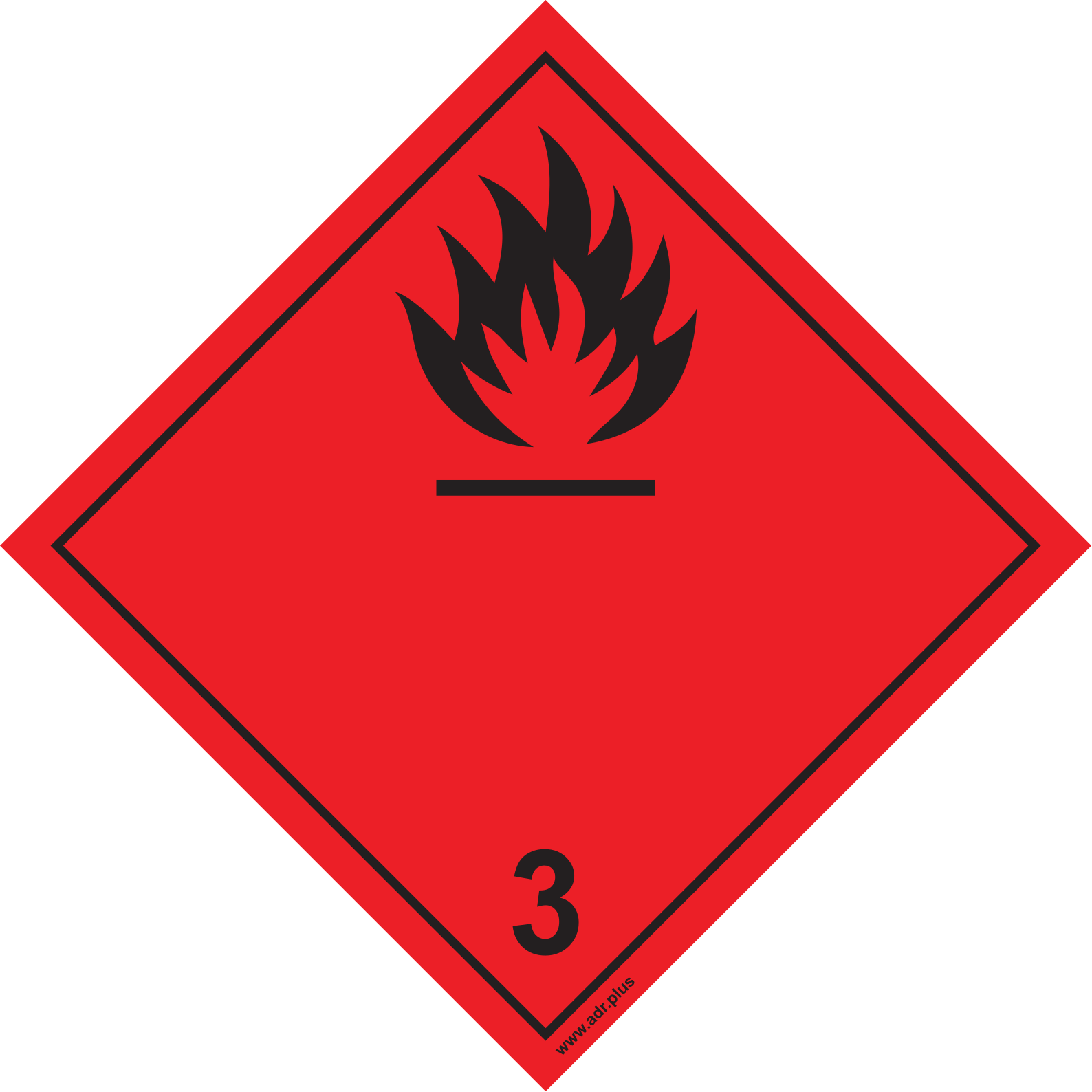
Every package carries the danger label of its Table A entry and the UN number with the letters "UN" (ADR 5.2.1, 5.2.2).
On the transport unit
Orange plates at the front and rear — and for tanks and bulk also enlarged placards 250 × 250 mm on the sides and rear (ADR 5.3.1, 5.3.2).

Limited quantities
Goods packed under Chapter 3.4 carry the LQ mark instead of the danger label and UN number (ADR 3.4.1, 3.4.7).
Class 2 specifics
- ADR 5.2.1.6
Every refillable receptacle must be durably and legibly marked with the UN number and proper shipping name of the gas, the maximum filling mass and tare or the gross mass, and the year of the next periodic inspection.
- ADR 5.2.2.2.1.2
On cylinders the danger labels may be reduced to the ISO 7225:2005 dimensions and placed on the shoulder; labels may overlap, but the primary hazard label, the figures and the symbols must remain fully visible.
- ADR 5.2.2.2.1.2
Empty uncleaned pressure receptacles may be carried with obsolete or damaged labels — for refilling, inspection or disposal.
- ADR 5.2.1.10.2
Orientation arrows are not required on outer packagings containing pressure receptacles, except closed or open cryogenic receptacles.
Transport document
What must be written in the transport document when you ship Class 2 goods.
- ADR 5.4.1.1.1
The transport document entry carries no packing group, since Class 2 assigns none — for example UN 1978, PROPANE, 2.1, (B/D).
- ADR 5.4.1.2.2
For gas mixtures in tanks the composition as a percentage of volume or mass must be given; constituents below 1% need not be indicated.
- ADR 5.4.1.2.2
Cylinders, tubes, pressure drums, cryogenic receptacles and bundles of cylinders carried under 4.1.6.10 need the entry "Carriage in accordance with 4.1.6.10".
- ADR 5.4.1.2.2
For refrigerated liquefied gases in tank-containers or portable tanks the consignor enters the end of holding time — "End of holding time: … (DD/MM/YYYY)".
- ADR 5.4.1.1.6.2.1
Empty uncleaned receptacles for gases up to 1 000 litres travel under the entry "EMPTY RECEPTACLE, 2".
Reliefs and restrictions
How much may travel under lighter regimes — and where tunnels restrict the route — is set per UN entry in Table A.
Limited quantities (LQ)
Column 7a caps each inner packaging. Within Chapter 3.4 most ADR requirements fall away, including the driver certificate.
ReadExcepted quantities (EQ)
E codes in column 7b let very small inner receptacles travel with almost no ADR overhead (Chapter 3.5).
ReadTunnel restrictions
Column 15 assigns the tunnel restriction code — it decides which tunnel categories the load may pass.
ReadLook up a Class 2 UN number
Get the full ADR profile for any UN number in this class.
Typical UN numbers
All 257 entries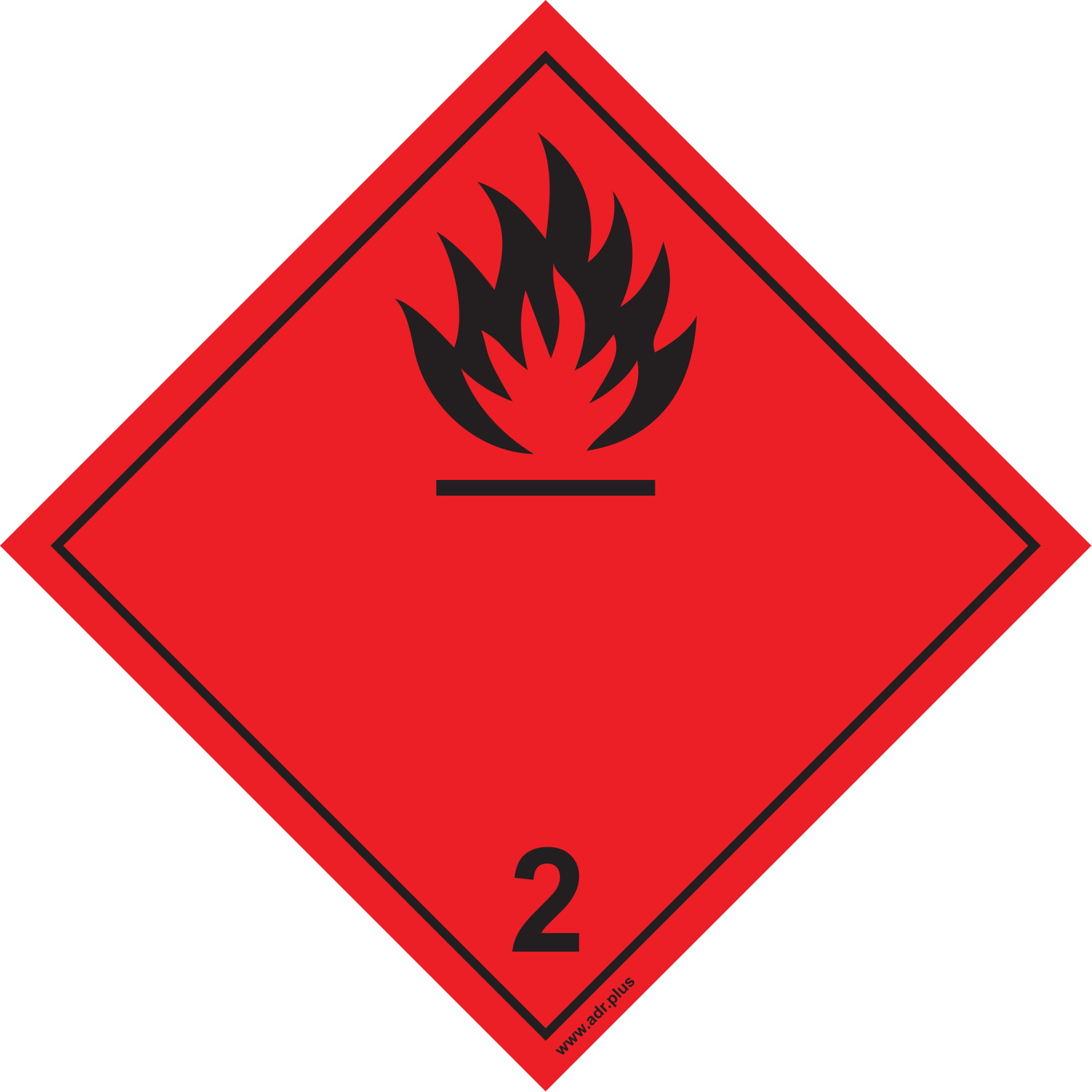
Help with Class 2 shipments
Not sure this class applies to you?
A DGSA can confirm the classification before your next load leaves the yard.
Train your team
Awareness training under ADR 1.3 for everyone who consigns, packs or loads dangerous goods.
Browse the courses