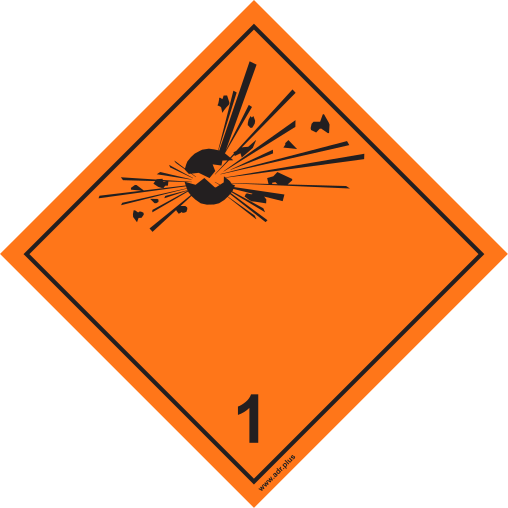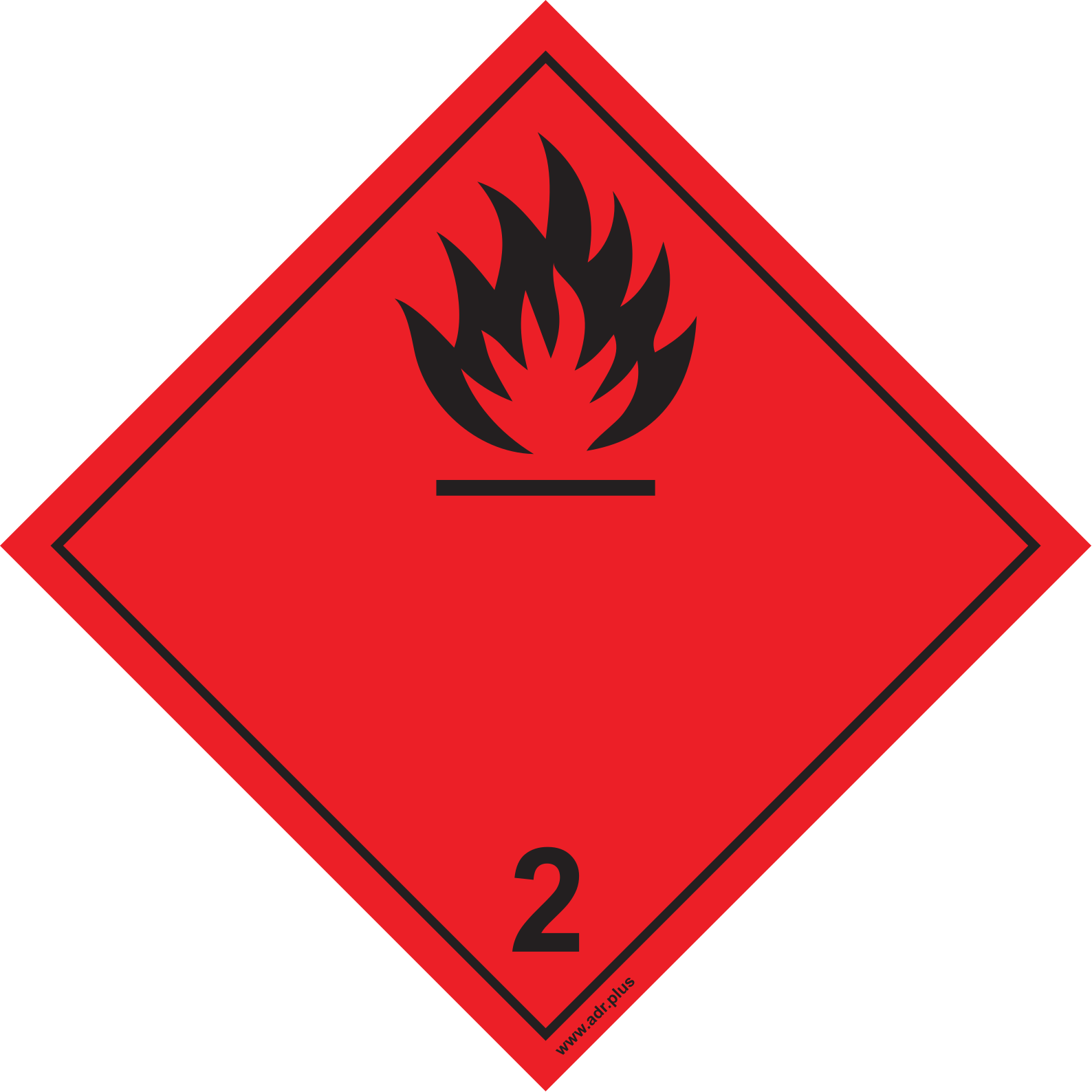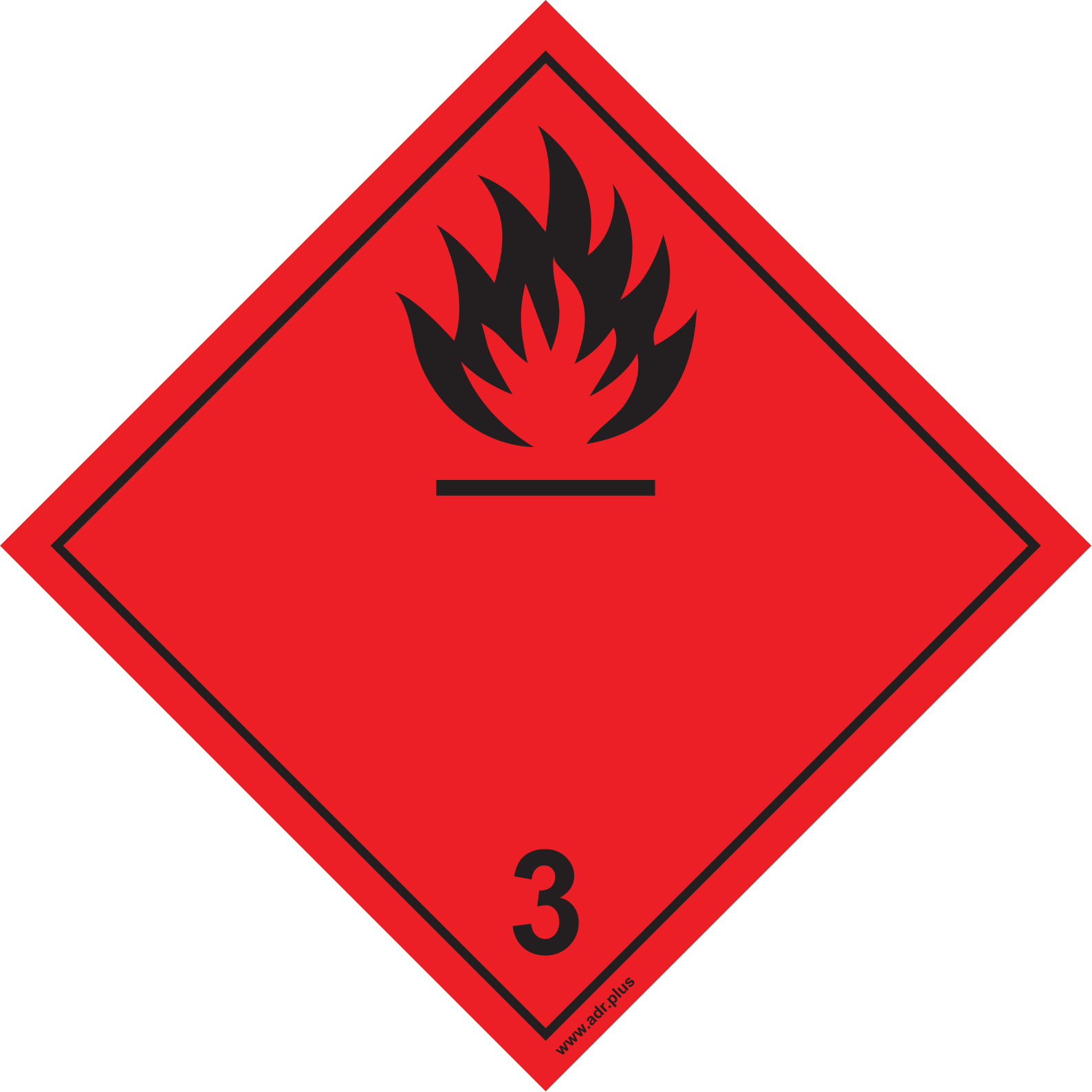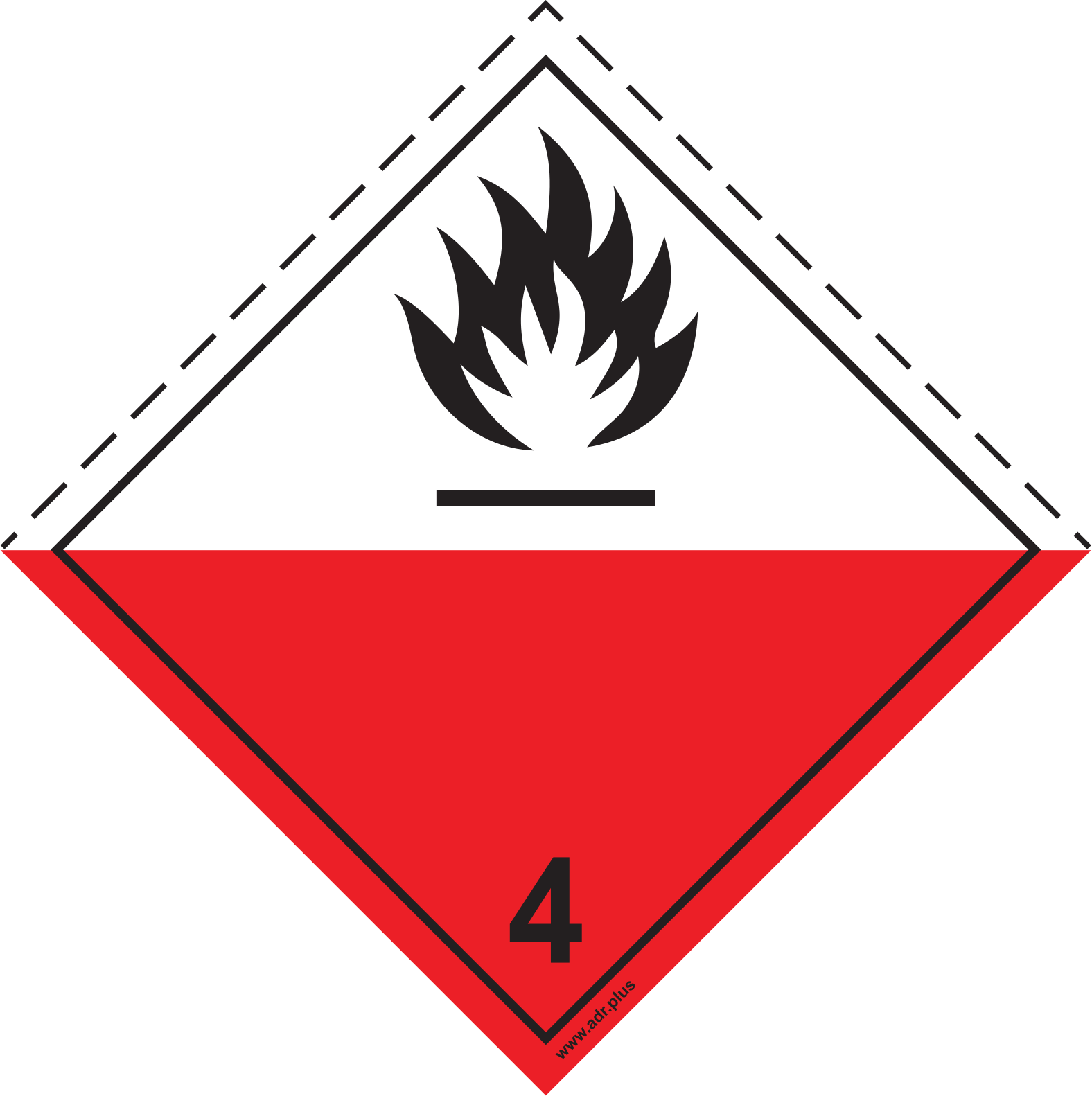


Class 7 — radioactive material
Material containing radionuclides where both the activity concentration and the total activity exceed defined clearance values.
What belongs in this class?
Class 7 covers radioactive material — any material containing radionuclides where both the activity concentration and the total activity in the consignment exceed the basic threshold values specified in ADR. (ADR 2.2.7.1.1)
Material below either threshold is not Class 7 at all — so the class is defined by a quantitative activity test rather than by a chemical family. The controlling values are the radionuclide's exempt activity concentration limit and the exempt total-activity limit for the consignment, each read from the table in 2.2.7.2.2.1 or derived under 2.2.7.2.2.2–2.2.7.2.2.6. (ADR 2.2.7.1.1, 2.2.7.2.2)
Classification rules
- ADR 2.2.7.1.3
Fissile material — material containing uranium-233, uranium-235, plutonium-239 or plutonium-241 — is handled separately, with dedicated fissile UN entries. Small quantities (less than 0.25 g of fissile nuclides) and certain natural or depleted uranium are excluded from the fissile definition.
- ADR 2.2.7.1.3
A surface contaminated object (SCO) is a solid object that is not itself radioactive but has radioactive material distributed on its surface, and is classified as such rather than by its bulk activity.
- ADR 2.2.7.1.3
Uranium is defined by enrichment — natural (≈ 0.72 % U-235), depleted (less than natural) or enriched (more than 0.72 %) — and each grade drives which UN entry and controls apply.
Packing groups in this class
Class 7 does not use packing groups. Radioactive material is instead assigned to a UN number that reflects its material characteristics and the package type required, taking the activity thresholds into account. (ADR 2.2.7.2.1.1)
The assignment table groups entries by transport form — excepted packages, low specific activity (LSA-I, II, III) material, surface contaminated objects (SCO), Type A, Type B(U), Type B(M) and Type C packages, material under special arrangement, and uranium hexafluoride. Most package types are split into a fissile and a "non fissile or fissile-excepted" variant (excepted packages, LSA-I and SCO-III have no fissile counterpart). (ADR 2.2.7.2.1.1)
Two material forms carry particular weight — low specific activity (LSA) material, which by its nature has limited specific activity, and special form radioactive material (an indispersible solid or a sealed capsule), which is allowed a higher activity value (A₁). (ADR 2.2.7.1.3)
Class 7 in Table A
Transport categories, tunnel codes and quantity reliefs across the 25 Table A entries of this class.
Transport categories
The category feeds the 1.1.3.6 calculation — the lower the number, the stricter the limit.
Tunnel codes
The column 15 code decides which tunnel categories the load may pass.
Limited quantities (LQ)
entries allow LQ
of 25 in the class
For the rest there is no relief — the full ADR applies to any quantity.
Excepted quantities (EQ)
entries allow EQ
of 25 in the class
For the rest there is no relief — the full ADR applies to any quantity.
Marking and signs for Class 7
What must be on every package — and what the transport unit carries on the road.
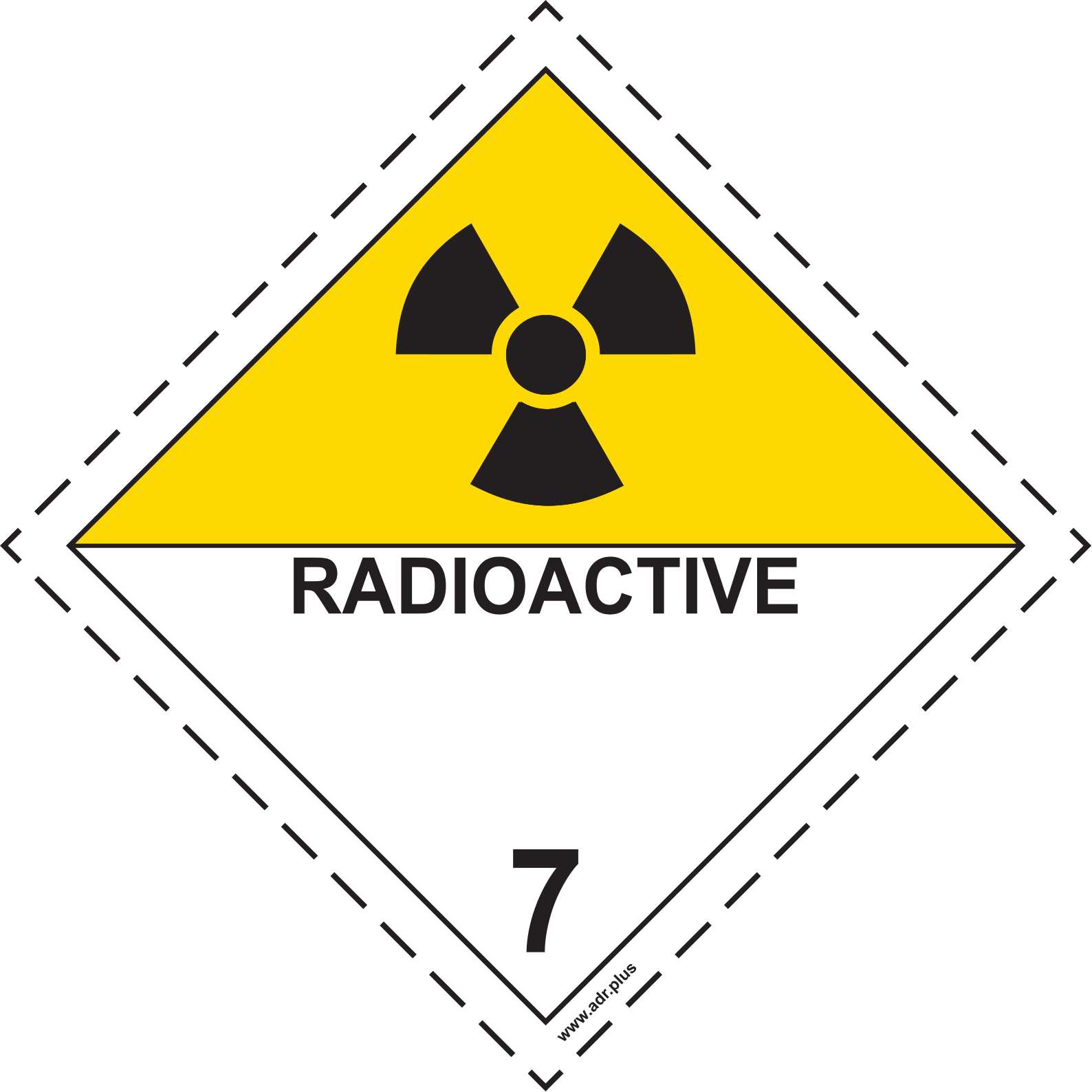
On the package
Every package carries the danger label of its Table A entry and the UN number with the letters "UN" (ADR 5.2.1, 5.2.2).
On the transport unit
Orange plates at the front and rear — and for tanks and bulk also enlarged placards 250 × 250 mm on the sides and rear (ADR 5.3.1, 5.3.2).

Limited quantities
Goods packed under Chapter 3.4 carry the LQ mark instead of the danger label and UN number (ADR 3.4.1, 3.4.7).
Class 7 specifics
- ADR 5.2.1.7.1
Each package and overpack shall be legibly and durably marked on the outside with an identification of either the consignor or consignee, or both.
- ADR 5.2.1.7.2
For each package, other than excepted packages, the UN number and the proper shipping name shall be marked on the outside of the packaging.
- ADR 5.2.1.7.4
Depending on the package design, the outside of the packaging is marked "TYPE IP-1", "TYPE IP-2", "TYPE IP-3" or "TYPE A", and Type IP-2, IP-3 and A packages also bear the distinguishing sign of the country of origin of design and the name of the manufacturer.
- ADR 5.2.2.1.11.1
Each package, overpack and container containing radioactive material shall bear labels conforming to models Nos. 7A, 7B or 7C according to the category, affixed to two opposite sides, and for fissile material additionally labels conforming to model No. 7E.
- ADR 5.2.2.1.11.2
Each label is completed with the contents — the name of the radionuclide, the maximum activity during carriage in becquerels (Bq) — and the transport index, except for category I-WHITE.
Transport document
What must be written in the transport document when you ship Class 7 goods.
- ADR 5.4.1.1.1
The transport document entry for Class 7 radioactive material shows the class number "7" in place of a label model number, and no packing group is assigned — for example, UN 2915, RADIOACTIVE MATERIAL, TYPE A PACKAGE, 7, (E).
- ADR 5.4.1.2.5.1
Immediately after the basic entry, the transport document for each Class 7 consignment shall include, in the order given, the name or symbol of each radionuclide, a description of the physical and chemical form of the material, the maximum activity during carriage in becquerels (Bq), the category of the package — I-WHITE, II-YELLOW or III-YELLOW — and the TI.
- ADR 5.4.1.2.5.1
Where a consignment is required to be shipped under exclusive use, the document bears the statement "EXCLUSIVE USE SHIPMENT".
- ADR 5.4.1.2.5.2
The consignor shall provide in the transport documents a statement regarding actions required to be taken by the carrier — supplementary requirements for loading, stowage, carriage, handling and unloading, including any provisions for the safe dissipation of heat, restrictions on the mode of carriage or vehicle with any necessary routeing instructions, and emergency arrangements appropriate to the consignment.
- ADR 5.4.1.2.5.4
The applicable competent authority certificates need not accompany the consignment — the consignor shall make them available to the carrier before loading and unloading.
Reliefs and restrictions
How much may travel under lighter regimes — and where tunnels restrict the route — is set per UN entry in Table A.
Limited quantities (LQ)
Column 7a caps each inner packaging. Within Chapter 3.4 most ADR requirements fall away, including the driver certificate.
ReadExcepted quantities (EQ)
E codes in column 7b let very small inner receptacles travel with almost no ADR overhead (Chapter 3.5).
ReadTunnel restrictions
Column 15 assigns the tunnel restriction code — it decides which tunnel categories the load may pass.
ReadLook up a Class 7 UN number
Get the full ADR profile for any UN number in this class.
Typical UN numbers
All 25 entries
UN 2908
RADIOACTIVE MATERIAL, EXCEPTED PACKAGE -EMPTY PACKAGING
UN 2909
RADIOACTIVE MATERIAL, EXCEPTED PACKAGE -ARTICLES MANUFACTURED FROM NATURAL URANIUM
UN 2910
RADIOACTIVE MATERIAL, EXCEPTED PACKAGE -LIMITED QUANTITY OF MATERIAL
UN 2911
RADIOACTIVE MATERIAL, EXCEPTED PACKAGE -INSTRUMENTS
UN 2912
RADIOACTIVE MATERIAL, LOW SPECIFIC ACTIVITY
UN 2913
RADIOACTIVE MATERIAL, SURFACE CONTAMINATED OBJECTS
Help with Class 7 shipments
Not sure this class applies to you?
A DGSA can confirm the classification before your next load leaves the yard.
Train your team
Awareness training under ADR 1.3 for everyone who consigns, packs or loads dangerous goods.
Browse the courses