


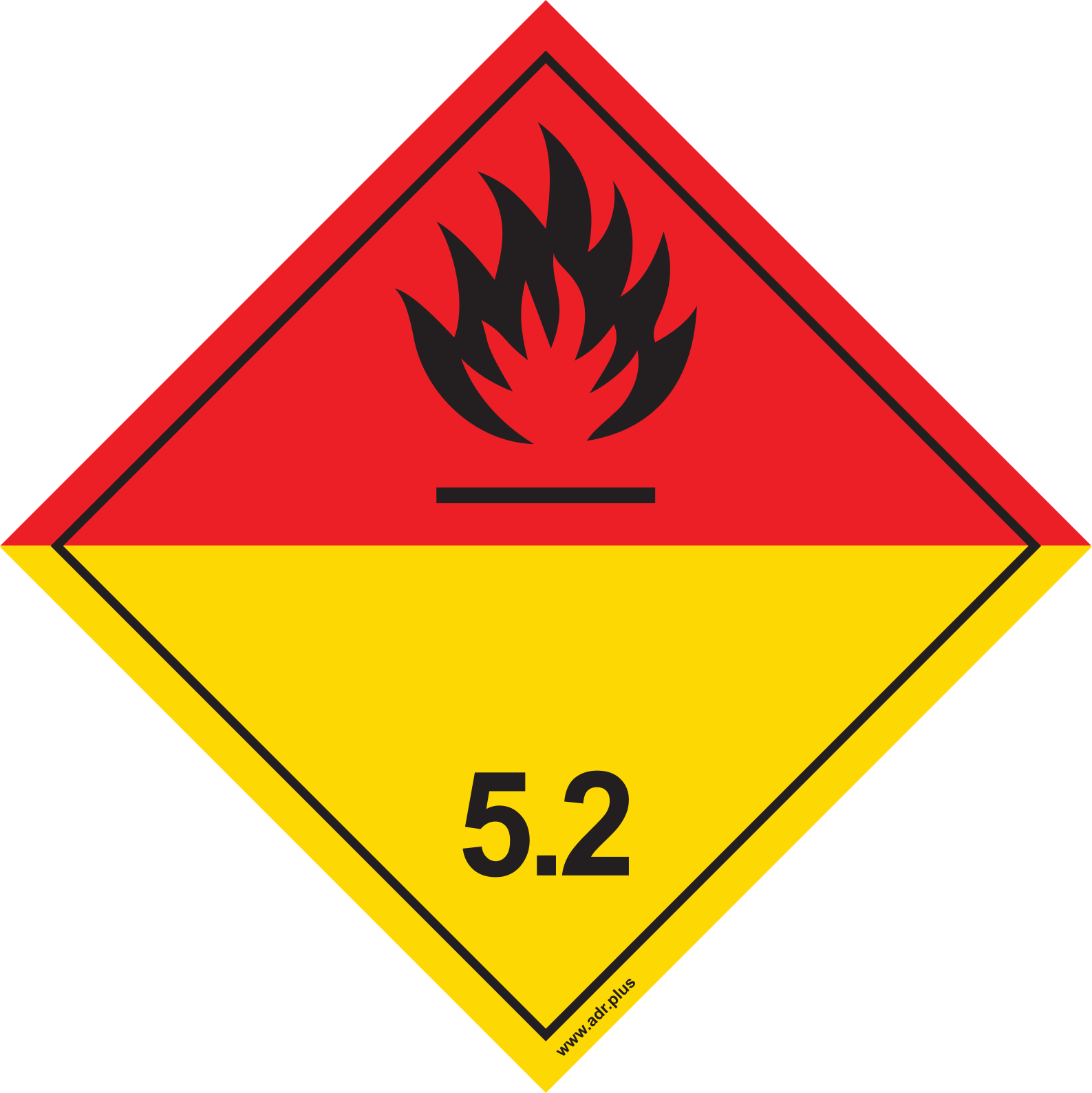
Class 5.2 — organic peroxides
Thermally unstable substances that can undergo exothermic self-accelerating decomposition, and are often also flammable or shock-sensitive.
What belongs in this class?
Class 5.2 covers organic peroxides and formulations of organic peroxides. (ADR 2.2.52.1.1)
Organic peroxides are organic substances containing the bivalent -O-O- structure — derivatives of hydrogen peroxide in which one or both hydrogen atoms have been replaced by organic radicals. (ADR 2.2.52.1.3)
They are liable to exothermic decomposition at normal or elevated temperatures, triggered by heat, contact with impurities such as acids or heavy-metal compounds, friction or impact. Decomposition can release harmful or flammable gases, some peroxides decompose explosively when confined, many burn vigorously, and some seriously injure the eyes or corrode the skin. (ADR 2.2.52.1.4)
Classification rules
- ADR 2.2.52.1.2
The two classification codes reflect handling — P1 for organic peroxides not requiring temperature control, P2 for those that do.
- ADR 2.2.52.1.7
Peroxides already classified for carriage map to the generic entries UN 3101 to 3120, each carrying the relevant type, state, temperature-control status and any subsidiary hazards.
- ADR 2.2.52.1.8
An organic peroxide not already listed must be classified — and its conditions of carriage set — by the competent authority of the country of origin, with recognition by the first ADR Contracting Party reached if the origin is outside ADR.
- ADR 2.2.52.1.7
Mixtures take the type of their most dangerous component, but because two stable components can form a less stable mixture, the self-accelerating decomposition temperature (SADT) must be determined and control and emergency temperatures derived from it where needed.
Packing groups in this class
Class 5.2 has no packing groups. Organic peroxides are instead sorted into seven types, A to G, according to the degree of danger they present. (ADR 2.2.52.1.6)
Type A is not accepted for carriage in the packaging in which it was tested, while type G is not subject to the provisions of Class 5.2 at all. Types B to F — the ones actually carried under the class — are classified in direct relation to the maximum quantity allowed in one package. (ADR 2.2.52.1.6)
Alongside the type, each entry is defined by physical state (liquid or solid) and by whether temperature control is required. (ADR 2.2.52.1.7)
Class 5.2 in Table A
Transport categories, tunnel codes and quantity reliefs across the 21 Table A entries of this class.
Transport categories
The category feeds the 1.1.3.6 calculation — the lower the number, the stricter the limit.
Tunnel codes
The column 15 code decides which tunnel categories the load may pass.
Limited quantities (LQ)
entries allow LQ
of 21 in the class
For the rest there is no relief — the full ADR applies to any quantity.
Excepted quantities (EQ)
entries allow EQ
of 21 in the class
For the rest there is no relief — the full ADR applies to any quantity.
Marking and signs for Class 5.2
What must be on every package — and what the transport unit carries on the road.
On the package
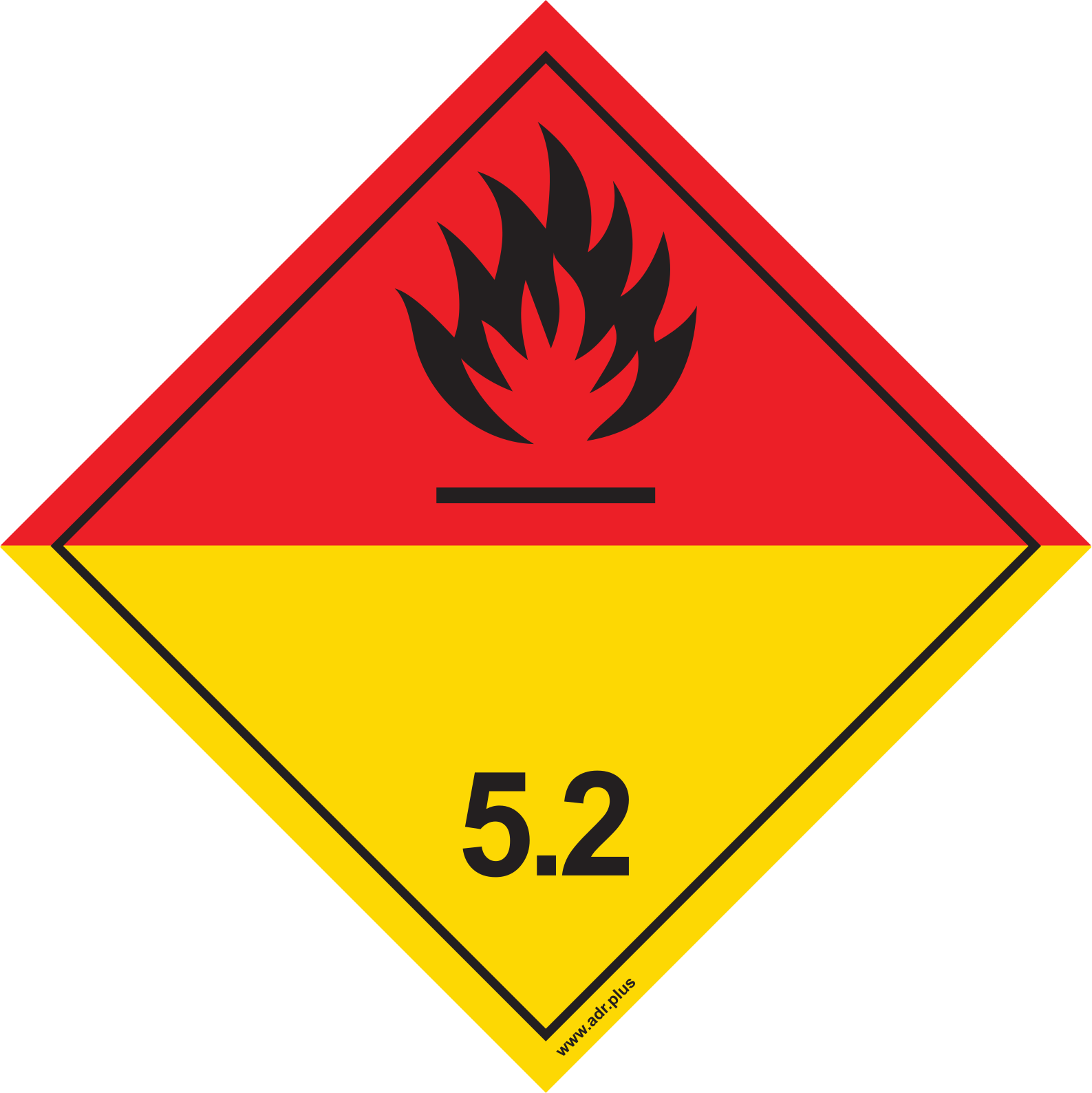
Every package carries the danger label of its Table A entry and the UN number with the letters "UN" (ADR 5.2.1, 5.2.2).
On the transport unit
Orange plates at the front and rear — and for tanks and bulk also enlarged placards 250 × 250 mm on the sides and rear (ADR 5.3.1, 5.3.2).

Limited quantities
Goods packed under Chapter 3.4 carry the LQ mark instead of the danger label and UN number (ADR 3.4.1, 3.4.7).
Class 5.2 specifics
- ADR 5.2.2.1.9
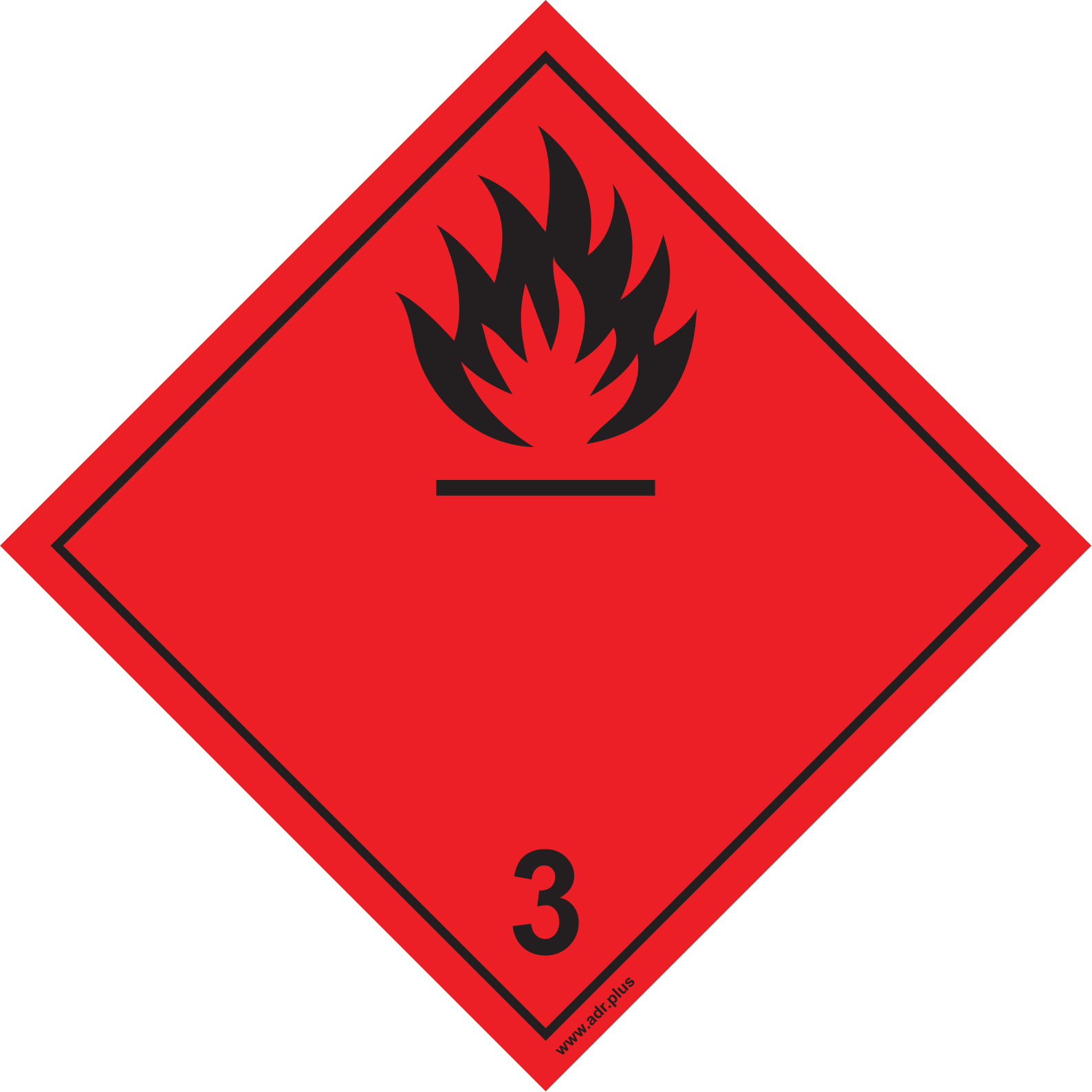
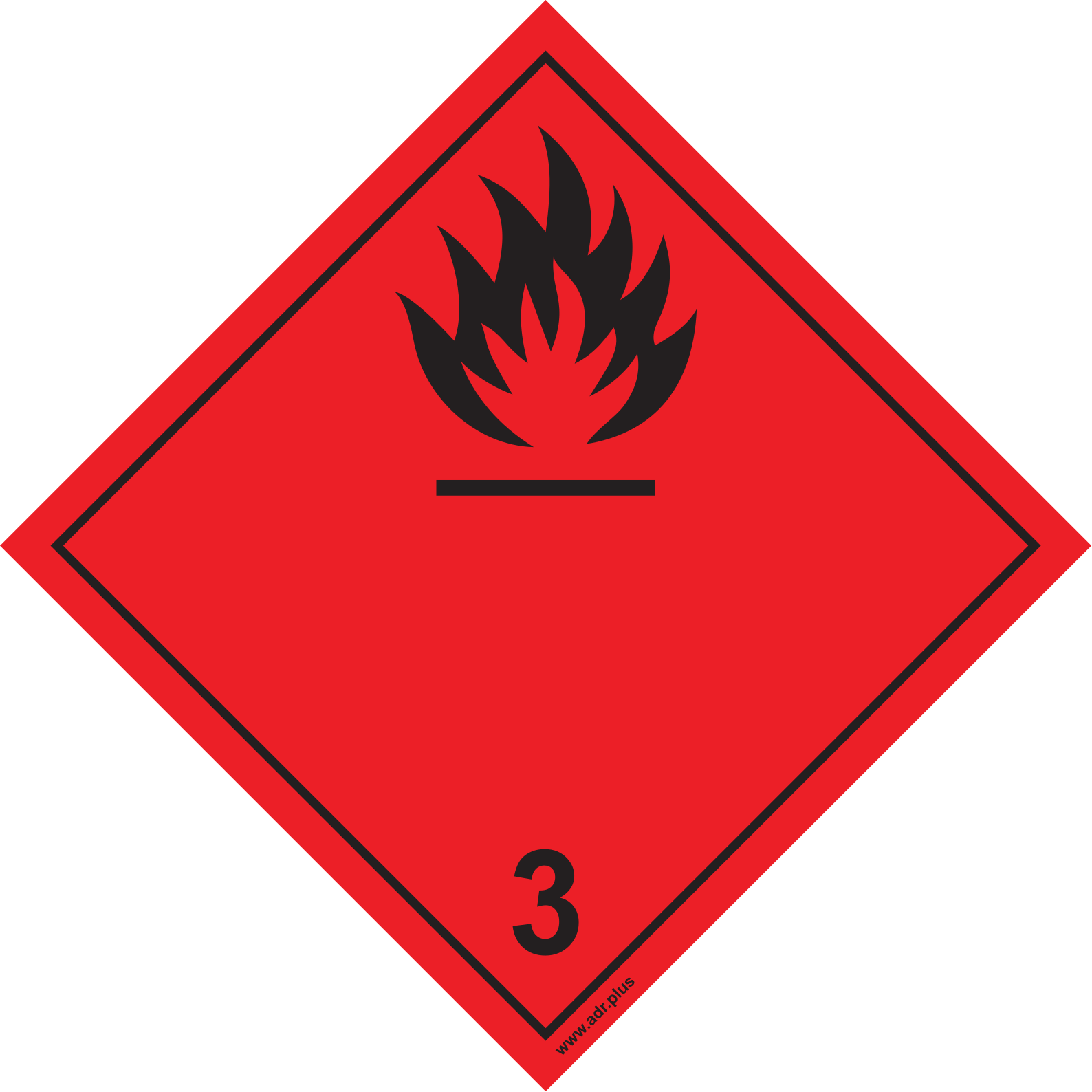
The label conforming to model No. 5.2 also implies that the product may be flammable, hence no label conforming to model No. 3 is required.
- ADR 5.2.2.1.9
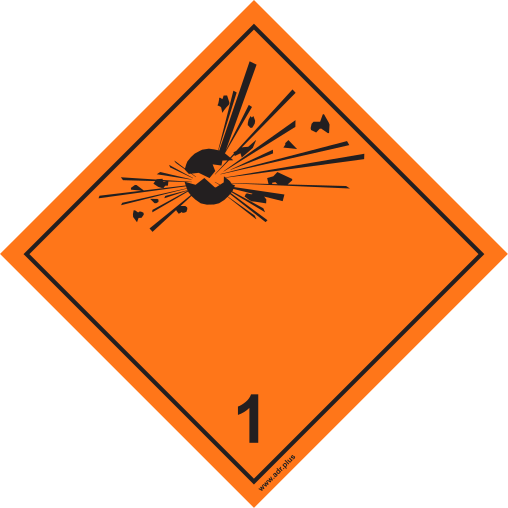
For organic peroxides type B a label conforming to model No. 1 must in addition be applied, unless the competent authority has permitted it to be dispensed with for a specific packaging on the basis of test data.
- ADR 5.2.2.1.9
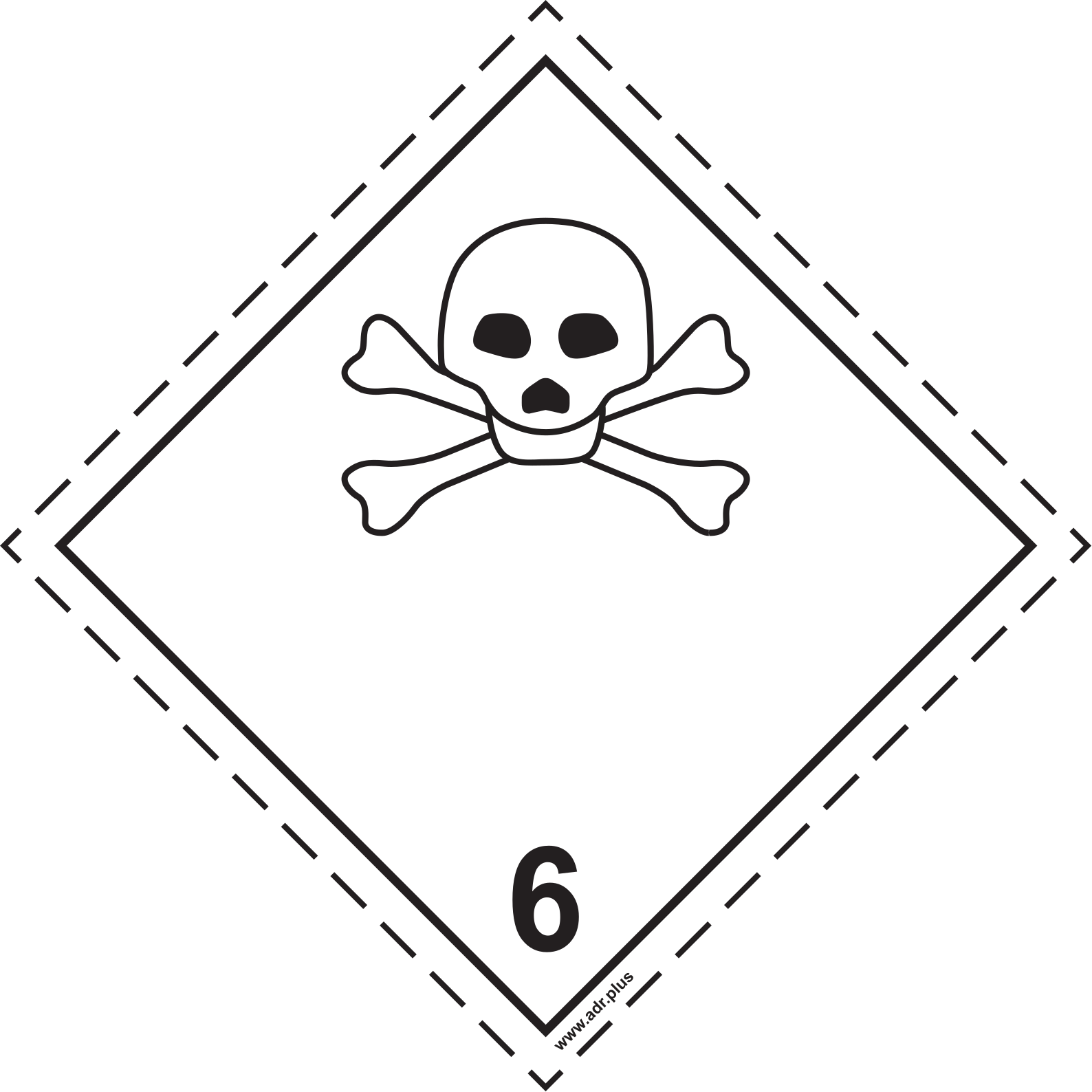
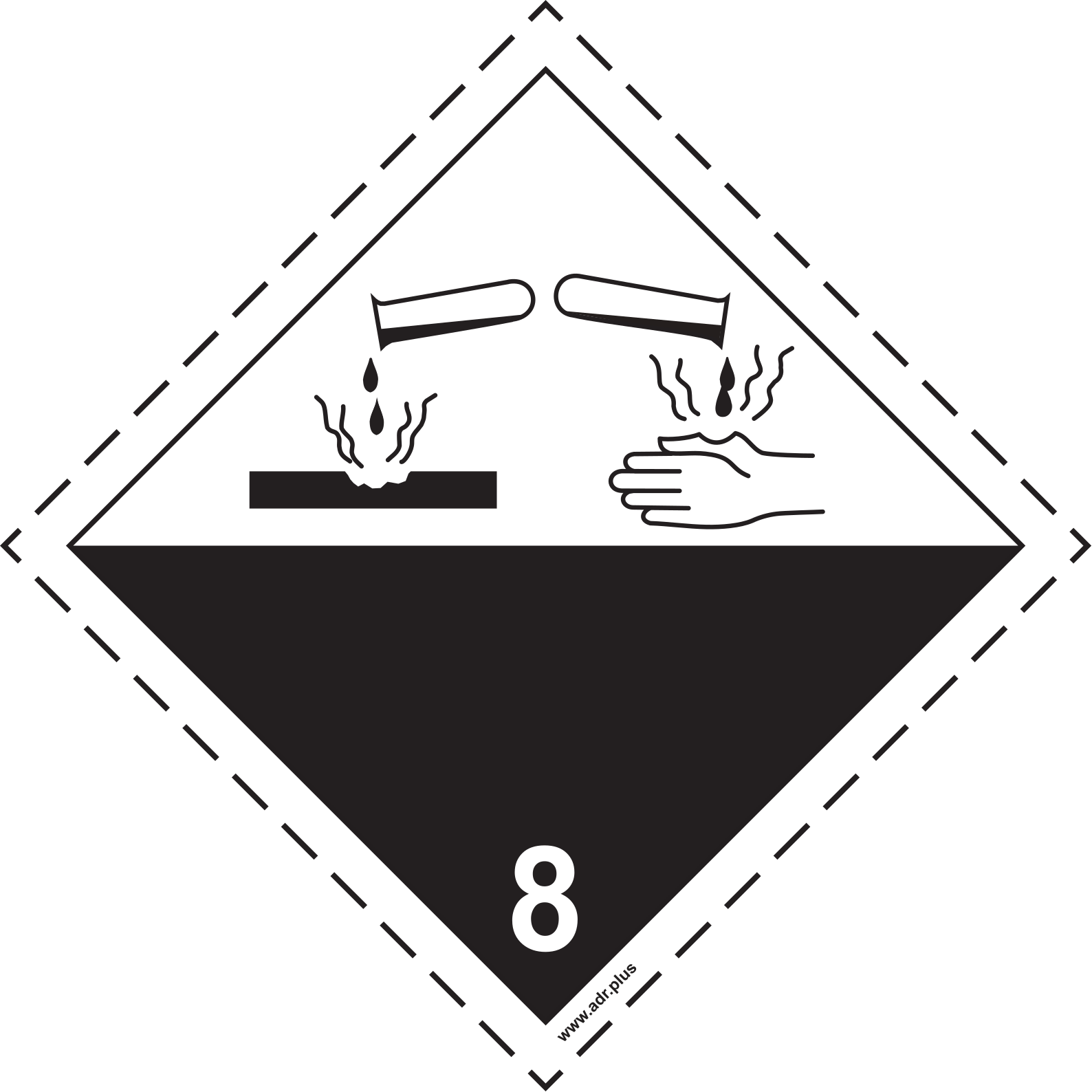
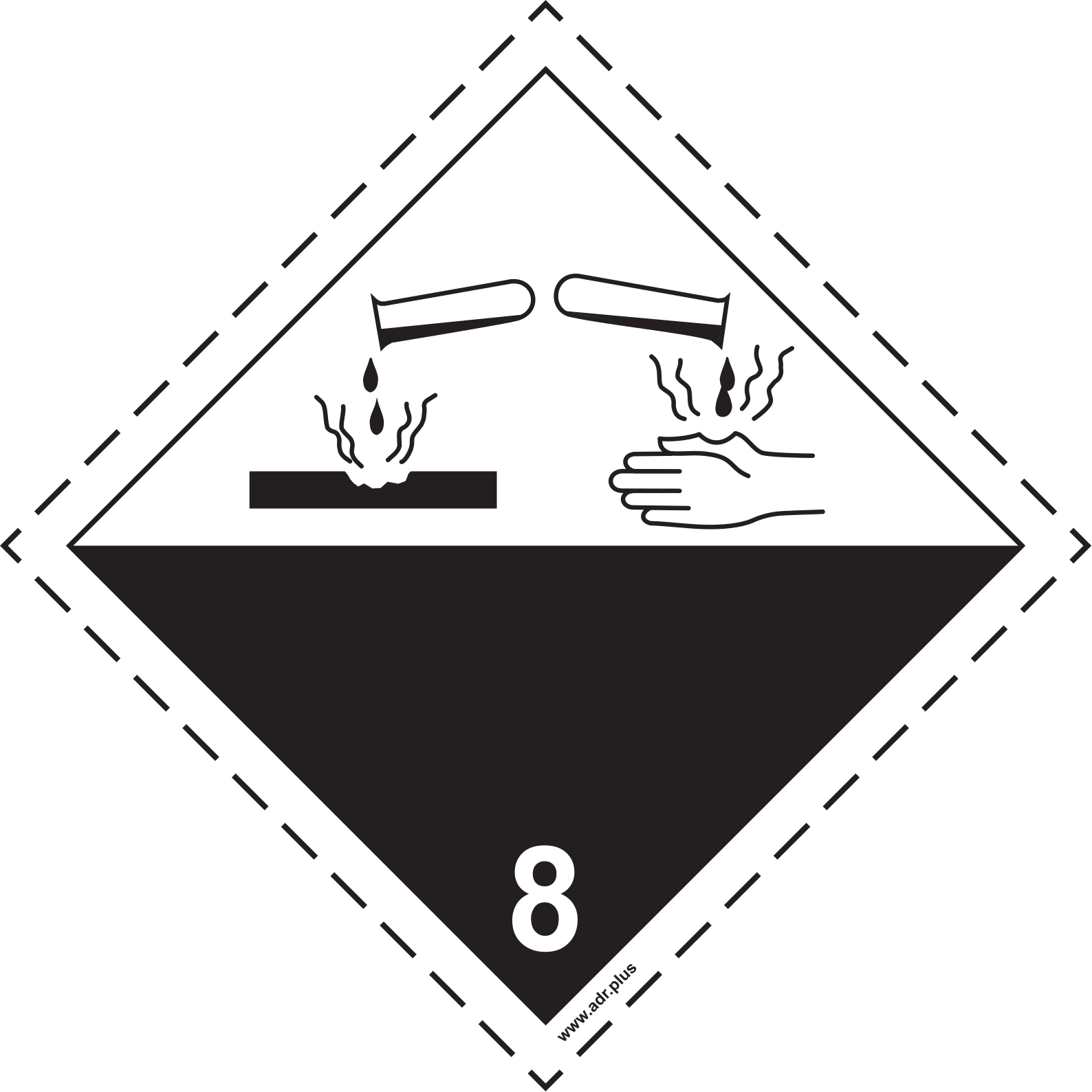
A label conforming to model No. 8 is required when Packing Group I or II criteria of Class 8 are met.
- ADR 5.2.2.2.1.6
On the Class 5.2 label the symbol may be shown in white.
Transport document
What must be written in the transport document when you ship Class 5.2 goods.
- ADR 5.4.1.1.1
The transport document entry has no packing group, as none is assigned to Class 5.2 — for example, UN 3105, ORGANIC PEROXIDE TYPE D, LIQUID, 5.2, (D).
- ADR 5.4.1.2.3.1
For organic peroxides that require temperature control, the document must indicate "Control temperature: ... °C Emergency temperature: ... °C".
- ADR 5.4.1.2.3.2
When the competent authority has permitted the label conforming to model No. 1 to be dispensed with for a specific packaging, the document must include the statement "The label conforming to model No. 1 is not required".
- ADR 5.4.1.2.3.3
When organic peroxides are carried under conditions where approval is required, the document must include a statement, e.g. "Carriage in accordance with 2.2.52.1.8", with a copy of the competent authority approval attached.
- ADR 5.4.1.2.3.4
When a sample of an organic peroxide is carried, the document must include a statement, e.g. "Carriage in accordance with 2.2.52.1.9".
Reliefs and restrictions
How much may travel under lighter regimes — and where tunnels restrict the route — is set per UN entry in Table A.
Limited quantities (LQ)
Column 7a caps each inner packaging. Within Chapter 3.4 most ADR requirements fall away, including the driver certificate.
ReadExcepted quantities (EQ)
E codes in column 7b let very small inner receptacles travel with almost no ADR overhead (Chapter 3.5).
ReadTunnel restrictions
Column 15 assigns the tunnel restriction code — it decides which tunnel categories the load may pass.
ReadLook up a Class 5.2 UN number
Get the full ADR profile for any UN number in this class.
Typical UN numbers
All 21 entries
Help with Class 5.2 shipments
Not sure this class applies to you?
A DGSA can confirm the classification before your next load leaves the yard.
Train your team
Awareness training under ADR 1.3 for everyone who consigns, packs or loads dangerous goods.
Browse the courses