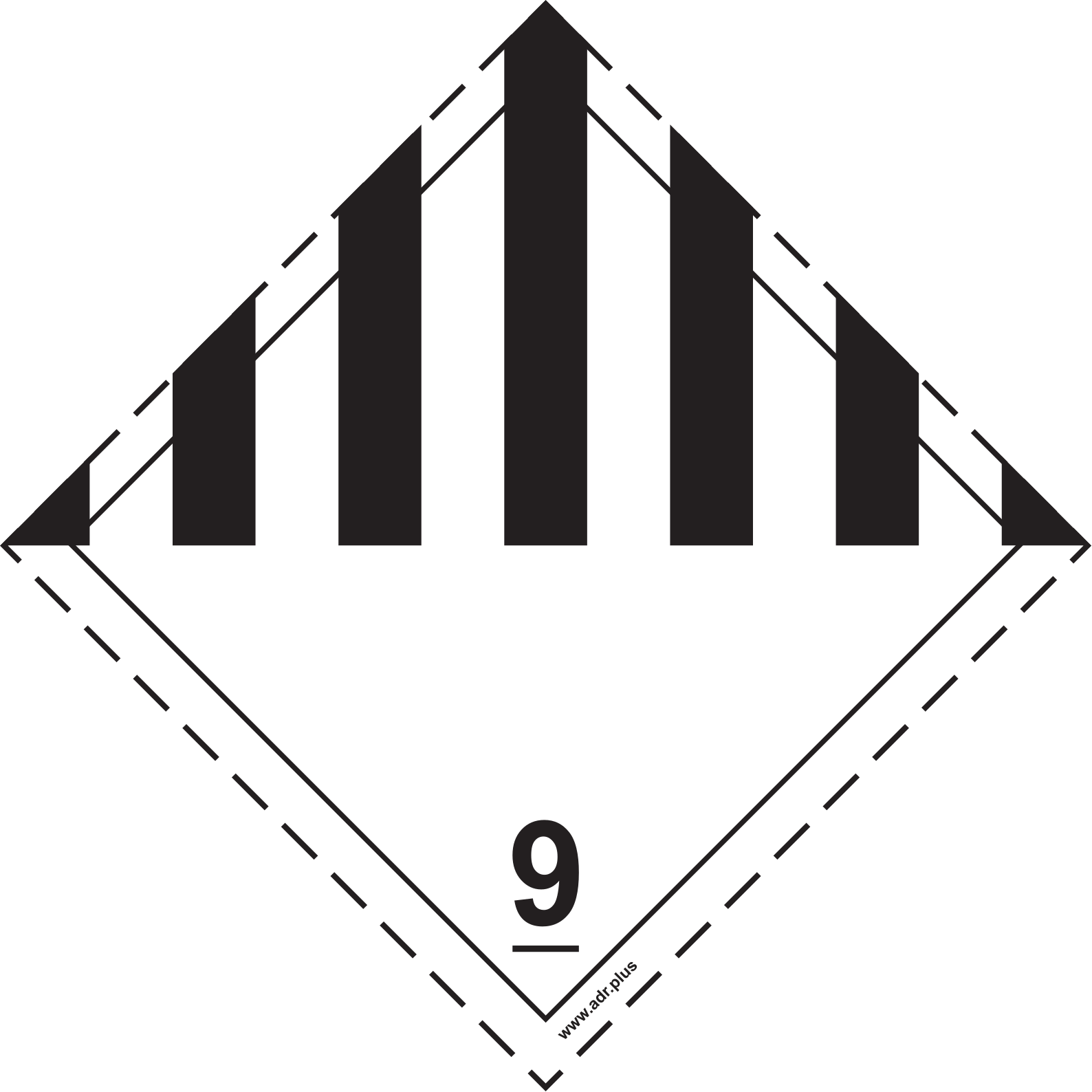

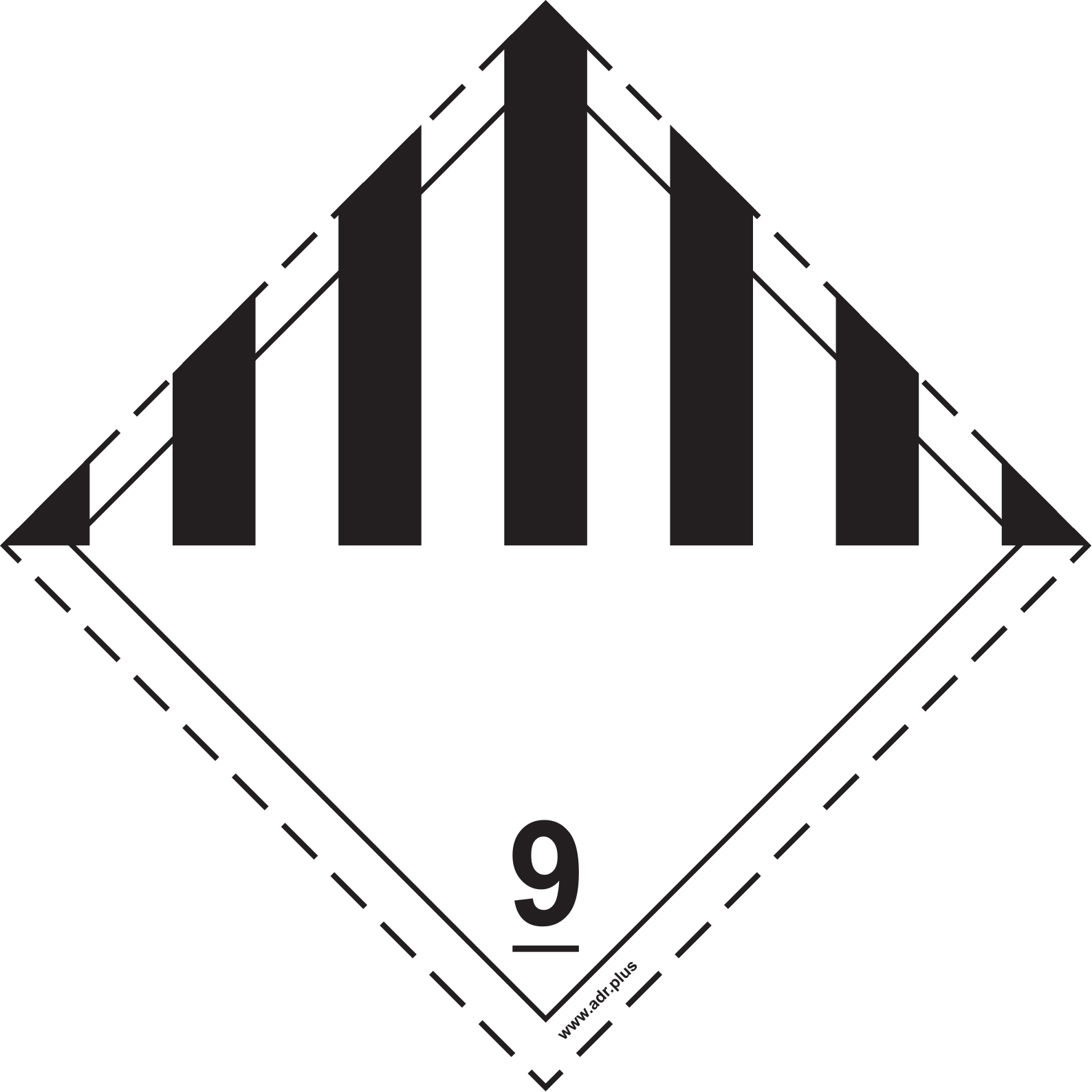
Class 9 — miscellaneous dangerous substances and articles
A catch-all class for substances and articles with a carriage danger not covered elsewhere — lithium batteries, dry ice, environmentally hazardous goods.
- Packing groups
- II–III
- UN entries
- 51
What belongs in this class?
Class 9 covers substances and articles that present a danger during carriage which is not covered by any other class. (ADR 2.2.9.1.1)
It is a deliberately broad, mixed group. In practice it takes in health-endangering dusts, substances that form dioxins in a fire, substances evolving flammable vapour, lithium and sodium-ion batteries, life-saving appliances, environmentally hazardous (aquatic-pollutant) substances, genetically modified microorganisms, elevated-temperature substances, and a catch-all for anything else dangerous in carriage that fits no other class. (ADR 2.2.9.1.2)
Classification rules
- ADR 2.2.9.1.2
The classification code is a single M-code identifying the specific miscellaneous hazard, from M1 (harmful dusts) through M11 (other dangers not meeting another class).
- ADR 2.2.9.1.3
Substances and articles not named in Table A are assigned to the relevant entry using the specific classification paragraphs of 2.2.9.1.4 onward — the class is not arbitrary — each sub-hazard has its own criteria.
- ADR 2.2.9.1.2
Lithium and sodium-ion batteries (M4) sit in Class 9 and are among its highest-volume entries, carried under their own detailed provisions rather than a packing group.
Packing groups in this class
How many UN numbers in this class fall under each packing group.
Most Class 9 entries carry no packing group. Where column (4) of Table A does assign one, only two groups are used — PG II for substances presenting medium danger and PG III for substances presenting low danger — there is no PG I in Class 9. (ADR 2.2.9.1.15)
Many of the class's most familiar entries — lithium batteries, life-saving appliances, dry ice, genetically modified organisms — are not packing-grouped at all and are governed by entry-specific provisions instead.
Class 9 in Table A
Transport categories, tunnel codes and quantity reliefs across the 51 Table A entries of this class.
Transport categories
The category feeds the 1.1.3.6 calculation — the lower the number, the stricter the limit.
Tunnel codes
The column 15 code decides which tunnel categories the load may pass.
Limited quantities (LQ)
entries allow LQ
of 51 in the class
For the rest there is no relief — the full ADR applies to any quantity.
Excepted quantities (EQ)
entries allow EQ
of 51 in the class
For the rest there is no relief — the full ADR applies to any quantity.
Marking and signs for Class 9
What must be on every package — and what the transport unit carries on the road.
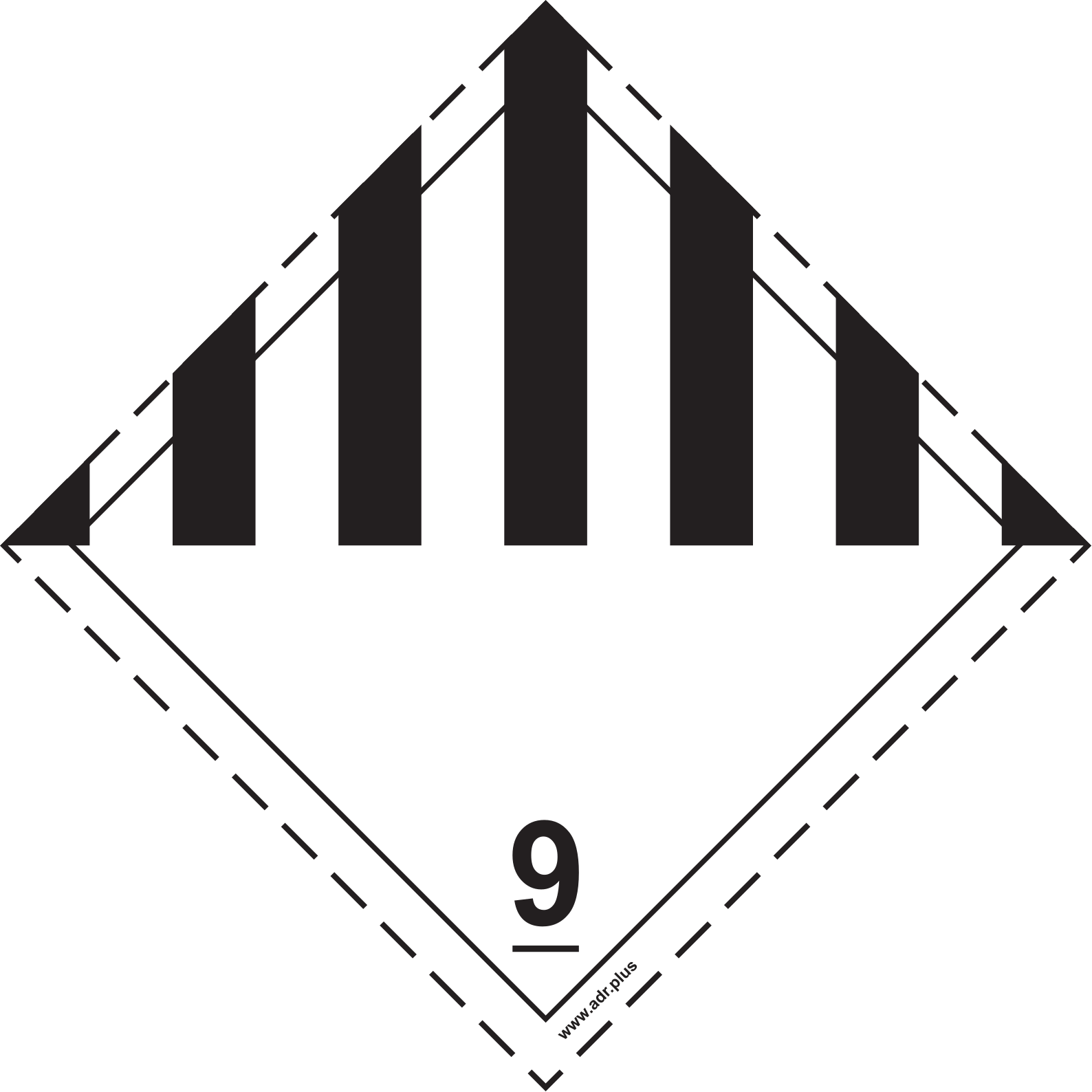
On the package
Every package carries the danger label of its Table A entry and the UN number with the letters "UN" (ADR 5.2.1, 5.2.2).
On the transport unit
Orange plates at the front and rear — and for tanks and bulk also enlarged placards 250 × 250 mm on the sides and rear (ADR 5.3.1, 5.3.2).

Limited quantities
Goods packed under Chapter 3.4 carry the LQ mark instead of the danger label and UN number (ADR 3.4.1, 3.4.7).
Class 9 specifics
- ADR 5.2.1.9.1
Packages containing lithium or sodium ion cells or batteries prepared in accordance with SP 188 or SP 400 must bear the battery mark.
- ADR 5.2.1.9.2
The mark must indicate the UN number — UN 3090 for lithium metal, UN 3480 for lithium ion, UN 3551 for sodium ion cells or batteries, and UN 3091, UN 3481 or UN 3552 when contained in or packed with equipment.
- ADR 5.2.1.8.1
Packages containing environmentally hazardous substances (criteria of 2.2.9.1.10) must be durably marked with the environmentally hazardous substance mark, except single or inner packagings with 5 l or less of liquids or 5 kg or less net of solids.
- ADR 5.2.1.8.3
The mark is a square set at an angle of 45° (diamond) with the black fish-and-tree symbol on a white or suitable contrasting background.
Transport document
What must be written in the transport document when you ship Class 9 goods.
- ADR 5.4.1.1.1
The transport document entry shows the packing group (letters PG) and no tunnel restriction code, as none is assigned to UN 3082 — for example, UN 3082, ENVIRONMENTALLY HAZARDOUS SUBSTANCE, LIQUID, N.O.S., 9, PG III.
- ADR 5.4.1.1.18
When a substance meets the criteria of 2.2.9.1.10, the transport document must bear the additional inscription "ENVIRONMENTALLY HAZARDOUS" — this requirement does not apply to UN 3077 and 3082.
- ADR 5.4.1.1.6.2.1
For empty packagings, uncleaned, the information of the goods last loaded may be replaced by "WITH RESIDUES OF " followed by the classes and subsidiary hazards in the class numbering order.
Reliefs and restrictions
How much may travel under lighter regimes — and where tunnels restrict the route — is set per UN entry in Table A.
Limited quantities (LQ)
Column 7a caps each inner packaging. Within Chapter 3.4 most ADR requirements fall away, including the driver certificate.
ReadExcepted quantities (EQ)
E codes in column 7b let very small inner receptacles travel with almost no ADR overhead (Chapter 3.5).
ReadTunnel restrictions
Column 15 assigns the tunnel restriction code — it decides which tunnel categories the load may pass.
ReadLook up a Class 9 UN number
Get the full ADR profile for any UN number in this class.
Typical UN numbers
All 51 entries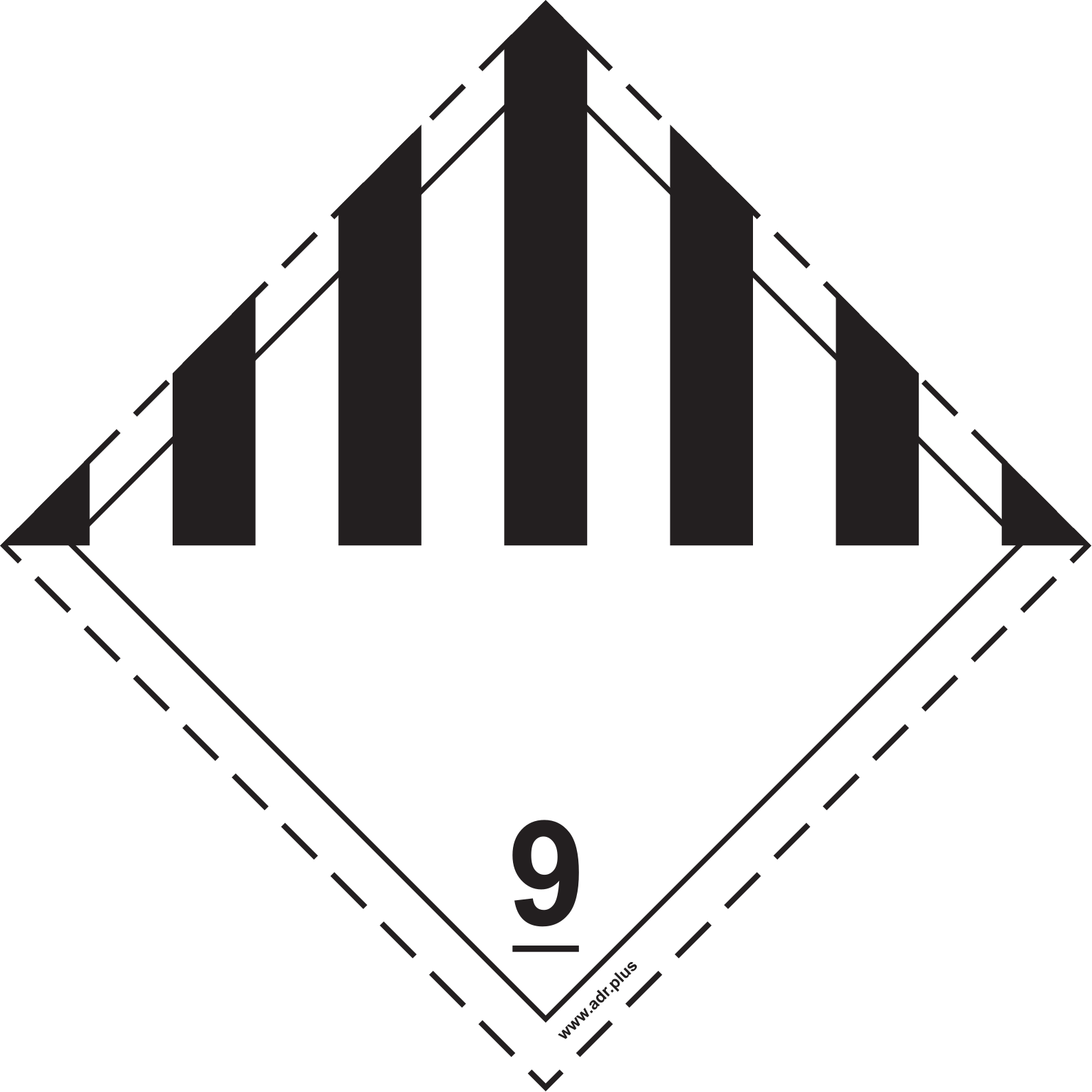
Help with Class 9 shipments
Not sure this class applies to you?
A DGSA can confirm the classification before your next load leaves the yard.
Train your team
Awareness training under ADR 1.3 for everyone who consigns, packs or loads dangerous goods.
Browse the courses