
Class 6.2 — infectious substances
Substances known or reasonably expected to contain pathogens capable of causing disease in humans or animals.
What belongs in this class?
Class 6.2 covers infectious substances — substances known, or reasonably expected, to contain pathogens. Pathogens are microorganisms such as bacteria, viruses, parasites and fungi, together with other agents such as prions, that can cause disease in humans or animals. (ADR 2.2.62.1.1)
Genetically modified microorganisms, biological products, diagnostic specimens and intentionally infected live animals fall in the class when they meet its conditions. Toxins from plant, animal or bacterial sources that contain no infectious substance are Class 6.1, not 6.2. (ADR 2.2.62.1.1)
Classification rules
- ADR 2.2.62.1.2
The classification code marks who or what is affected — I1 infectious substances affecting humans, I2 affecting animals only, I3 clinical waste, I4 biological substances.
- ADR 2.2.62.1.4.1
The Category A example list is not exhaustive — any pathogen (including new or emerging ones) that meets the criteria goes to Category A, and where there is doubt whether a substance qualifies, it is included in Category A.
- ADR 2.2.62.1.4.1
Assignment to UN 2814 or UN 2900 rests on the known medical history and symptoms of the source, endemic local conditions, or professional judgement of the individual circumstances.
Packing groups in this class
Class 6.2 does not use packing groups. Infectious substances are sorted into two categories by the severity of the disease they can cause. (ADR 2.2.62.1.4)
Category A is an infectious substance carried in a form that, on exposure, is capable of causing permanent disability, or life-threatening or fatal disease, in otherwise healthy humans or animals — assigned to UN 2814 (affecting humans, or humans and animals) or UN 2900 (affecting animals only). (ADR 2.2.62.1.4.1)
Category B is an infectious substance that does not meet the Category A criteria. It is assigned to UN 3373, "Biological substance, category B". (ADR 2.2.62.1.4.2)
Class 6.2 in Table A
Transport categories, tunnel codes and quantity reliefs across the 11 Table A entries of this class.
Transport categories
The category feeds the 1.1.3.6 calculation — the lower the number, the stricter the limit.
Tunnel codes
The column 15 code decides which tunnel categories the load may pass.
Limited quantities (LQ)
entries allow LQ
of 11 in the class
For the rest there is no relief — the full ADR applies to any quantity.
Excepted quantities (EQ)
entries allow EQ
of 11 in the class
For the rest there is no relief — the full ADR applies to any quantity.
Marking and signs for Class 6.2
What must be on every package — and what the transport unit carries on the road.
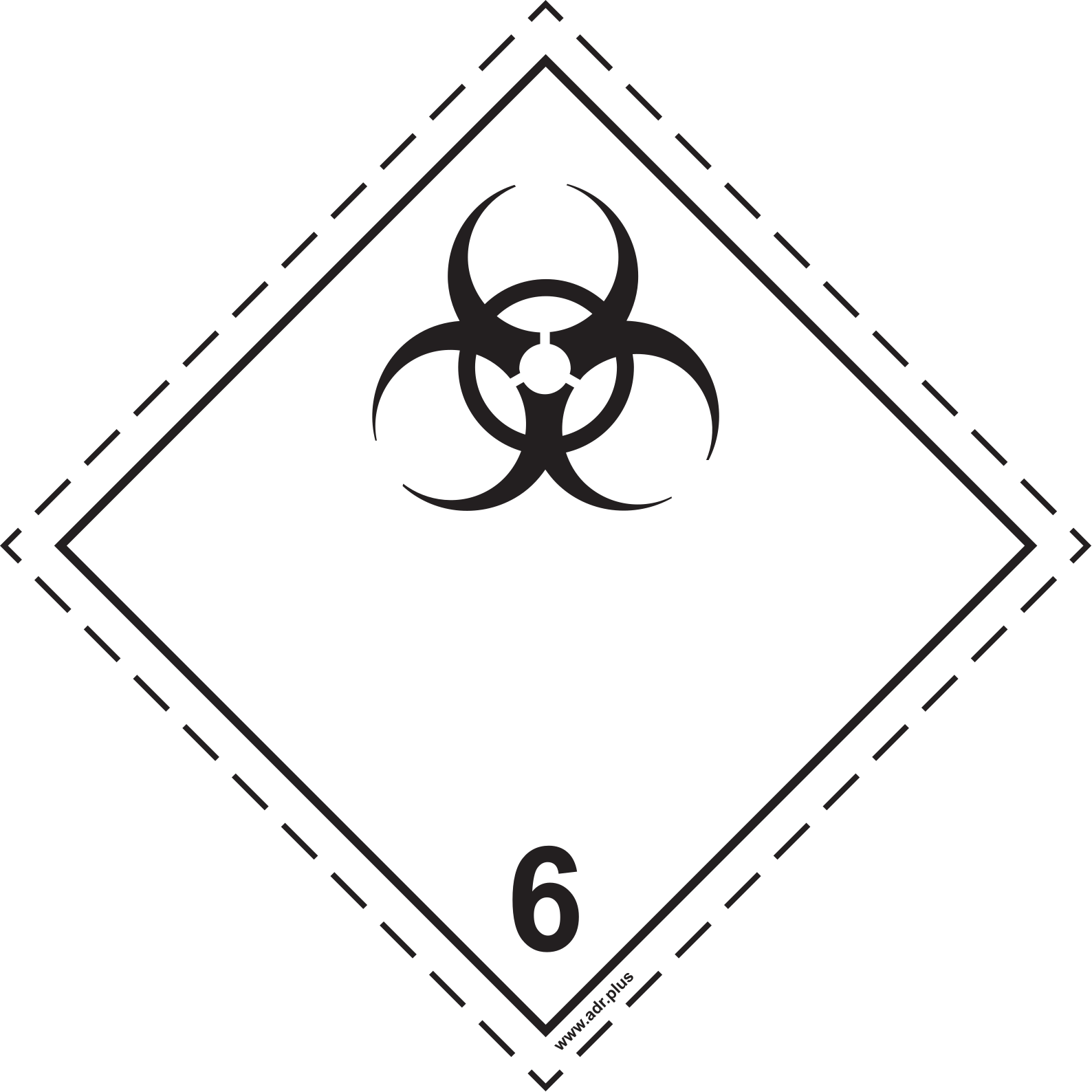
On the package
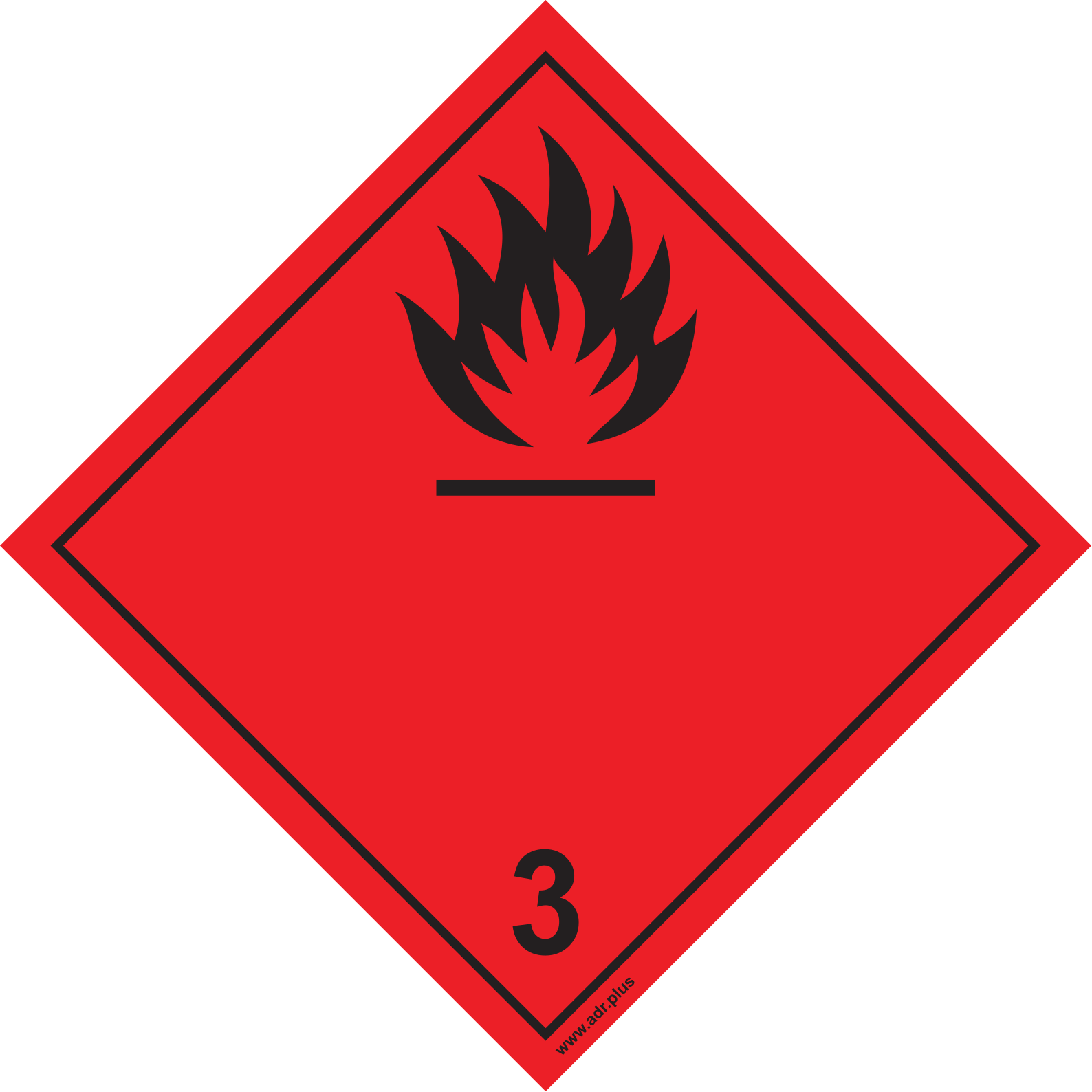
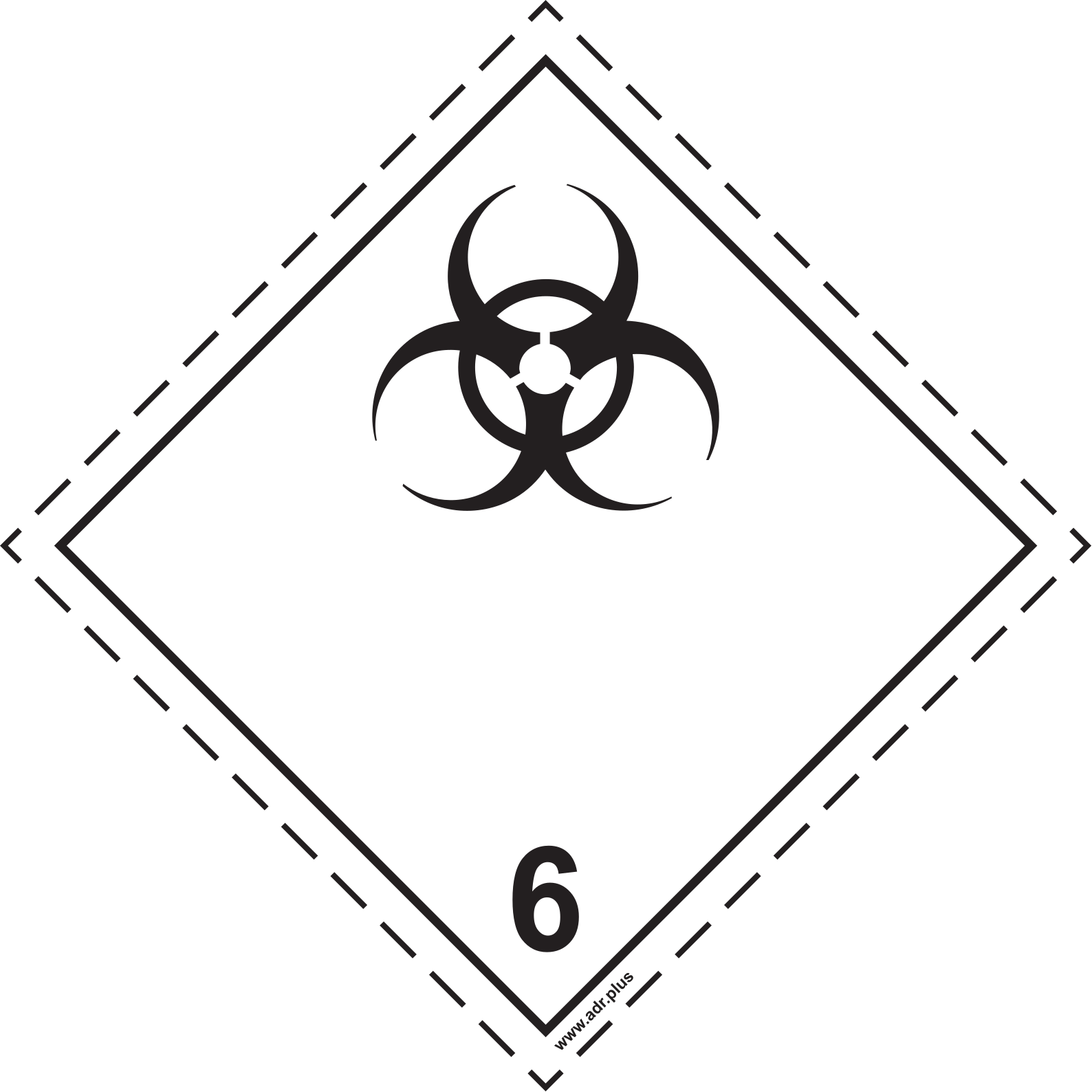
Every package carries the danger label of its Table A entry and the UN number with the letters "UN" (ADR 5.2.1, 5.2.2).
On the transport unit
Orange plates at the front and rear — and for tanks and bulk also enlarged placards 250 × 250 mm on the sides and rear (ADR 5.3.1, 5.3.2).

Limited quantities
Goods packed under Chapter 3.4 carry the LQ mark instead of the danger label and UN number (ADR 3.4.1, 3.4.7).
Class 6.2 specifics
- ADR 5.2.2.1.10
In addition to the label conforming to model No. 6.2, packages of infectious substances must bear any other label required by the nature of the contents.
- ADR 5.2.1.10.2
Orientation arrows are not required on outer packagings containing Class 6.2 infectious substances in primary receptacles each containing not more than 50 ml.
Transport document
What must be written in the transport document when you ship Class 6.2 goods.
- ADR 5.4.1.2.4
In addition to the information concerning the consignee, the name and telephone number of a responsible person must be indicated in the transport document.
Reliefs and restrictions
How much may travel under lighter regimes — and where tunnels restrict the route — is set per UN entry in Table A.
Limited quantities (LQ)
Column 7a caps each inner packaging. Within Chapter 3.4 most ADR requirements fall away, including the driver certificate.
ReadExcepted quantities (EQ)
E codes in column 7b let very small inner receptacles travel with almost no ADR overhead (Chapter 3.5).
ReadTunnel restrictions
Column 15 assigns the tunnel restriction code — it decides which tunnel categories the load may pass.
ReadLook up a Class 6.2 UN number
Get the full ADR profile for any UN number in this class.
Typical UN numbers
All 11 entries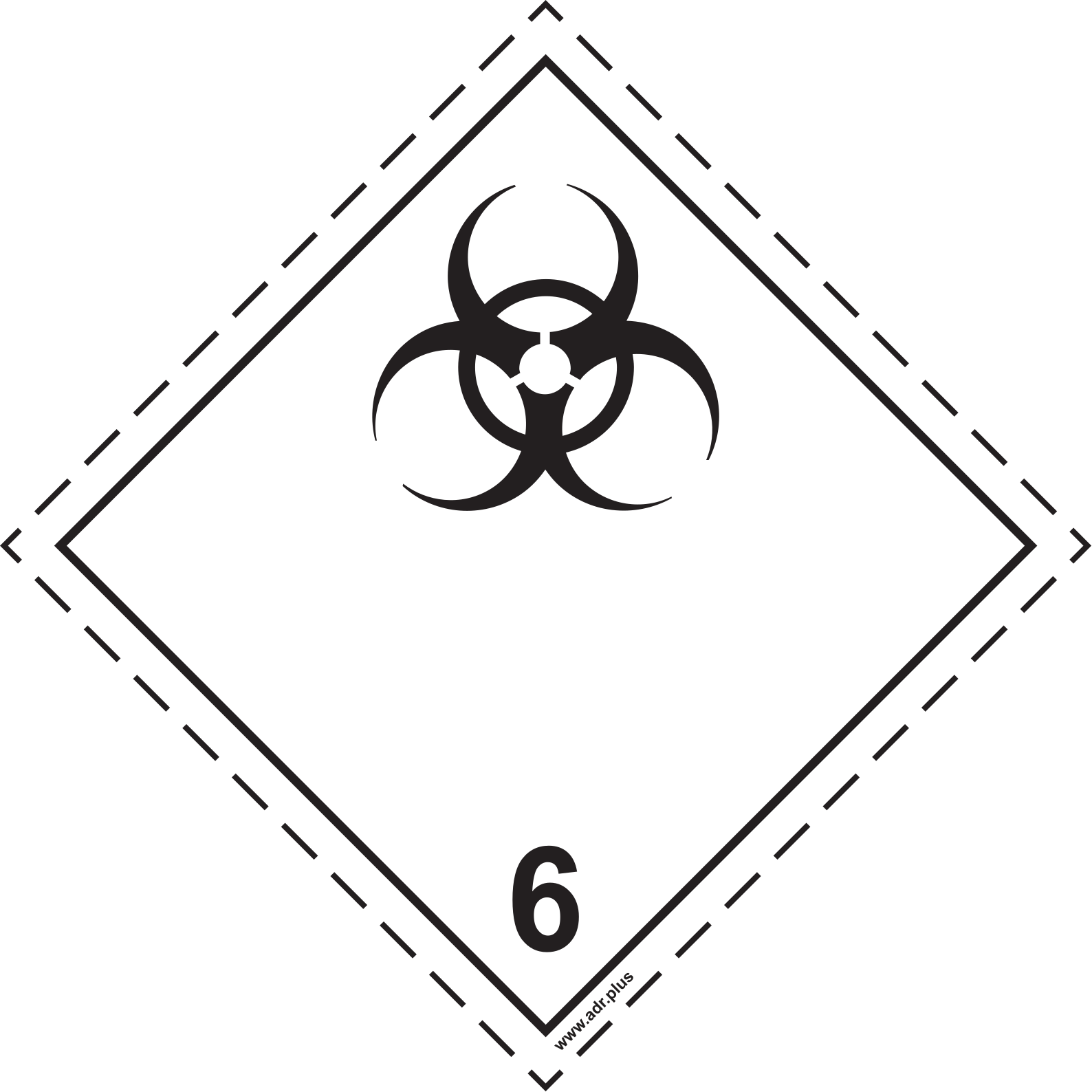
Help with Class 6.2 shipments
Not sure this class applies to you?
A DGSA can confirm the classification before your next load leaves the yard.
Train your team
Awareness training under ADR 1.3 for everyone who consigns, packs or loads dangerous goods.
Browse the courses